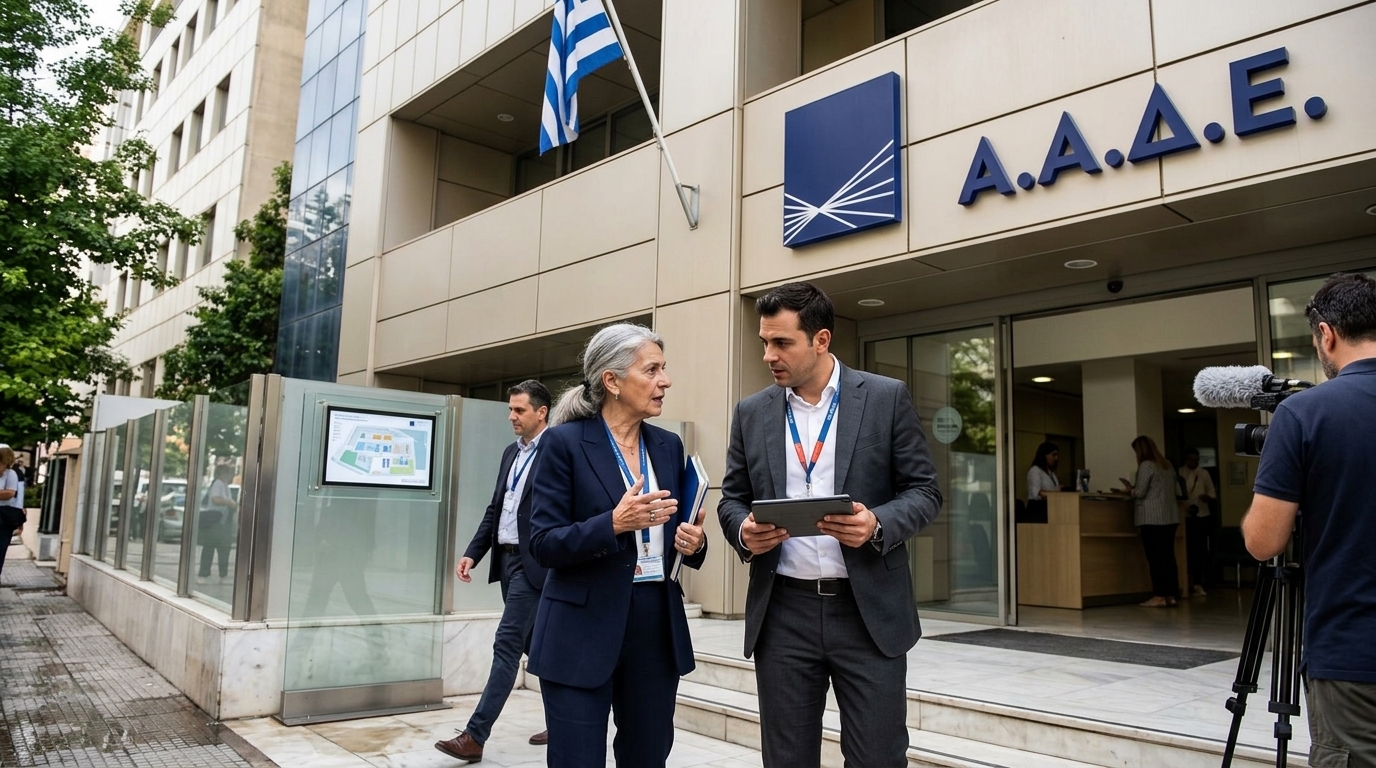
The European Commission's Annual Report on Taxation 2026 is far more than a routine assessment; it is a resounding validation of the transformation of the Greek tax administration. The Independent Authority for Public Revenue (AADE), under the leadership of George Pitsilis, is now emerging as a European benchmark for digital transformation, leaving behind the days of bureaucracy and inefficiency that long defined the country's public sector.
The Digital Revolution and the myDATA Milestone
A central pillar of the Commission's report is the successful consolidation of the myDATA platform. Greece has managed to implement an electronic invoicing and bookkeeping system that provides the tax administration with a real-time view of transactions. This 'digital eye' allows for automated data cross-referencing, making it exceptionally difficult for businesses to conceal revenue. The Commission notes that the Greek experience now serves as a roadmap for other member states seeking to modernize their own tax infrastructures.
The integration of POS terminals with cash registers, a project completed with significant technical challenges and political determination, is recorded as a major milestone. This move effectively closed one of the largest loopholes for tax evasion in the retail sector, ensuring that every card payment is strictly accompanied by a fiscal receipt. The report emphasizes that this technological convergence led to an immediate spike in declared revenues, particularly in the hospitality and service sectors.
Artificial Intelligence and Predictive Auditing
AADE is no longer limited to random audits based on an inspector’s intuition. The use of Artificial Intelligence (AI) algorithms for risk scoring represents the cutting edge of its strategy. These algorithms sift through vast amounts of data—ranging from bank accounts and property movements to social media activity—to identify discrepancies between a taxpayer's lifestyle and their declared income.
According to the Commission's report, Greece has developed one of the most sophisticated data analysis systems in the EU. AADE’s ability to conduct 'smart' audits has reduced the cost of collection per euro of tax while simultaneously increasing voluntary compliance. The psychological impact of the state’s 'digital omniscience' appears to act as a potent deterrent for potential tax evaders.
Closing the VAT Gap: A Success Story
One of the most critical indicators of an economy’s fiscal health is the VAT gap—the difference between expected and actual VAT receipts. Greece, which once sat at the bottom of EU rankings, now shows the largest percentage reduction in this gap. The Commission highlights that the narrowing of the VAT gap in Greece is not merely a byproduct of increased electronic transactions but also a result of tightening the framework for monitoring intra-community 'carousel' fraud.
This success has a direct impact on public finances, allowing the government to allocate resources to social policies or to reduce other tax burdens. However, the report cautions that the effort must be sustained, as the absolute figure still remains above the European average despite the spectacular improvement. The goal is to reach the single digits within the next two years.
Challenges and the Future of Tax Administration
Despite the praise, the report does not shy away from the challenges ahead. Digitization requires continuous training for AADE staff and, crucially, support for small and medium-sized enterprises (SMEs) that often struggle to keep up with the rapid pace of change. The compliance cost for a small business remains high, and the Commission suggests further simplification of procedures to ease the burden.
Furthermore, data privacy remains a sensitive issue. The extensive use of AI and access to sensitive banking data must be accompanied by robust security measures and transparency to ensure that citizen trust in the state is not undermined. AADE must strike a delicate balance between collection efficiency and the protection of taxpayer rights.
In conclusion, the 2026 Commission report solidifies Greece’s path toward a modern, digital economy. AADE has managed to turn a crisis into an opportunity for reconstruction, proving that with the right technology and political will, even the most deeply rooted systemic issues can be addressed. The challenge for the coming years is to maintain this momentum and transform fiscal justice from a political slogan into a daily reality for all citizens.