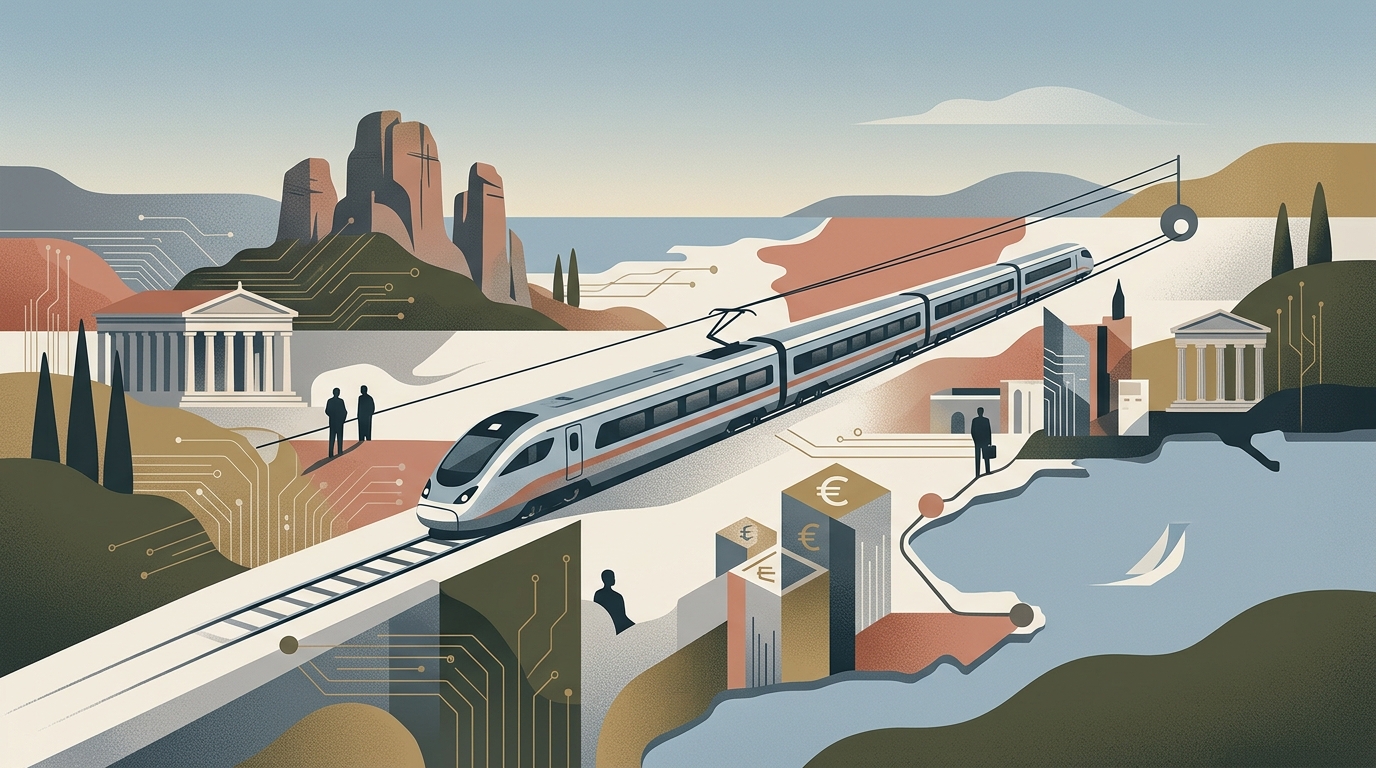
At a time when the Greek railway is desperately seeking to restore its credibility, the inclusion of the second phase of the Palaiofarsalos – Kalambaka line upgrade in the "Transport 2021-2027" NSRF (ESPA) program is news with multiple layers of significance. The project, with a total budget of 85.6 million euros, is not merely a technical intervention; it is an effort to connect the heart of Thessaly with the modern European network, offering safety and speed to a region hit hard by natural disasters and chronic underinvestment.
The Project's Technical Profile
The intervention concerns an 81.4-kilometer single railway line, which serves as a vital branch of the main Athens – Thessaloniki axis. The second phase of the project includes the installation of an electrification system, signaling with remote control (tele-command), and, most importantly, the implementation of the ETCS (European Train Control System) Level 1. These systems represent the cutting edge of rail safety in Europe, allowing for automatic train speed control and the prevention of human error.
Furthermore, the project provides for the construction of a new platform at the Sofades Railway Station, the upgrading of platforms at the Karditsa, Trikala, and Kalambaka stations, as well as the installation of modern passenger information systems. This upgrade will allow trains to reach speeds of up to 160 km/h, significantly reducing travel times and making the train a competitive alternative to road transport.
Safety: The Ultimate Prerequisite
Following the Tempi tragedy, the word "railway" in Greece is inextricably linked to the need for absolute safety. The installation of ETCS Level 1 on the Palaiofarsalos – Kalambaka line is not a luxury but an imperative necessity. Remote control will allow dispatchers to have a full, real-time picture of train movements, eliminating the manual procedures that led to fatal errors in the past. This investment is part of a broader national plan for the full digitalization of the network, which, however, is progressing at a pace that often tests the public's patience.
Economic and Tourism Impact
Thessaly, and particularly the Meteora region (Kalambaka), is one of the country's most significant tourist destinations. Connecting Kalambaka with high-speed electric trains will breathe new life into the local economy. Visitors will be able to travel from Athens to Meteora in less than three hours, boosting day-trip and short-stay tourism. At the same time, the improvement of freight transport will facilitate the movement of agricultural products from the Thessalian plain to major ports and international markets.
Challenges and Timelines
Despite securing NSRF funding, the challenge remains implementation. The history of Greek public works is riddled with delays, legal disputes between contractors, and bureaucratic hurdles. The restoration of damages caused by Storm Daniel to the Thessalian rail network remains an open wound, and the electrification project must go hand-in-hand with the overall reconstruction of the region. The people of Thessaly, who saw their infrastructure collapse, now demand projects that are not just "on paper" but delivered for use with strict adherence to specifications.
Conclusion
The upgrade of the Palaiofarsalos – Kalambaka line is a project of vital importance. It represents the hope for a railway that will not be the "poor relative" of transport but the engine of growth for the Greek provinces. With the support of European funds, Greece has a golden opportunity to close the gap with the rest of Europe, provided that political will is accompanied by effective management and transparency.