Economics, a discipline traditionally rooted in statistical analysis, complex mathematical modeling, and market interpretation, is currently facing one of the most significant shifts in its history. The emergence of Generative AI and Large Language Models (LLMs) is not merely changing the tools at an economist's disposal; it is fundamentally restructuring the labor market for the entire profession. From central banks to global consulting firms, the question is no longer whether AI will affect the field, but how professionals will remain relevant in an environment where data processing happens in milliseconds.
The Technological Revolution in Economic Analysis
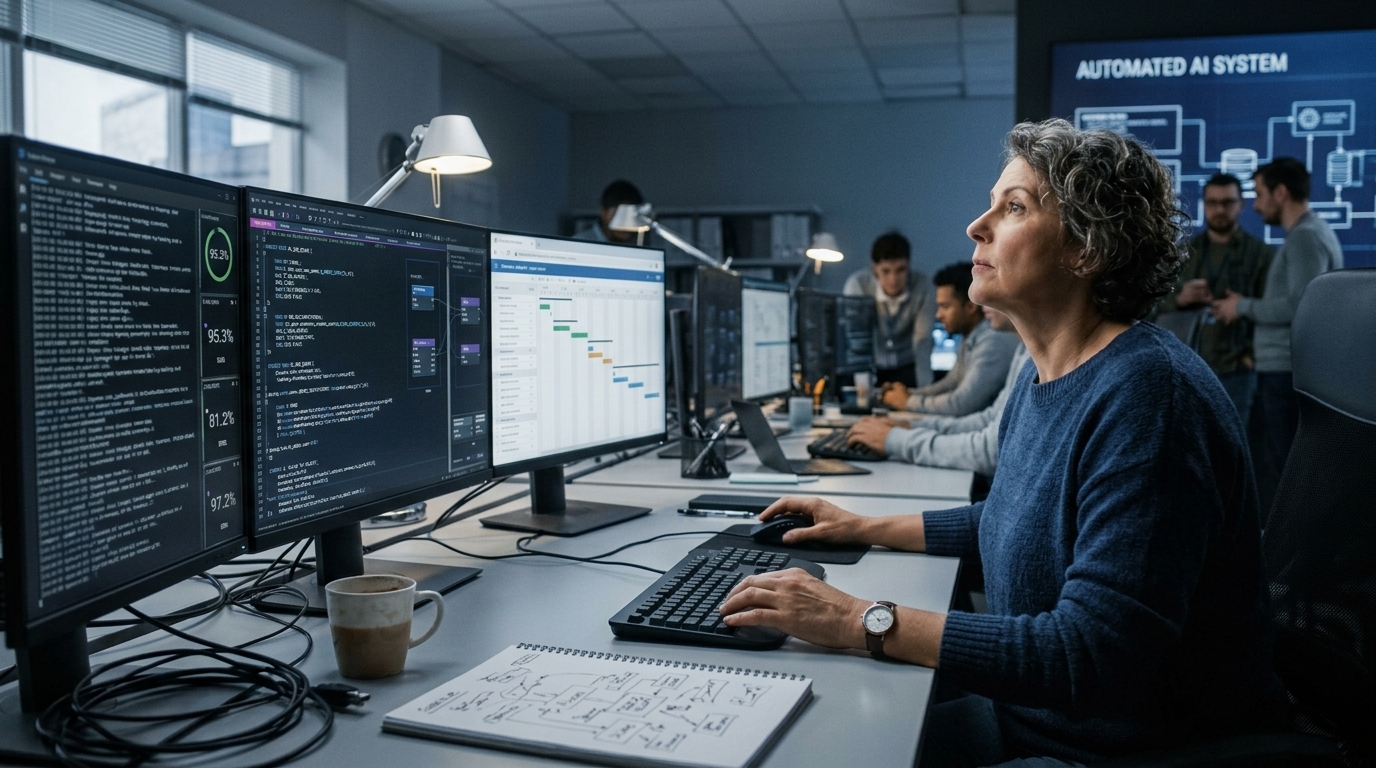
For decades, a substantial portion of an economist's workload—particularly for junior analysts—involved data collection, cleaning, and organization. Today, machine learning algorithms can execute these tasks with precision that far exceeds human capability, identifying patterns in massive datasets that were previously impossible to parse. The transition from manual spreadsheets to automated analytical platforms means the economist of the future must function more as a "systems architect" and less as an "information gatherer."
"AI will not replace economists, but economists who use AI will replace those who do not," is a sentiment echoed across boardrooms, highlighting the urgent need for adaptation.
In the realm of forecasting, AI enables "nowcasting" models that provide real-time estimates of economic indicators, rather than waiting for quarterly reports from national statistics offices. This dramatically alters how monetary and fiscal policy decisions are made, requiring economists to possess the critical thinking necessary to evaluate the reliability and nuances of these rapid-fire predictions.
New Skills for a New Era
The shift in job descriptions mandates a radical overhaul of the required skill set. While traditional econometrics remains the foundation, it must now be supplemented by programming proficiency (Python, R), an understanding of neural network architectures, and, crucially, the ability to communicate complex results effectively. In a world where AI can generate thousands of pages of analysis, human value lies in synthesis, ethical judgment, and strategic direction.
- Data Governance and Ethics: Economists are now tasked with ensuring that algorithms do not incorporate biases that could lead to unfair or discriminatory social policies.
- Interdisciplinarity: The nexus between economics, data science, and behavioral psychology is becoming tighter than ever.
- Adaptability: The rapid obsolescence of technical knowledge requires a commitment to lifelong learning and constant upskilling.
Institutional Adaptation and the Global Market
The global labor market is already seeing a premium placed on "hybrid" economists. Leading financial institutions are no longer just looking for PhDs in Macroeconomics; they are looking for individuals who can bridge the gap between economic theory and algorithmic execution. This has led to a surge in demand for roles like "Economic Data Scientist" or "Algorithmic Policy Analyst."
However, this transition is not without its frictions. Smaller firms and developing economies may struggle to keep pace with the massive investments in AI infrastructure required by the industry giants. There is a growing risk of a "technological divide" within the profession, where those with access to the best proprietary models have a significant competitive advantage over those who do not.
Socio-Economic Risks and the Human-in-the-Loop
The automation of economic analysis also brings risks. Over-reliance on black-box models can lead to systemic failures if the underlying assumptions of the AI are not understood by its human supervisors. The "human-in-the-loop" principle is becoming a cornerstone of economic methodology, ensuring that moral and social considerations are not sacrificed for the sake of efficiency.
Furthermore, the displacement of entry-level roles poses a challenge for the professional pipeline. If the tasks traditionally performed by junior economists are automated, how will the next generation gain the foundational experience needed to become senior leaders? Firms and universities must collaborate to create new pathways for mentorship and skill development that account for the automated nature of modern data work.
Conclusion: Navigating the Transition
In conclusion, the new labor market for economists is not a threat but an evolution. The economist of the AI era is a hybrid scientist who combines analytical rigor with technological fluency. By embracing these tools, economists can move away from the drudgery of data processing and focus on solving the world's most pressing challenges—from climate change to inequality. Those who invest in understanding the technology while maintaining a deeply human-centric perspective will be the ones to define the economic landscape of the 21st century.