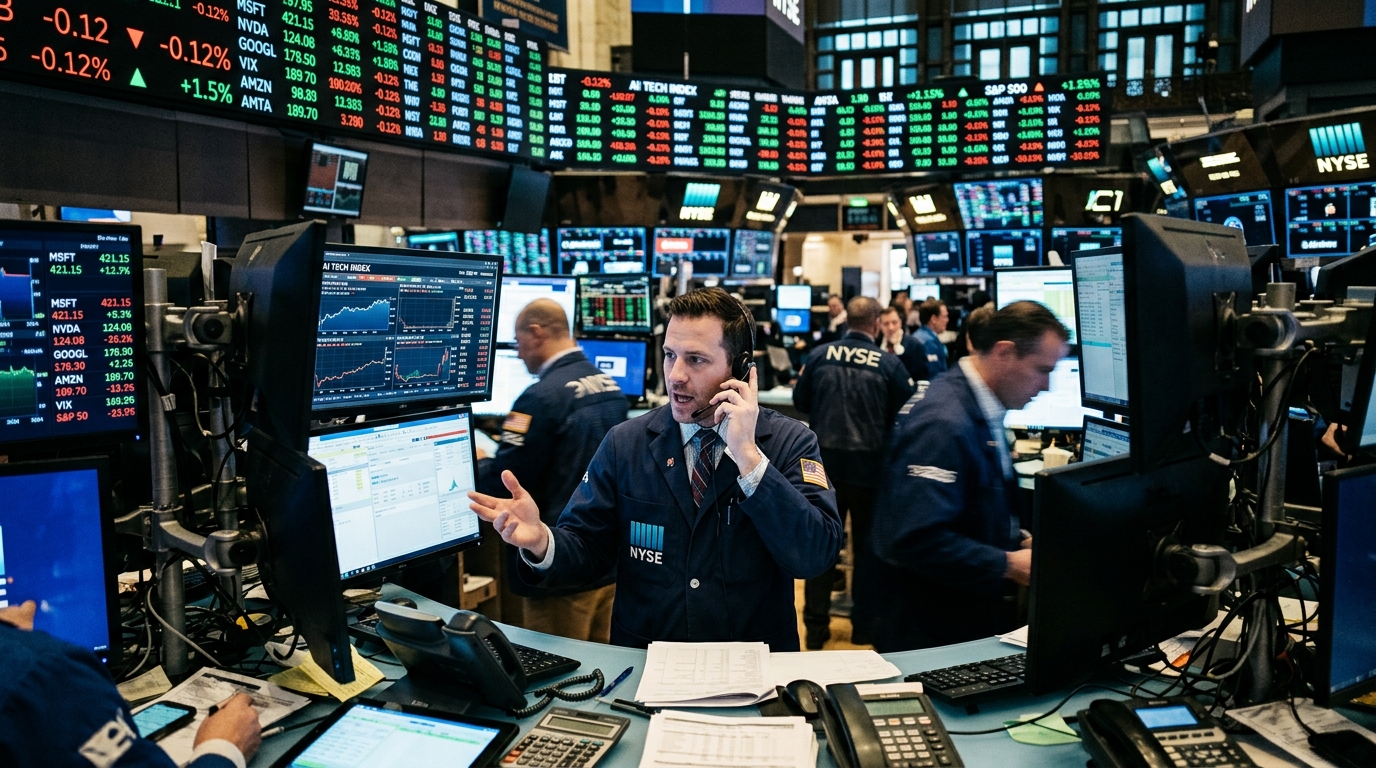
The history of technological revolutions is often a story of misunderstandings between those building the future and those financing it. Today, we stand at a critical juncture where Wall Street, despite its initial euphoria over Artificial Intelligence (AI), seems to be losing patience with the so-called "Hyperscalers"—giants like Alphabet, Microsoft, and Amazon that are spending billions on infrastructure. However, a deeper analysis of the financial data reveals that the market may be focusing on the wrong tree, missing the forest of unprecedented profitability in the making.
The Capital Expenditure (CapEx) Trap
The primary argument from Wall Street skeptics focuses on "terrifying" capital expenditures. When Alphabet or Meta announce spending increases of 30% or 40% to purchase Nvidia chips and build data centers, their stocks often face pressure. Investors fear these outlays will "cannibalize" profit margins and free cash flows. Yet, this perspective ignores the nature of these investments. These are not merely operating expenses; they are the construction of the 21st century's "electrical grid."
The metric that changes everything is Return on Invested Capital (ROIC) coupled with Cloud Revenue Acceleration. Despite massive investments, growth rates for Google Cloud and AWS are not only remaining high but are accelerating as enterprises rush to integrate Generative AI into their operations. Wall Street sees the cost today but fails to correctly price the customer "lock-in" achieved through this infrastructure.
The Case of Alphabet: An Undervalued Giant?
The case of Alphabet (Google) is particularly interesting. While its stock has taken hits due to concerns over competition from ChatGPT and the cost of AI Search, the Forward P/E (Price-to-Earnings) ratio relative to Cloud growth tells a different story. Alphabet often trades at levels suggesting a "legacy economy" company, even though its AI infrastructure is perhaps the most complete in the world, ranging from its own chips (TPUs) to the Android and YouTube ecosystems.
- Data Dominance: AI is trained on data, and Google holds the largest volume globally.
- Vertical Integration: The ability to design proprietary chips reduces long-term reliance on Nvidia.
- Operating Leverage: Once the massive infrastructure phase is complete, profit margins are expected to skyrocket.
Lessons from the 1990s
Many analysts compare the current era to the dot-com bubble. However, there is a fundamental difference. In the late 90s, companies were spending money without having revenue. Today, Hyperscalers are the most profitable money-making machines in human history. Their spending is funded by existing profits, not debt. Wall Street's "one-sided" focus on short-term costs is reminiscent of the undervaluation of Amazon when it was building its logistics network—an investment then considered madness, but which today constitutes its ultimate competitive advantage.
"The market is a pendulum that always swings between unjustifiable optimism and unjustifiable fear. In the case of AI, the fear of cost is blinding investors to the value of infrastructure."
In conclusion, the "jaw-dropping" metric is none other than the divergence between market valuation and the actual value of AI fixed assets. When the fog of uncertainty clears, those who understood that CapEx is the "down payment" for future dominance will be the winners of the decade.