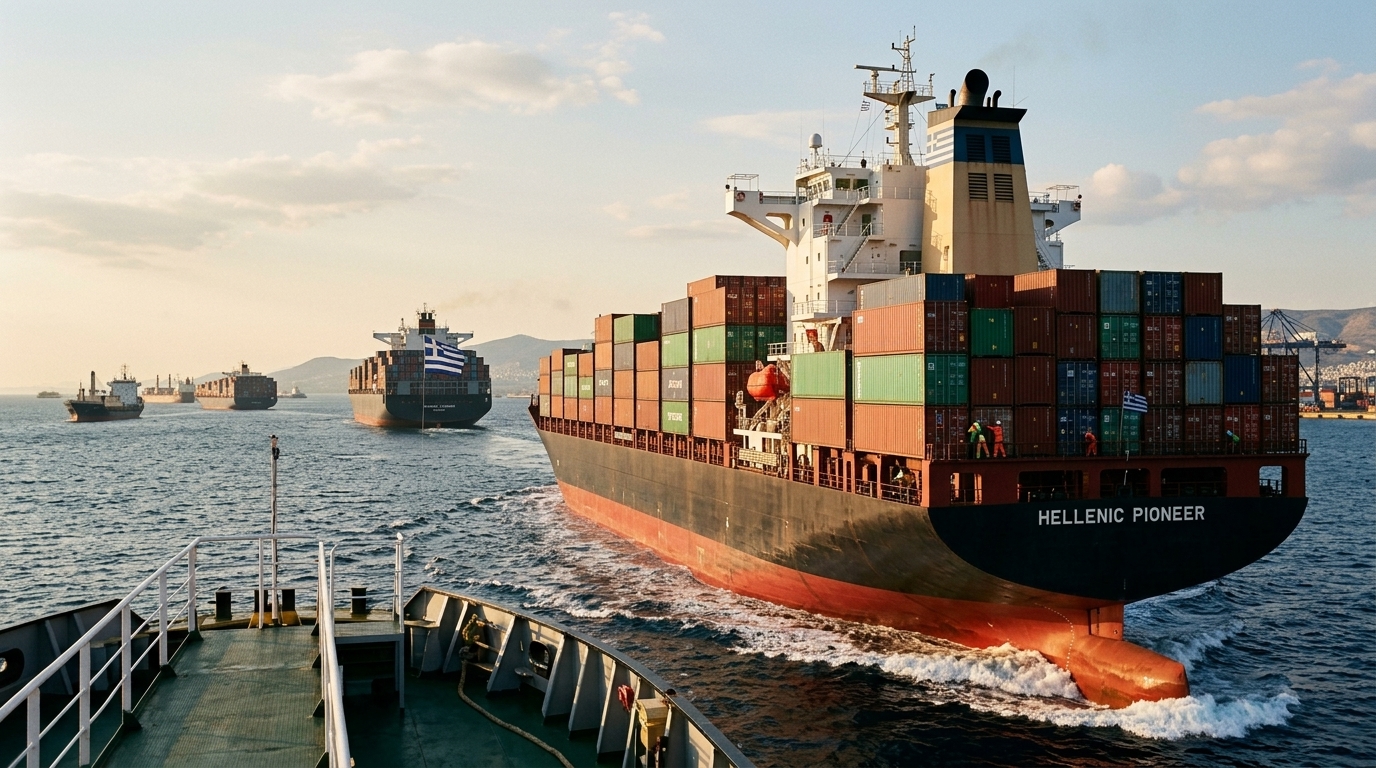
Greek shipping, historically the backbone of global trade, is once again demonstrating its uncanny ability to read market trends before they become mainstream. While the strength of the Greeks has traditionally resided in tankers and dry bulk carriers, a new, coordinated move toward containerships is reshaping the investment landscape in Piraeus and the City of London. A recent report by Naftemporiki highlights a clear trend: Greek shipowners are "voting" for containers, with a particular focus on the mid-sized capacity segment.
The Dominance of Mid-Size Vessels: Why 1,000-1,0000 TEU?
The current investment fever is not an indiscriminate pursuit of every vessel type. Interest is heavily concentrated on ships with capacities between 1,000 and 10,000 TEU (Twenty-foot Equivalent Units). This choice is strategic. These vessels, often referred to as "feeder" or "regional mid-size" ships, offer unparalleled flexibility. They can access ports with limited infrastructure where 24,000 TEU mega-ships cannot berth, while simultaneously serving the growing needs of regional trade in Asia, the Mediterranean, and Latin America.
Profitability in this sector remains at historically high levels despite concerns about a global economic slowdown. Freight rates for mid-sized containerships have shown remarkable resilience. The demand for transporting consumer goods remains steady, while the supply of new ships in this specific category was limited in previous years, creating a vacuum that the Greeks are now rushing to fill.
Geopolitical Instability: Crisis as a Profit Accelerator
One cannot analyze the rise of the containership market without mentioning the situation in the Red Sea. Ongoing Houthi attacks have forced the majority of the global fleet to bypass the Suez Canal, opting instead for the long journey around Africa via the Cape of Good Hope. This rerouting has dramatically increased "ton-miles"—the distance a cargo must travel.
- Absorption of excess capacity: Ships remain at sea for more days, effectively reducing the available supply of vessels in the market.
- Rate hikes: The scarcity of available ships leads to a surge in transport prices, benefiting fleet owners.
- Fleet renewal necessity: Longer voyages accelerate vessel wear and tear, making fleet modernization imperative.
Greek shipowners, armed with their legendary liquidity, are capitalizing on this situation to acquire high-specification secondhand vessels or place new orders at South Korean and Chinese shipyards.
Green Transition and Technological Modernization
Beyond pure profitability, another factor driving investment is the stringent regulations from the International Maritime Organization (IMO) and the European Union (EU ETS) regarding emission reductions. Much of the existing global containership fleet is aging and energy-inefficient. New Greek investments are focusing on "eco-friendly" vessels, equipped with dual-fuel engines capable of burning LNG or methanol, and advanced exhaust gas cleaning systems (scrubbers).
"Shipping is no longer just about capacity; it's about efficiency and environmental compliance. Those who do not invest in green technology today will find themselves out of the market tomorrow," note industry analysts in Piraeus.
Companies such as Danaos Corporation, Costamare, and Euroseas are leading this charge, reporting staggering financial results and pursuing strategic acquisitions that solidify their dominance. The Greek presence in the containership sector is no longer merely supplementary; it is directly competing with traditional giants from Northern Europe and Asia.
Conclusion: A High-Stakes, High-Reward Bet
The expansion of Greek shipowners into containerships represents a calculated move of high risk and high reward. With their sights set on the next decade, these maritime leaders are turning the uncertainty of international supply chains into an opportunity for further growth. In a world increasingly dependent on "just-in-time" trade, controlling the maritime highways through containerships is the ultimate display of economic power.