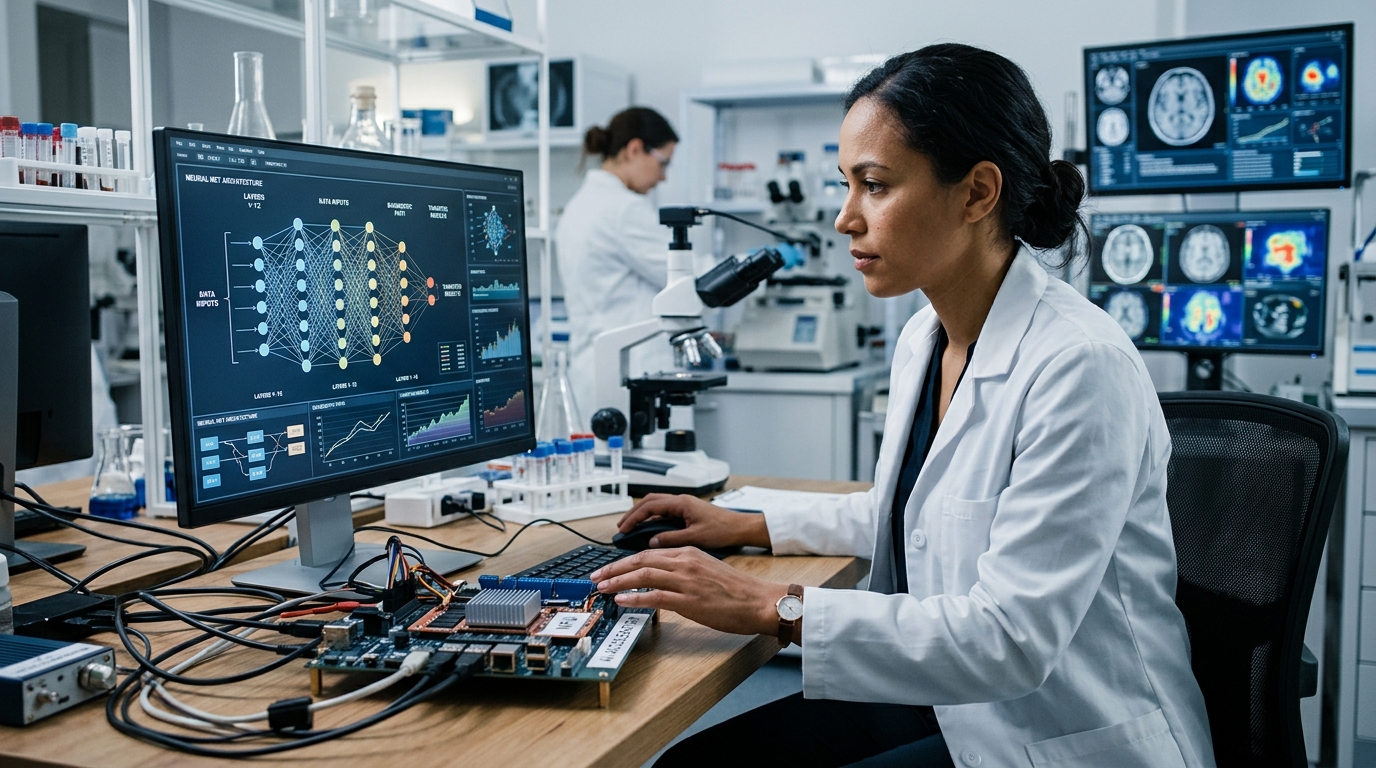
Medical science stands at the threshold of one of the most significant transformations in its history. The integration of Artificial Intelligence (AI) into clinical practices is no longer a science fiction scenario but a tangible reality reshaping the therapeutic landscape. Recent studies and reports, such as those highlighted by sbctv.gr, demonstrate that AI systems can now offer diagnoses up to eight times more targeted than traditional methods, particularly in fields like oncology, cardiology, and rare genetic analysis.
The Precision Revolution and Computational Power
The fundamental difference between traditional diagnosis and AI-enhanced diagnosis lies in the ability to process vast amounts of data in minimal time. While an experienced radiologist might review thousands of images over a career, a Deep Learning algorithm can be trained on millions of cases within hours. This "superhuman" capability allows the algorithm to identify patterns and subtle lesions often invisible to the human eye, especially in the early stages of diseases.
The figure of "8 times more targeted" is not coincidental. It reflects the reduction of false positives and false negatives. In the case of breast or lung cancer, the AI's ability to isolate suspicious areas with surgical precision means patients avoid painful and unnecessary biopsies, while simultaneously gaining precious time to begin treatment. The technology does not replace the physician; rather, it acts as a "digital co-pilot" that eliminates fatigue and subjective error.
From Genomics to Personalized Therapy
Beyond imaging, AI is making leaps in the field of genomics. Analyzing a patient's DNA produces petabytes of data. Using AI allows researchers to link specific genetic mutations to responses to certain drugs. What we call "precision medicine" is based exactly on this targeting: the right drug, at the right dose, for the right patient, at the right time.
- Predicting cardiovascular risks through retinal analysis.
- Automated detection of skin melanomas with dermatologist-level accuracy.
- Analysis of blood biomarkers to predict Alzheimer's disease years before symptoms appear.
In Greece, the digitization of hospital records and the creation of the National Electronic Health Record provide the necessary foundation to leverage these tools. The ability to compare a Greek patient's data with global databases can lead to faster diagnoses for rare diseases, which in the past required years of a "diagnostic odyssey."
Ethical Dilemmas and the Human Touch
Despite the excitement, the use of AI in healthcare raises serious questions. Who bears responsibility for a wrong diagnosis suggested by an algorithm? How is the protection of sensitive personal patient data ensured? The European Union, through the AI Act, is attempting to set a strict framework, classifying AI in healthcare as "high-risk," requiring transparency and human oversight.
"Technology is the tool, but medicine remains a deeply human art. The challenge is to use machine intelligence to give doctors more time with their patients, not less," industry experts note.
In conclusion, achieving eight times more targeted diagnoses is just the beginning. As algorithms become more sophisticated and data quality improves, medicine will move from "reactive" care (treating the disease) to "proactive" health management. The challenge for healthcare systems worldwide is to ensure that these innovations are accessible to everyone, not just a privileged elite, while always keeping the human at the center of care.