The global telecommunications market is entering a new cycle of maturity where connectivity, cloud computing, and Artificial Intelligence (AI) merge into a single ecosystem. According to the Ericsson Mobility Report 2026, 5G subscriptions surpassed 3.1 billion in the first quarter of 2026, with the technology now carrying half of the world's mobile data traffic.
Greece's Momentum and 5G Stand Alone
Greece is emerging as a key player in these developments, having achieved high levels of population coverage. According to Giorgos Pappas, head of Ericsson Greece, the country is one of the few in Europe where all providers have announced the commercial availability of 5G Stand Alone (5G SA) networks. This infrastructure is considered critical for supporting next-generation applications, as it enables open, programmable networks through APIs.
The Impact of AI and New Devices
Artificial Intelligence is reshaping not just software, but device design. The rise of smart glasses (10 million shipments in 2025), drones, and humanoid robots is increasing demands on the "uplink" — the transmission of data from the device to the network. Meanwhile, mobile data traffic grew by 22% within a year, reaching 210 exabytes per month, with video accounting for 75% of total usage.
The 6G Horizon
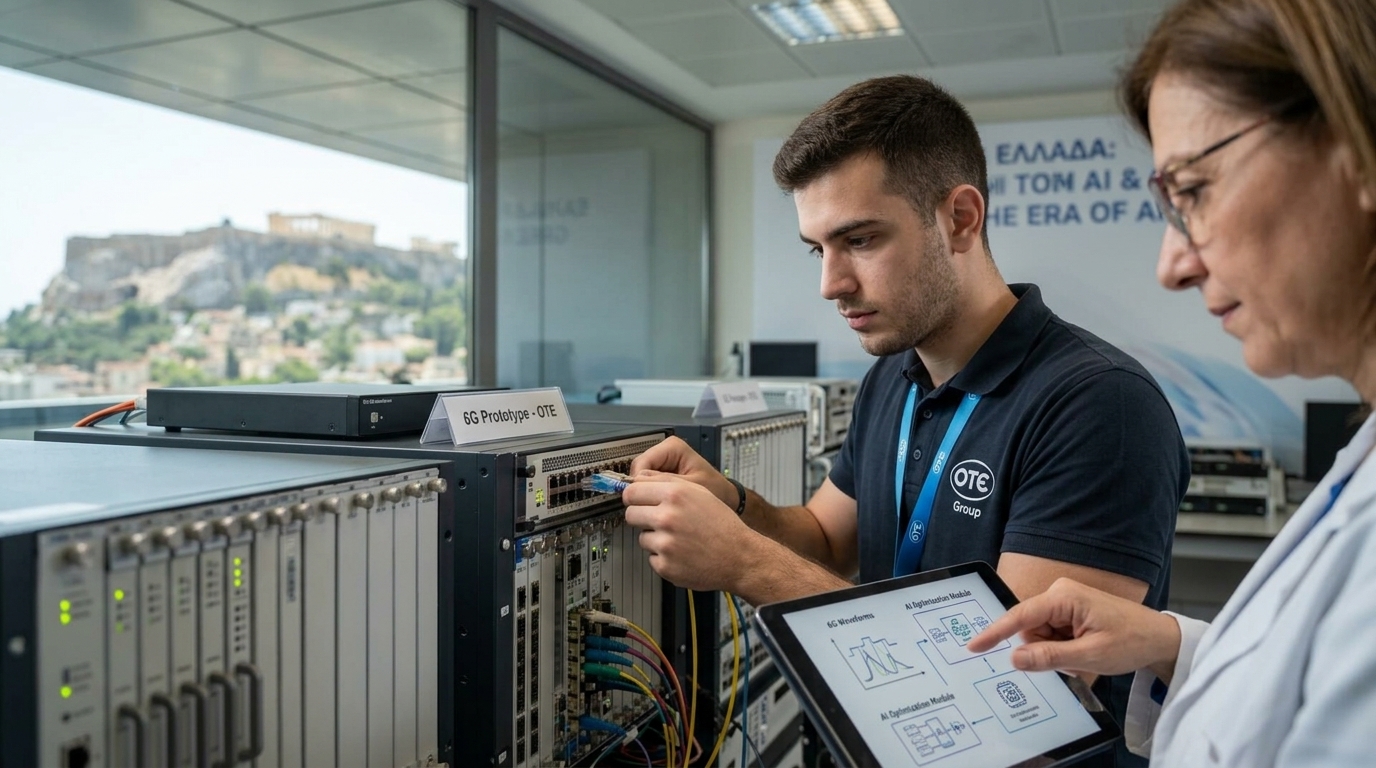
Although 5G is still expanding, the groundwork for 6G has already begun. Technical specifications are expected by the end of 2028, with the first commercial services projected around 2030. 6G promises native AI integration, advanced sensing capabilities, and the convergence of terrestrial and satellite networks. For Greece, success will depend on timely spectrum allocation, continued provider investment, and state support for universities and startups to develop domestic applications.