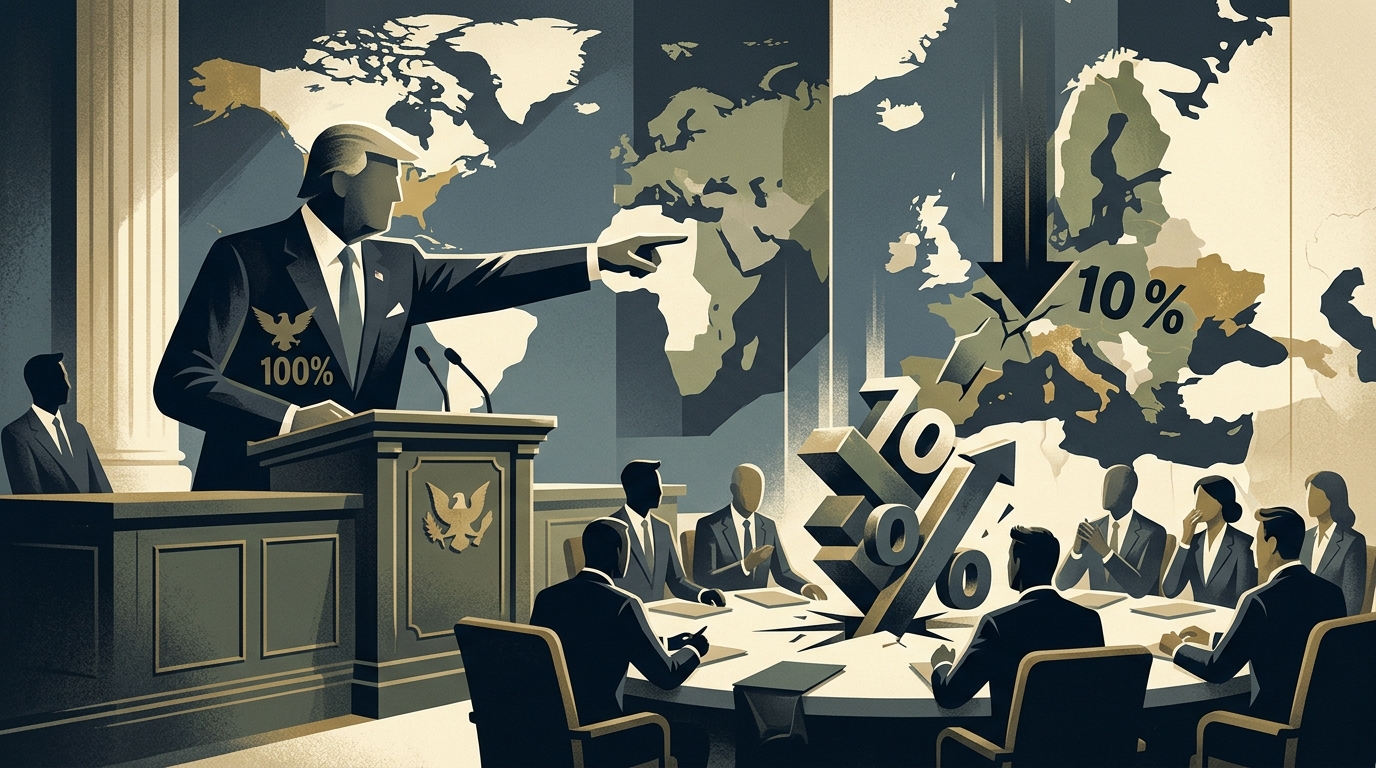
The shadow of an all-out trade war looms once again over the Atlantic. Donald Trump, in a move reminiscent of the most turbulent periods of his first term, has unleashed an unprecedented threat against European capitals: the imposition of 100% tariffs on European goods if the continent's governments do not withdraw the Digital Services Taxes (DST) targeting American tech giants.
This move is not merely a negotiating tactic; it is a strategic choice aimed at protecting the "national champions" of Silicon Valley. From Paris to Rome and from London to Madrid, concern is widespread as the European economy, already struggling with anemic growth and high energy costs, faces the prospect of being locked out of its most critical export market.
The Bone of Contention: The Digital Tax
The root of the conflict lies in the effort by European nations to tax the revenues of companies like Google, Amazon, Meta, and Apple. These companies, using complex accounting structures, shift their profits to low-tax jurisdictions (such as Ireland or Luxembourg), leaving the states where the economic activity actually occurs with minimal tax revenue.
"We will not allow foreign countries to take advantage of our greatest companies. If you tax our companies, we will tax your products at double the rate," Trump stated, signaling the core of his policy.
For Europe, the digital tax is a matter of fiscal justice. For Washington, it is a discriminatory attack on American innovation. This clash has frozen talks within the OECD framework for a global tax reform, leaving the field open for unilateral actions.
The Impact on European Industry
If the threat of 100% tariffs is realized, the consequences will be catastrophic for specific sectors. The German automotive industry, already under pressure from Chinese competition, would see its vehicle prices in the US double overnight. French wines, Italian luxury goods, and Spanish agricultural products would become unaffordable for the average American consumer.
- Germany: Risk for BMW, Mercedes, and Volkswagen at a critical juncture for electrification.
- France: A blow to the luxury goods sector (LVMH, Hermès) and wine production.
- Italy: Threat to fashion and high-quality food exports.
Analysts warn that such a trade war could lead to a global recession, as it would disrupt supply chains and increase inflation, forcing central banks to keep interest rates high.
Geopolitical Instability and the Future of the West
Beyond economics, this move undermines the geopolitical unity of the West. At a time when Russia remains a threat on the eastern flank and China asserts global dominance, a rift between the US and the EU is the last thing international stability needs. Trump appears to view international relations as a zero-sum game, where one side's victory necessitates the other's humiliation.
The EU now faces a dilemma: to yield to pressure, risking its fiscal sovereignty, or to respond with reciprocal countermeasures, triggering a cycle of protectionism that could dismantle the World Trade Organization. The future of transatlantic relations looks more uncertain than ever, with economic diplomacy giving way to raw power.