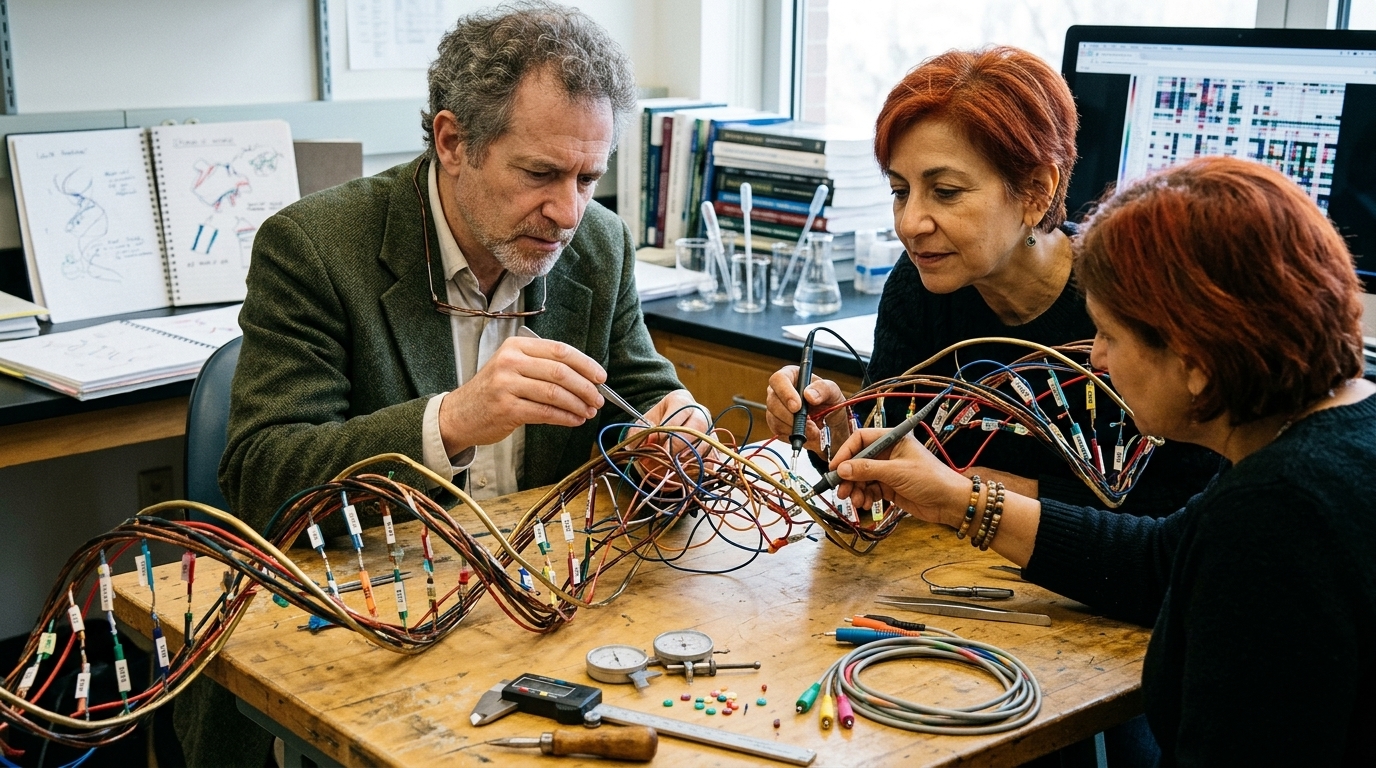
Since its molecular structure was deduced in the 1950s, DNA has been hailed as the blueprint of life. However, decades of research reveal that the human genome is less a script than a puzzle that grows more complex the closer scientists look. Despite the full sequencing of our 3 billion chemical building blocks, it has been shown that barely 2 percent of the human genome consists of actual protein-coding genes.
The Challenge of Gene Regulation
The critical question is no longer what each gene does, but how those genes are used or regulated. Cells switch suites of genes on and off in response to signals from their surroundings, a process so intricate that some biologists wonder if it will ever be fully within human grasp. This complexity involves "enhancers" that may sit millions of nucleotides away from the gene they influence, requiring the DNA to form great three-dimensional loops to bring elements together.
The AI "Black Box"
AI foundation models such as Google DeepMind’s AlphaGenome and Evo 2 are trained on vast quantities of genomic data to predict how sequence differences affect biological traits. However, this approach treats the genome as a computational "black box." Experts point out that AI lacks critical data on how different cell types change over time during development and how they are influenced by external factors like diet and environment.
“Our genome is not what we might make it if we sat down at the drawing board,” says biologist Karen Adelman.
Biologist Wendy Bickmore argues that while AI can certainly help, human reasoning is still needed to discern fundamental principles. The genome is not an automated program but an "open informational system" that responds dynamically, making its full decoding by current AI models an incredibly difficult task.