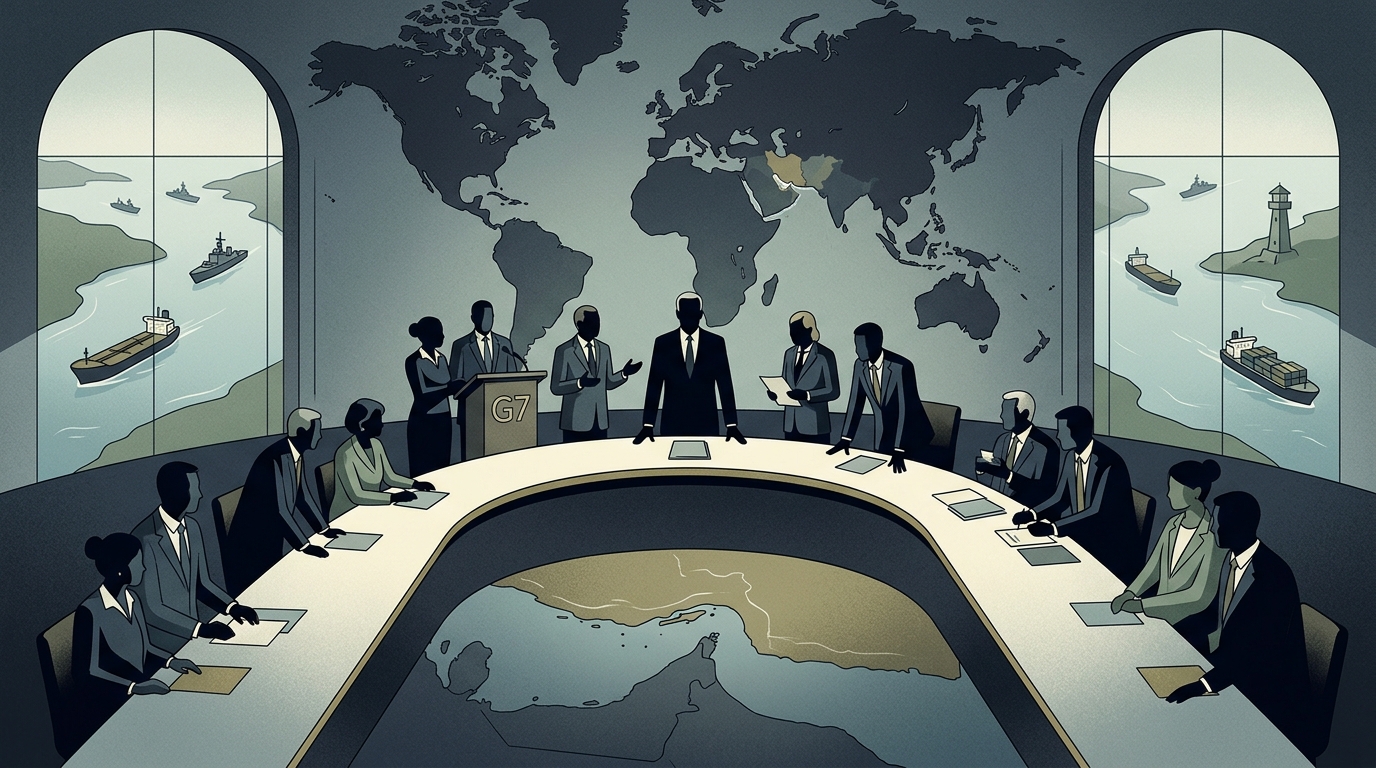
As the global community watches with bated breath the diplomatic maneuvers to end years of conflict with Iran, the upcoming G7 summit is emerging as a theater for critical strategic decisions. President Donald Trump, according to sources close to the White House, is preparing to present allies with an urgent mandate: the complete demining of the Strait of Hormuz. This move is not merely a military necessity but the first substantive step toward restoring global energy security and restarting international trade in a region that has remained "mined"—literally and figuratively—for months.
The Strategic Weight of the Hormuz Choke Point
The Strait of Hormuz is arguably the most vital maritime artery for global oil transit. With one-fifth of the world’s liquid fuel consumption passing through this narrow waterway, any threat to free navigation translates immediately into global economic instability. During the recent conflict, the extensive use of naval mines by Iranian forces and their proxies turned the area into a lethal trap for tankers.
Trump’s approach at the G7 summit is rooted in the logic of "burden sharing." While the United States led the military kinetic phase, Washington now argues that securing the peace and restoring commercial routes is the collective responsibility of all major economic powers. Britain and France, traditional naval powers with significant mine-countermeasure (MCM) expertise, have already signaled their interest in leading the effort, viewing it as an opportunity to stabilize energy prices that have ravaged European economies.
European Interests and the Technical Challenge
For London and Paris, participating in the demining operation is a dual-edged sword. On one hand, deploying mine-hunting vessels is a humanitarian and economic imperative. On the other, collaborating with the Trump administration at this juncture requires delicate diplomacy; European leaders want to ensure that any peace deal with Tehran is sustainable and does not lead to a new cycle of isolationism.
The French and British navies possess some of the most advanced Autonomous Underwater Vehicles (AUVs) in the world, capable of detecting and neutralizing mines without risking sailors' lives. Utilizing this technology in the Strait of Hormuz would represent the largest operation of its kind since the Gulf War. However, the technical challenges are formidable: the maritime environment of the Strait, characterized by strong currents and high salinity, makes detecting modern "smart" mines an extremely difficult task. These mines can be programmed to ignore certain vessel signatures and target others, requiring a high degree of acoustic and magnetic intelligence to neutralize.
Geopolitical Implications: Beyond the Water
Demining is as much a political issue as a technical one. Tehran, though in a state of rapprochement or potential capitulation, may use the coordinates of minefields as a bargaining chip. Trump is expected to push the G7 to demand full disclosure of Iranian naval defenses as a prerequisite for any sanctions relief. This creates a high-stakes game of poker where the safety of global shipping is the pot.
Furthermore, the presence of a multinational task force in the Strait of Hormuz sends a clear signal to China and Russia. The West is asserting its dominance over global choke points. For Trump, the success of this operation would be the ultimate validation of his foreign policy: a conflict concluded with allies footing the bill for reconstruction and security, while the U.S. maintains its role as the overarching guarantor of order.
The Road Ahead for Global Shipping
The shipping industry, particularly major tanker operators, views these developments with cautious optimism. A safe passage through Hormuz would drastically reduce war-risk insurance premiums and allow for the normalization of global supply chains. However, maritime analysts warn that demining is a meticulous process that could take anywhere from six months to a year. The upcoming G7 summit will determine whether the international community is ready to turn the page or if the "mines" of diplomacy will remain active for the foreseeable future. The world expects more than just a ceasefire; it expects a clear path forward through the world's most dangerous waters.