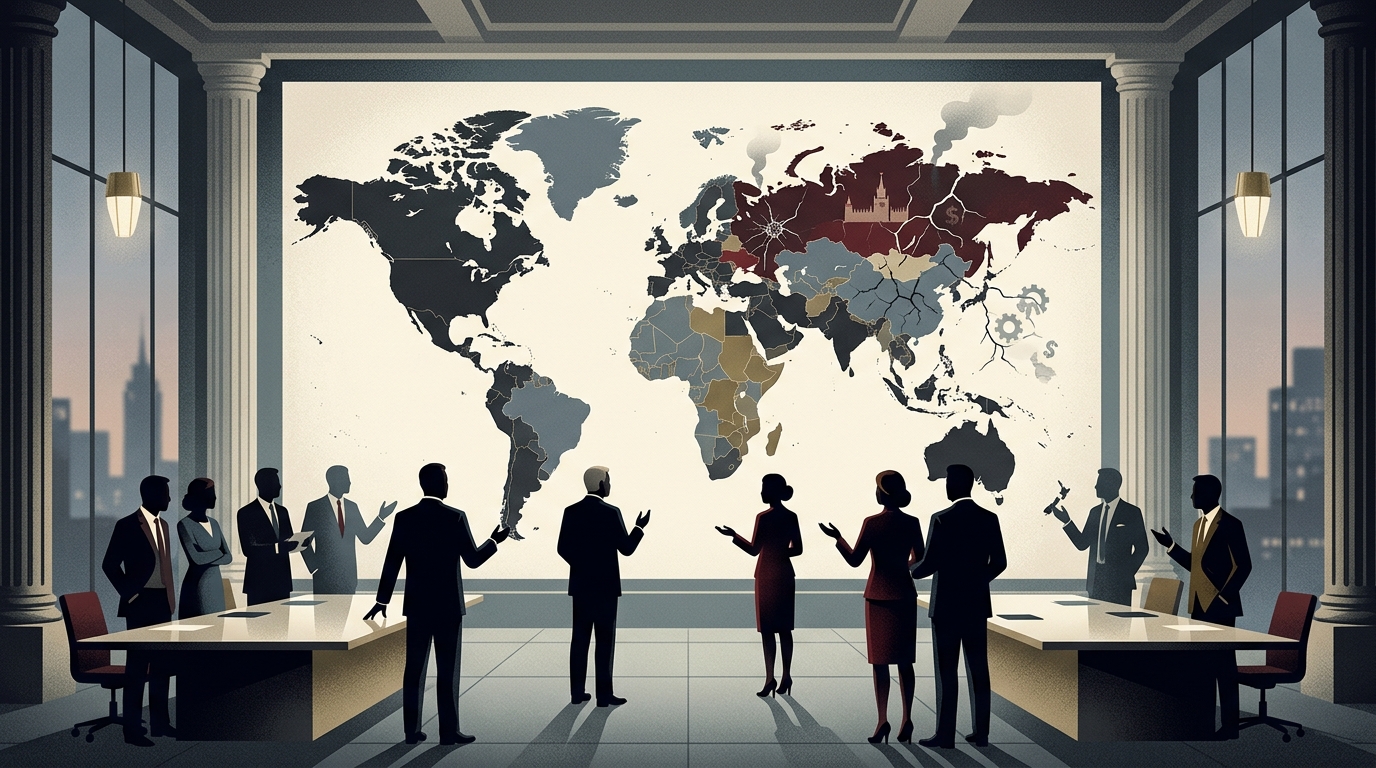
As of June 27, 2026, the image of Russia is a far cry from the superpower that attempted to impose its will on Europe four years ago. According to analyses by former Central Bank of Russia advisors and international observers, Vladimir Putin’s regime is no longer facing a sudden overthrow, but a structural disintegration fueled by the chaos of war spending and social disorganization.
The Economy of Cannibalization
The Russian economy has transformed into a mechanism that feeds on its own flesh. With 40% of the state budget now channeled directly into the war machine, the sectors of health, education, and infrastructure have been left to their fate. Alexandra Prokopenko, a former Central Bank official, points out that Moscow is trapped in a vicious cycle: to maintain the illusion of stability, it prints money, which in turn skyrockets inflation and devalues the ruble.
The most ironic phenomenon of the current crisis is the widespread fuel shortages in a country that is one of the world's largest oil producers. Drone attacks on refineries, combined with the priority given to supplying the front lines, have left Russian provinces without gasoline and diesel. "Brawls at the pumps," as reported on social media, have turned into violent clashes, undermining the social contract that promised "stability in exchange for freedom."
The Ghost of Prigozhin and New Mutinies
The memory of Yevgeny Prigozhin’s 2023 mutiny remains vivid, but today’s threats are more diffuse and less centralized. Reports of "silent mutinies" in individual frontline units are multiplying. Soldiers who haven't been paid for months and units lacking basic supplies are beginning to openly question the orders of their senior officers. The threat of a new, widespread military mutiny no longer comes from a powerful warlord, but from the collective despair of lower-ranking personnel.
- The collapse of the supply chain within Russia.
- The failure of the central command to control inflation.
- The growing dissatisfaction of soldiers' families.
- International isolation draining foreign exchange reserves.
"It’s less dramatic than a palace coup, but this is what decline looks like. The slow erosion of every state function is what will bring the end," note sources close to the country's economic elite.
The Geopolitical Trap
Internationally, Russia has become a "toxic partner." Even China, which provided an economic lifeline in previous years, now appears hesitant to invest in an economy that resembles quicksand. Dependence on Beijing has turned into vassalage, with Russia forced to sell its resources at humiliating prices to maintain liquidity flow.
The question now occupying analysts in Washington and Brussels is not whether the regime will collapse, but how to manage the chaos that will follow. A Russia in a state of internal disintegration, with thousands of nuclear warheads and an army in turmoil, represents a security nightmare that may prove more dangerous than Putin's aggression itself. History teaches us that empires rarely die quietly in their sleep; they usually collapse amidst the noise of shortages, inflation, and internal conflict.