The history of global diplomacy has traditionally been written by heads of state, career diplomats, and generals. However, the conclusion of the G7 summit in Italy—a moment we now view from the vantage point of June 2026 as the turning point for 'Algorithmic Sovereignty'—proved that the new hierarchy of power now includes the architects of silicon. The presence of OpenAI’s Sam Altman and Anthropic’s Dario Amodei in discussions with the world's most powerful leaders was not merely a ceremonial visit; it was a recognition that Artificial Intelligence (AI) is the new frontier of geopolitical confrontation.
The Diplomacy of Artificial Intelligence
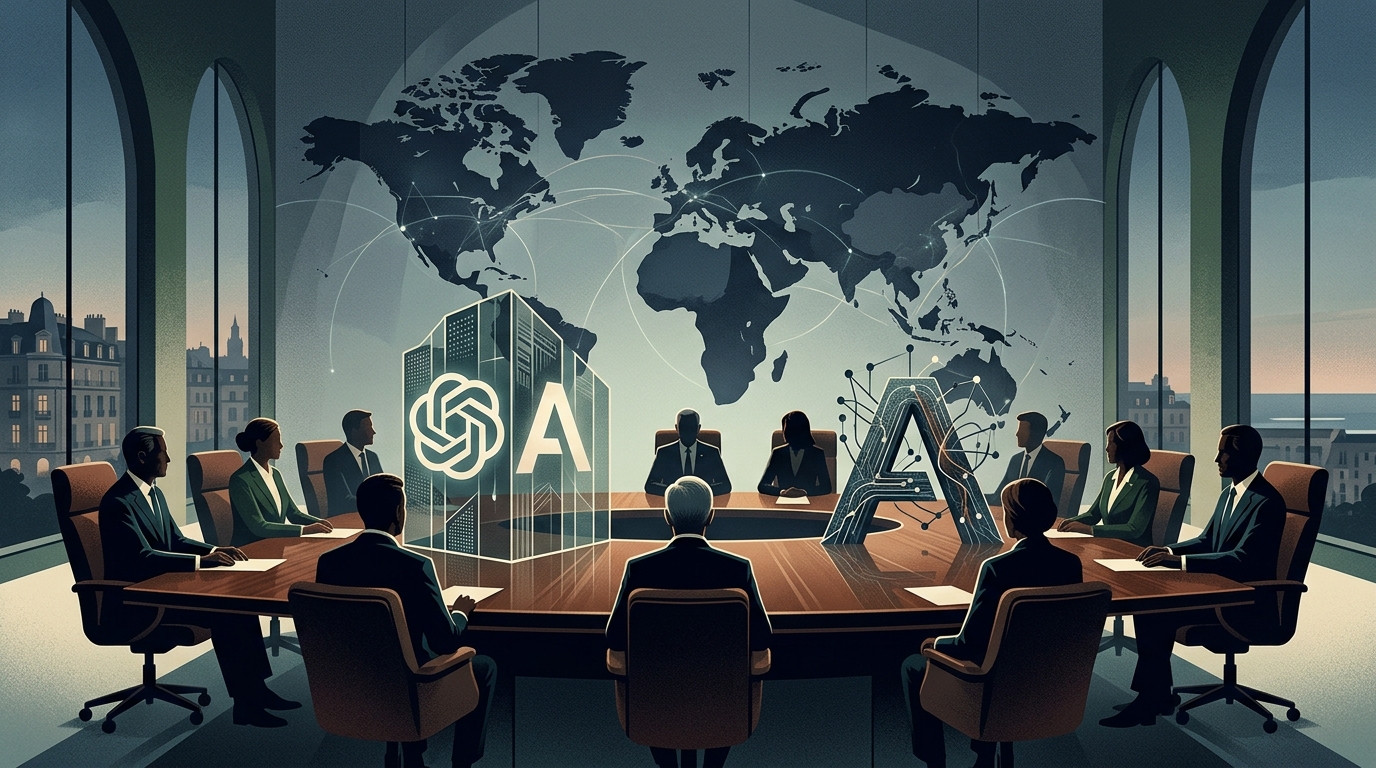
For the first time, leaders from the US, Germany, France, the UK, Italy, Canada, and Japan sat at the same table with the heads of companies that control the most advanced intelligence models on the planet. The central question was no longer whether regulation would happen, but who would define the rules of the game. Discussions focused on the safety of 'frontier' models, the protection of intellectual property, and, crucially, the risk of AI being weaponized in cyberattacks or the spread of disinformation.
The presence of Pope Francis at the summit, who spoke on the 'ethics of algorithms' (algorethics), added a unique dimension to the proceedings. His call for a human-centric approach to technology served as a moral counterweight to the raw economic and military power represented by AI. The G7 leaders, under the presidency of Giorgia Meloni, sought to balance the need for innovation with the urgent requirement for control, adopting the 'Hiroshima AI Process' framework.
OpenAI and Anthropic: The New Diplomats
For OpenAI and Anthropic, this participation constitutes a de facto recognition of their role as entities with state-like influence. Sam Altman, having conducted a global tour in the preceding months, presented AI as a 'public good' requiring international cooperation similar to that of nuclear energy. On the other hand, Anthropic’s Dario Amodei focused on the concept of 'Constitutional AI,' proposing models that self-regulate based on predefined ethical principles.
- Safety and Oversight: Agreement was reached on creating an international network of AI safety institutes.
- Economic Transition: The impact on labor markets and the need for workforce retraining were discussed.
- Geopolitical Competition: The necessity for a united Western front against the unregulated development of AI by authoritarian regimes.
However, behind the smiles and handshakes lies a deep-seated anxiety. Governments are realizing that the pace of technological evolution far exceeds their legislative capacity. The reliance on a few private companies to provide this critical infrastructure creates a new kind of 'digital feudalism,' where corporations hold the keys to knowledge and productivity.
The Challenge of Inclusivity
One of the most thorny issues discussed was the gap between the Global North and the Global South. While the G7 plans the future of AI, a large part of the planet risks being left behind, deprived of access to compute power and data. The leaders' commitment to an 'inclusive AI' remains to be proven in practice, especially regarding technology transfer and support for developing economies.
"Artificial intelligence is a tool that can liberate humanity, but only if it remains under the control of human values and not corporate profits," a European official remarked on the sidelines of the summit.
In conclusion, this meeting was not the end of a process but the beginning of a new era. Artificial intelligence is no longer a technical issue for Silicon Valley; it is the heart of global stability. As we head toward 2027, the ability of states to collaborate with tech giants—without surrendering to them—will define the peace and prosperity of our century.