

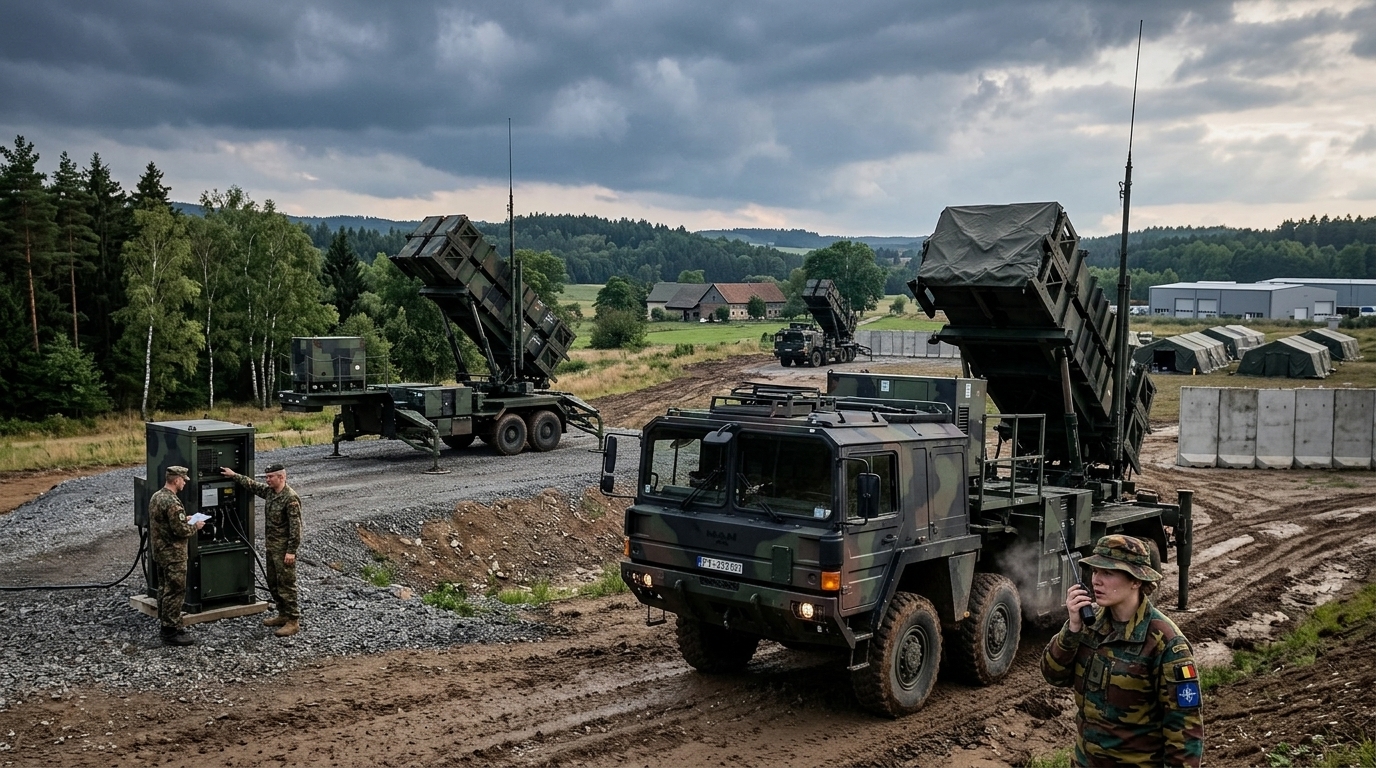
Europe's geopolitical architecture is undergoing a seismic shift. After decades defined by the post-Cold War "peace dividend," the continent is rapidly returning to a logic of hard deterrence. Recent reports indicating that approximately 12 European NATO member states are preparing to spend over $50 billion over the next decade on Deep Precision Strike (DPS) capabilities are not just news about procurement; they represent an admission of a strategic gap that has left Europe vulnerable.
For years, European defense relied on U.S. air superiority and limited stocks of air-launched cruise missiles like the British Storm Shadow and French SCALP. However, the war in Ukraine has demonstrated that in a high-intensity conflict against a peer adversary like Russia, the ability to strike deep—destroying command centers, ammunition depots, and infrastructure hundreds of kilometers behind the front lines—is the decisive factor for survival.
The Strategic Gap and the ELSA Initiative
Russia has long possessed a formidable arsenal of ballistic and cruise missiles, such as the Iskander and Kalibr, which can strike almost any point on the European continent. Conversely, Europe, constrained by the Intermediate-Range Nuclear Forces (INF) Treaty—from which the U.S. withdrew in 2019 citing Russian violations—had neglected land-based long-range systems.
In this context, the European Long-Range Strike Approach (ELSA) initiative was born. At the NATO summit in Washington, France, Germany, Italy, and Poland signed a letter of intent to jointly develop missiles with a range exceeding 500 kilometers. This move aims to reduce dependence on the United States and bolster European "strategic autonomy," a concept consistently promoted by Emmanuel Macron that is now gaining material substance through this $50 billion commitment.
Technology and Industrial Mobilization
This investment is not just about quantity; it is about technological superiority. New systems are expected to incorporate stealth technologies to evade radar, hypersonic speeds, and, most importantly, advanced Artificial Intelligence for target recognition and electronic warfare resilience. The European defense industry, led by giants like MBDA, Rheinmetall, and Saab, is being called upon to accelerate production lines—a massive challenge given the current shortages of skilled labor and raw materials.
- MBDA: The European missile powerhouse is expected to receive the lion's share of contracts for developing the Future Cruise/Anti-Ship Weapon (FC/ASW).
- German Involvement: Abandoning traditional reservations, Berlin has accepted the temporary stationing of U.S. long-range missiles on its soil starting in 2026 as a "bridge" until European systems are operational.
- Poland: Warsaw is emerging as a regional military heavyweight, investing heavily in HIMARS systems and South Korean missiles, serving as the "lighthouse" of the eastern flank.
The Geopolitical Chessboard and Risks
While framed as defensive, this move will inevitably trigger a reaction from Moscow. The Kremlin has already warned that deploying such weapons in Europe will lead to a "mirror response," heightening the risk of a new missile crisis reminiscent of the 1980s. However, for NATO planners, the absence of these weapons poses a greater danger, as it could embolden Russia in the event of an escalation.
"Deterrence only works when the adversary knows you can hit them where it hurts, with precision and speed," says a senior Alliance official.
In conclusion, the $50 billion investment marks the end of an era of innocence for Europe. The continent realizes that security is not free and that technological superiority in AI and missile tech is now a matter of national sovereignty. The remaining question is whether this arms race will lead to a stable balance of terror or an uncontrollable escalation that the Old Continent will struggle to manage.





