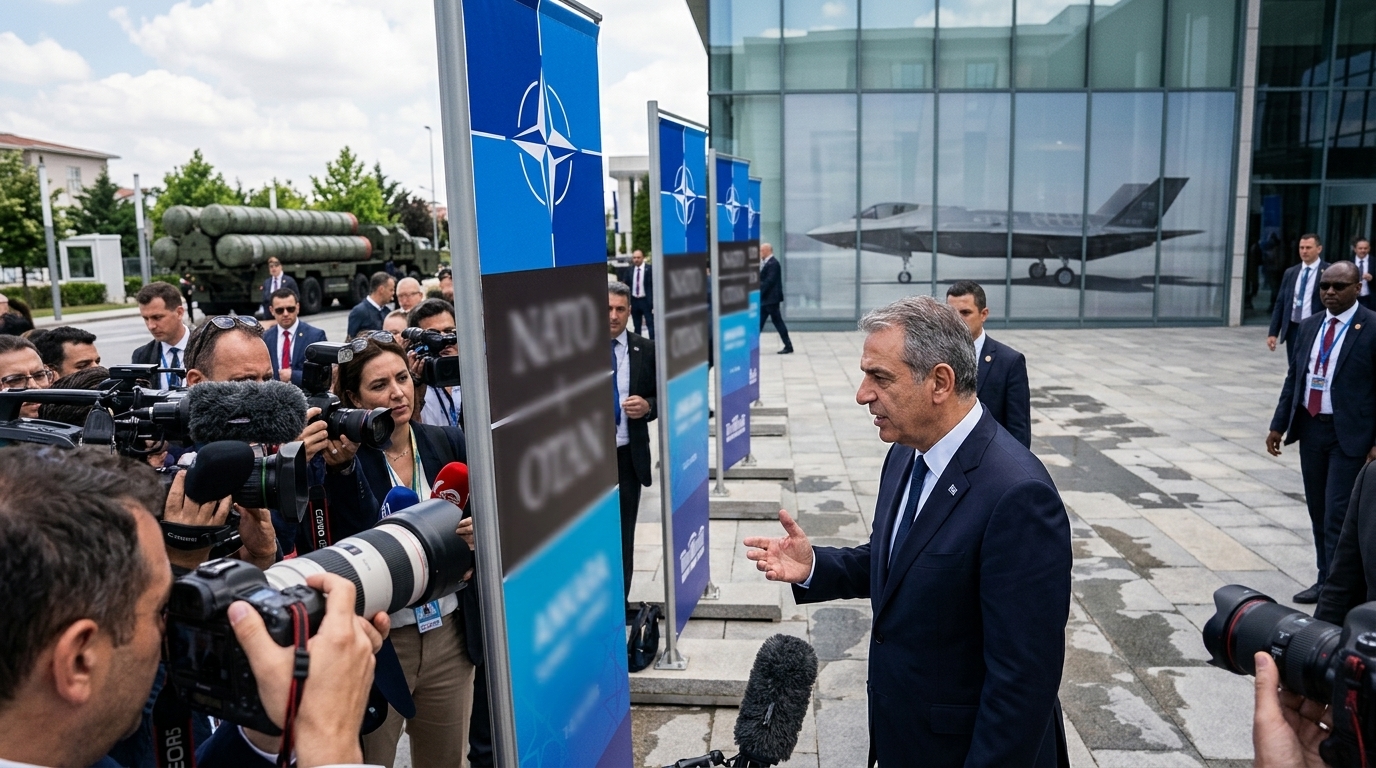
The NATO Summit has traditionally been an arena where geopolitical power meets diplomatic finesse. However, in the current context of 2026, the balances in the Eastern Mediterranean and the Alliance's security architecture are being tested by a series of complex armament programs that go beyond simple weapon procurement. At the heart of this chessboard lies Greece, seeking to capitalize on its stability, and Turkey, attempting a difficult return to the F-35 program without shedding the Russian stigma of the S-400s.
The S-400 Impasse and the F-35 Riddle
For Ankara, acquiring the fifth-generation F-35 fighter remains the ultimate strategic goal. Its expulsion from the program due to the purchase of Russian S-400s was not just a blow to its air power, but a deep rift in its relationship with the US Congress. Despite rapprochement efforts, the CAATSA (Countering America's Adversaries Through Sanctions Act) legal framework remains an insurmountable obstacle. Washington has made it clear that the coexistence of Russian air defense technology and American stealth fighters in the same network is technically and politically impossible.
Greek diplomacy, for its part, no longer focuses on a sterile denial of Turkish armaments but on creating institutional safeguards. Athens constantly emphasizes that any concession of advanced technology must be accompanied by explicit guarantees that these weapons will not be used against allies. The issue of the *casus belli* remains on the table as a reminder that normalizing relations requires more than a temporary lull in the Aegean.
The New Defense Architecture: From Purchases to Co-production
One of the most significant shifts recorded at the Summit is the emphasis on the Alliance's 'new defense architecture.' NATO doctrine is moving from individual national orders toward joint procurement and co-production. This is not just a matter of economies of scale, but also a matter of interoperability. Europe, under the pressure of geopolitical developments in Ukraine and the need for strategic autonomy, is looking for ways to strengthen its defense industry.
For Greece, this shift represents an opportunity. Participating in programs such as joint ammunition procurement or the development of European air defense systems offers not only security but also industrial benefits. The Greek defense industry, after years of stagnation, is called upon to integrate into these value chains. The stake is no longer just 'what we buy,' but 'what we co-organize' and 'what we produce' within the allied framework.
Athens' Strategy and Challenges
The Greek Prime Minister and the diplomatic team in Washington have invested in an image of a 'predictable and reliable ally.' This approach has borne fruit, with the Greek F-35 program proceeding normally, ensuring the Hellenic Air Force a qualitative advantage for the next decade. However, the challenge remains maintaining this balance in an environment where the US seeks to keep Turkey tethered to the Western chariot.
- Ensuring the balance of power in the Aegean through the qualitative superiority of the F-35s.
- Utilizing US Excess Defense Articles (EDA) to strengthen the Army and Navy.
- Pressuring for the removal of Turkish threats as a prerequisite for any upgrade of the Turkish air force.
Ultimately, the Summit's 'balance sheet' shows that security in the region depends not only on the number of aircraft but on the stability of alliances. Greece seems to understand that its power stems from alignment with international norms, while other players struggle with the contradictions of their choices.
"Defense is not an end in itself, but the means to defend sovereignty and peace. In the NATO of 2026, credibility is the most expensive currency."