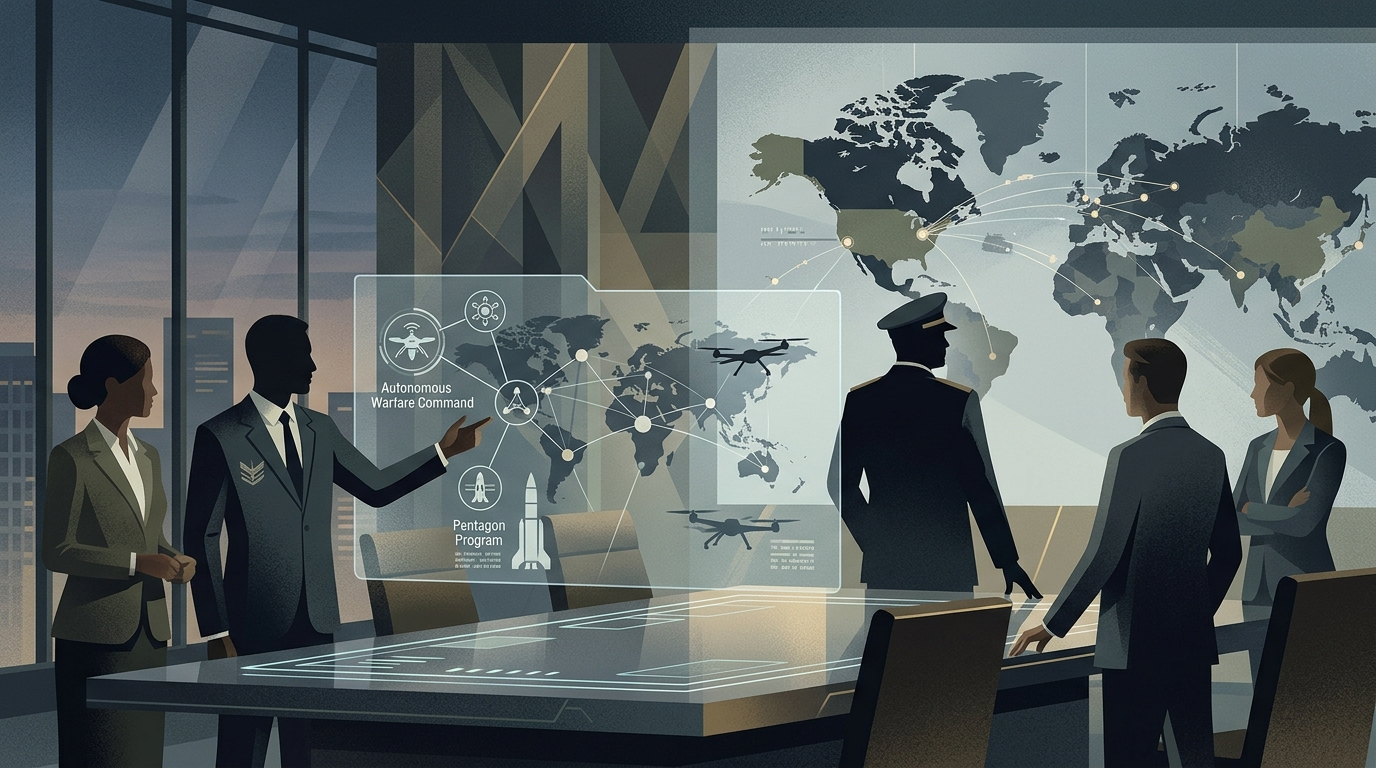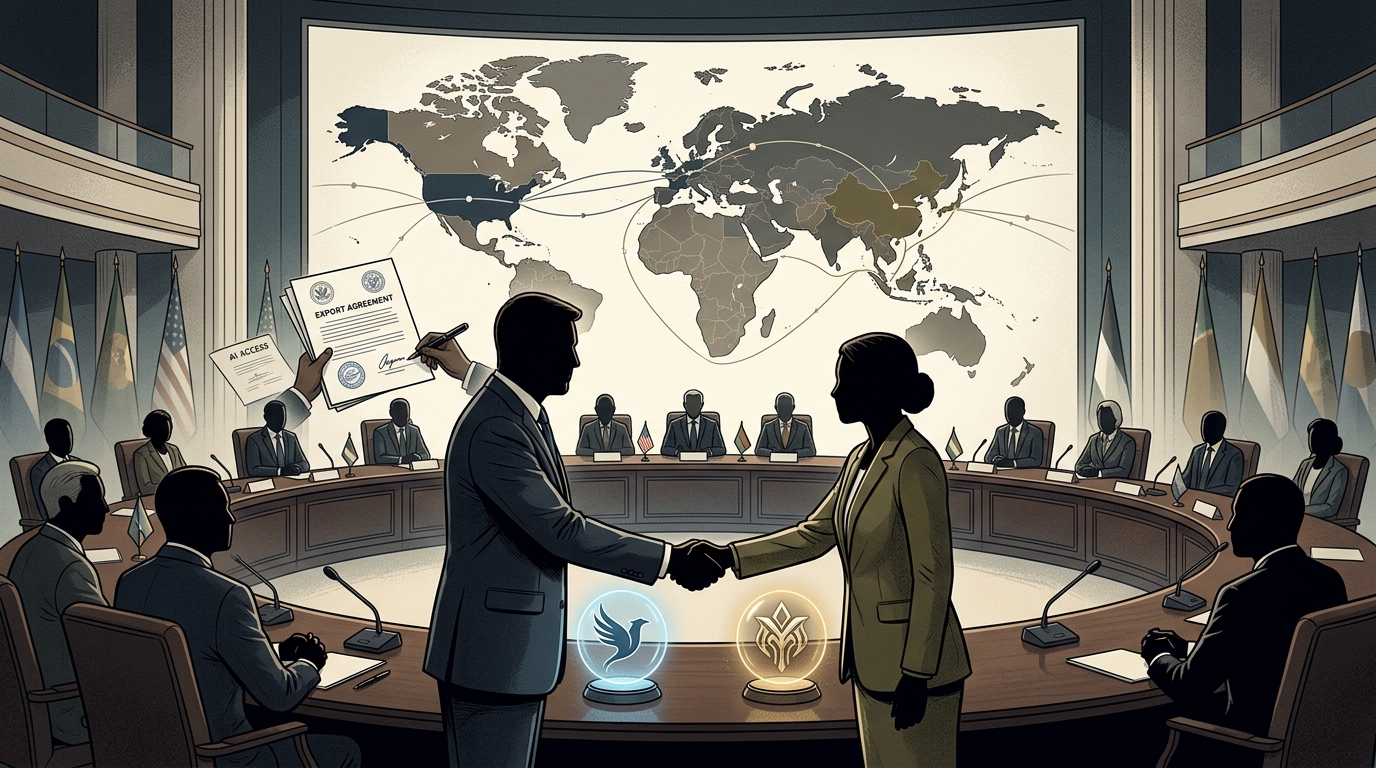
In a historic turning point for global technological geopolitics, the Trump administration has announced the lifting of stringent export restrictions that previously prevented Anthropic from deploying its most advanced models, Claude Fable 5 and Mythos 5, to selected international markets. This decision, following months of intense deliberations between the Department of Commerce and Silicon Valley giants, marks the end of a period of 'technological isolationism' and the beginning of a new strategy analysts are calling 'AI Statecraft.'
Washington’s Strategic Pivot: From Protection to Dominance
This move is not merely a commercial facilitation; it is a profound political choice. Throughout the first half of 2026, the debate in Washington focused on the risks posed by the leakage of 'frontier models' to rival powers, primarily China. However, the Trump administration appears to have concluded that restricting American companies created a power vacuum that Chinese firms like Baidu and Alibaba were eager to fill.
According to sources close to the White House, the new direction is based on the doctrine that American influence is best secured when the world uses American tools, even if they come with certain risks. "If we do not export our values through code, others will export theirs," a senior Department of Commerce official stated. The lifting of restrictions primarily concerns NATO allies, Gulf states, and strategic partners in the Indo-Pacific region, provided they adhere to specific cybersecurity protocols.
Claude Fable 5 and Mythos 5: Anthropic’s New Crown Jewels
The Claude Fable 5 and Mythos 5 models represent the pinnacle of 'Constitutional AI.' Fable 5 is designed for complex strategic analysis and scientific research, featuring a context window reaching 5 million tokens, allowing for the processing of entire libraries in seconds. On the other hand, Mythos 5 focuses on 'creative empathy' and advanced user interaction, making it ideal for diplomatic and educational applications.
Anthropic, which has traditionally maintained a more conservative stance on safety issues compared to OpenAI, found itself in a paradoxical position. While its models are the most shielded against generating dangerous content, previous regulations treated them as 'dual-use' technology, akin to nuclear weaponry. Lifting these restrictions allows the company to compete on equal footing in a global market expected to generate billions in government contracts across Europe and Asia.
Geopolitical Implications and the European Reaction
This decision is causing ripple effects in Brussels. As the EU attempts to implement its AI Act, the sudden availability of Anthropic’s models creates a dilemma: should they allow the free use of these powerful tools to boost productivity, or impose additional restrictions of their own, risking falling behind technologically?
- Strengthening Alliances: Washington is using access to Fable 5 as a diplomatic incentive for signing defense agreements.
- Pressure on China: This move forces Beijing to accelerate its own exports, potentially bypassing safety checks.
- Economic Protectionism: Anthropic is required to maintain data centers for 'exportable' models on US soil or in approved zones, ensuring data sovereignty.
However, skeptical voices remain. Digital rights organizations warn that exporting such powerful models to authoritarian regimes—even with 'democratic safeguards'—could lead to new forms of surveillance and social control. Anthropic maintains that its models' 'Constitution' is inviolable, but in practice, local fine-tuning remains a grey area.
Conclusion: The New Normal
The Trump administration’s decision regarding Anthropic serves as a prelude to an era where AI is no longer a laboratory experiment but the primary export of American power. At the dawn of the second half of 2026, the battle for cyberspace dominance is shifting from chips to algorithms, and Anthropic, with the White House's blessing, is now at the forefront of the offensive.