South Korea, the nation that once stood as the undisputed leader of the global cultural renaissance through the "Korean Wave" (Hallyu), is currently at a critical crossroads. Despite the historic success of films like 'Parasite' and series like 'Squid Game', Seoul's domestic film industry is bleeding. Declining box office revenues, skyrocketing production costs, and shifting consumer habits have created an explosive cocktail that threatens the survival of traditional studios. In this bleak landscape, Artificial Intelligence (AI) is no longer viewed as a future threat, but as perhaps the only path to salvation.
The Fall of a Giant and the Digital Escape
For decades, South Korean cinema relied on a high-budget model emphasizing artistic excellence and local identity. However, the pandemic and the subsequent dominance of streaming platforms changed the game. Korean viewers, once among the most loyal theater-goers worldwide, now prefer the comfort of their couches, leaving cinema halls empty. According to recent data, the production cost of an average Korean film has increased by 30% over the last three years, while box office receipts remain stuck at pre-2019 levels.
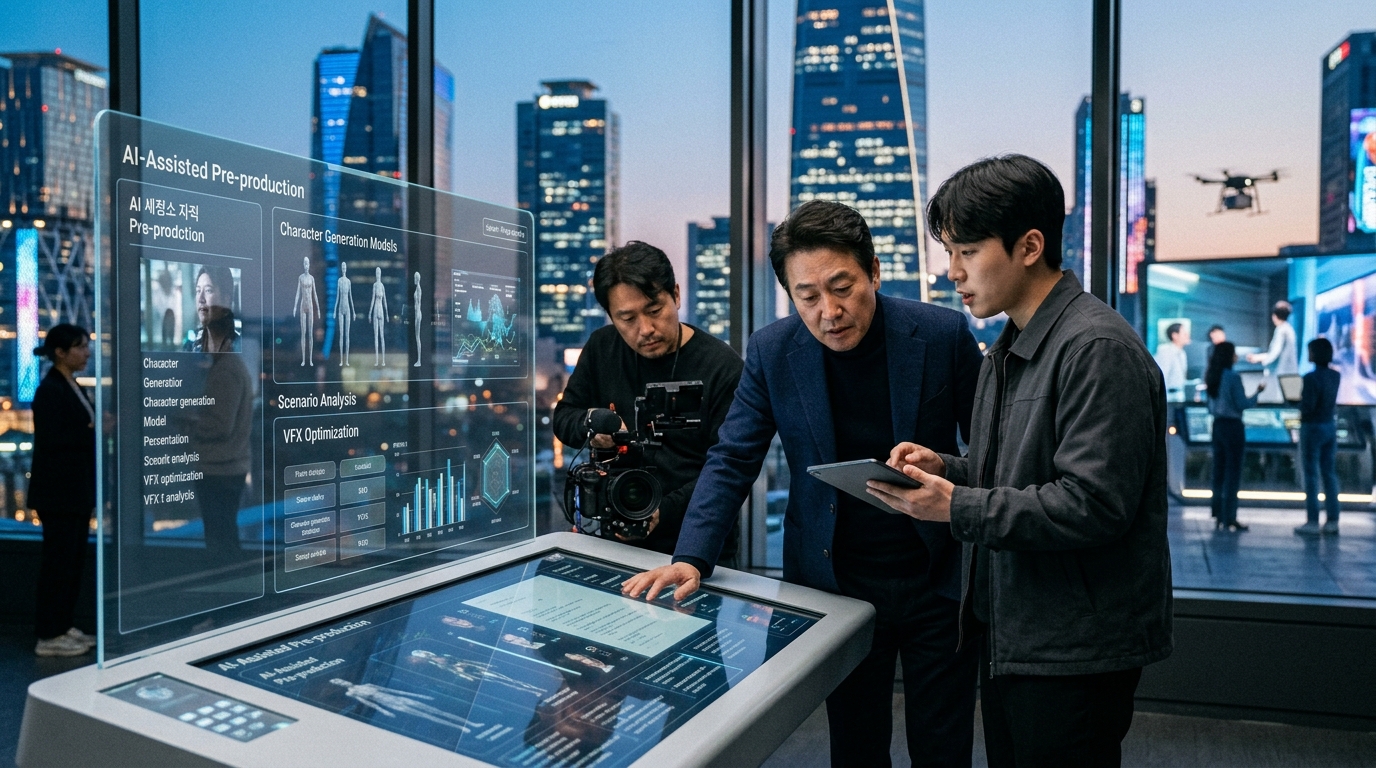
In this context, the appearance of two feature films in Korean theaters, built largely with generative AI tools, marks the beginning of a new era. This isn't just about visual effects. AI was used for scriptwriting, storyboarding, and even producing visual content that would have required hundreds of hours of human labor and millions of dollars in investment.
Resource Optimization and Creative Freedom
The use of AI in Korean cinema is not just a matter of cost, but also of speed. In East Asia's competitive market, the ability to produce high-quality content in record time is decisive. Generative AI tools allow creators to experiment with visual styles that would have previously been budget-prohibitive for a non-Hollywood production.
- Reduction of post-production costs by up to 60%.
- Ability to create realistic sets without the need for physical locations.
- Use of AI-generated actors for minor roles, reducing payroll expenses.
- Automated translation and subtitling for immediate global distribution.
However, this shift is not without pushback. Technical labor unions and actors' guilds are expressing serious concerns about the devaluation of their profession. The debate in Seoul closely mirrors the recent strikes in Hollywood, with the difference that in Korea, the economic pressure is so immense that resistance often yields to the necessity of survival.
The Ethical Dilemma and the Identity of K-Content
The big question looming over South Korea's film industry is whether AI will dilute the "soul" of its works. Korean cinema is famous for its deep emotion, social critique, and human complexity. Can an algorithm replicate the anguish of the protagonists in 'Oldboy' or the class rage of 'Parasite'?
Proponents of the technology argue that AI is merely a tool, much like the digital camera once was. "Creativity remains human; AI simply removes the technical barriers," state producers who have already integrated AI into their workflows. Nevertheless, the risk of a "homogenized" aesthetic is real. If all films begin using the same image generation models, the uniqueness that made Korean cinema a global phenomenon might be lost.
"We aren't choosing AI because it's the trend of the moment. We are choosing it because without it, in two years, there won't be a Korean film industry to talk about," says an executive from a major distribution company in Seoul.
In conclusion, South Korea is acting as the global laboratory for the future of cinema. The success or failure of AI-based films in Korean theaters will largely determine the industry's trajectory worldwide. It is a battle between economic survival and artistic integrity, in a country that has proven its ability to reinvent itself through technology.