The history of space exploration has always been a battle against gravity, but in 2026, it seems the greatest challenge isn't physics, but the calendar. In a recent Ars Live discussion, the analysis of the current state of heavy-lift rockets revealed an uncomfortable truth: despite spectacular tests and optimistic proclamations, NASA remains tethered to technologies that are not yet ready to shoulder the burden of human presence beyond Low Earth Orbit (LEO).
Starship and the Refueling Enigma
SpaceX’s Starship remains the most ambitious undertaking in rocketry history. However, the distance between a successful test flight and certification for carrying astronauts to the Moon is a chasm. The primary hurdle is no longer just the launch, but orbital refueling. For Starship to reach the Moon as part of Artemis III, multiple "tanker" flights are required to transfer propellant to a central depot in space.
Analysts point out that cryogenic fluid transfer in microgravity is a technology that has never been demonstrated at this scale. SpaceX promises speed, but history shows that Elon Musk frequently underestimates technical difficulties by years. If refueling isn't perfected within the next 18 months, the date for the 21st century's first lunar landing will inevitably slip toward the end of the decade.
New Glenn: The Sleeping Giant
Jeff Bezos’ Blue Origin, with its motto "Gradatim Ferociter" (Step by step, ferociously), seems to have taken the first half of that slogan very seriously. The New Glenn rocket is essential for creating competition and providing alternatives to NASA. Despite massive infrastructure investments at Cape Canaveral, New Glenn has yet to make its maiden flight.
This delay doesn't just hurt the company's prestige; it impacts U.S. strategic planning. Without New Glenn, the heavy-lift market remains a duopoly between SpaceX and the exorbitant SLS. The market needs a second player to drive down costs and increase launch cadence, but Blue Origin appears trapped in a culture of excessive caution that stands in stark contrast to SpaceX’s "fail fast" mentality.
The SLS Dilemma and the Cost of Continuity
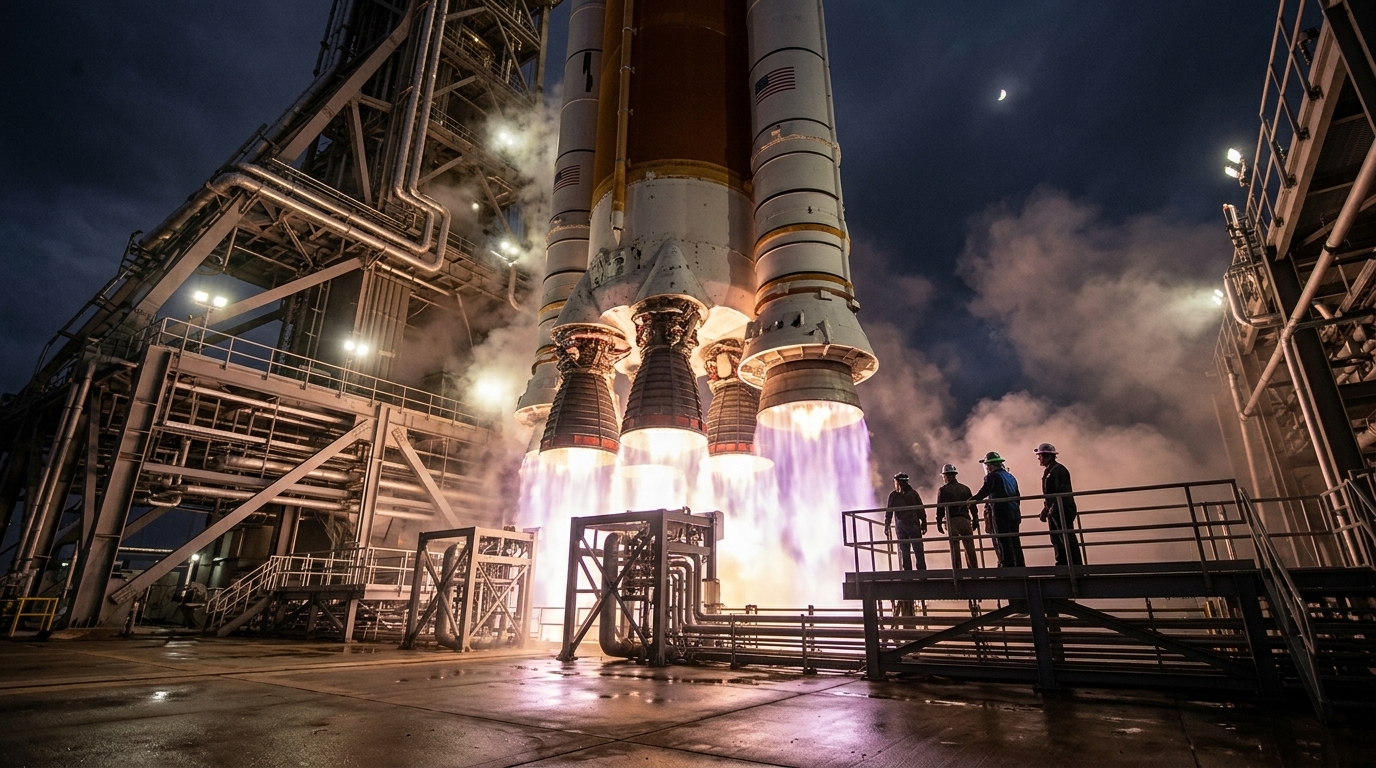
NASA’s Space Launch System (SLS) is currently the only operational rocket for Artemis missions, but its cost is astronomical. With each launch estimated to cost billions, the SLS is economically unsustainable in the long run. Furthermore, its production rate is agonizingly slow. NASA finds itself in a peculiar position: it desperately needs the private sector to replace its own creation, yet it cannot abandon the SLS until those private partners prove they can deliver.
During the Ars Live discussion, it was emphasized that political pressure from Congress keeps the SLS alive, as it secures jobs across many states. However, this political necessity drains resources from developing newer, more efficient technologies. The "tyranny of the schedule" means NASA might be forced to launch Artemis II late, simply because the SLS supply chain cannot keep up.
Geopolitics and the Shadow of China
While the U.S. struggles with private sector timelines, China is moving methodically. Beijing does not face the same bureaucratic or stock market pressures. The development of the Long March 10, the rocket intended to carry Chinese taikonauts to the Moon, is progressing without the public friction seen in the West. If SpaceX and Blue Origin fail to meet their marks, there is a distinct possibility that the next flag planted on lunar soil will not feature stars and stripes. NASA needs these rockets not just for science, but for the maintenance of American space hegemony.