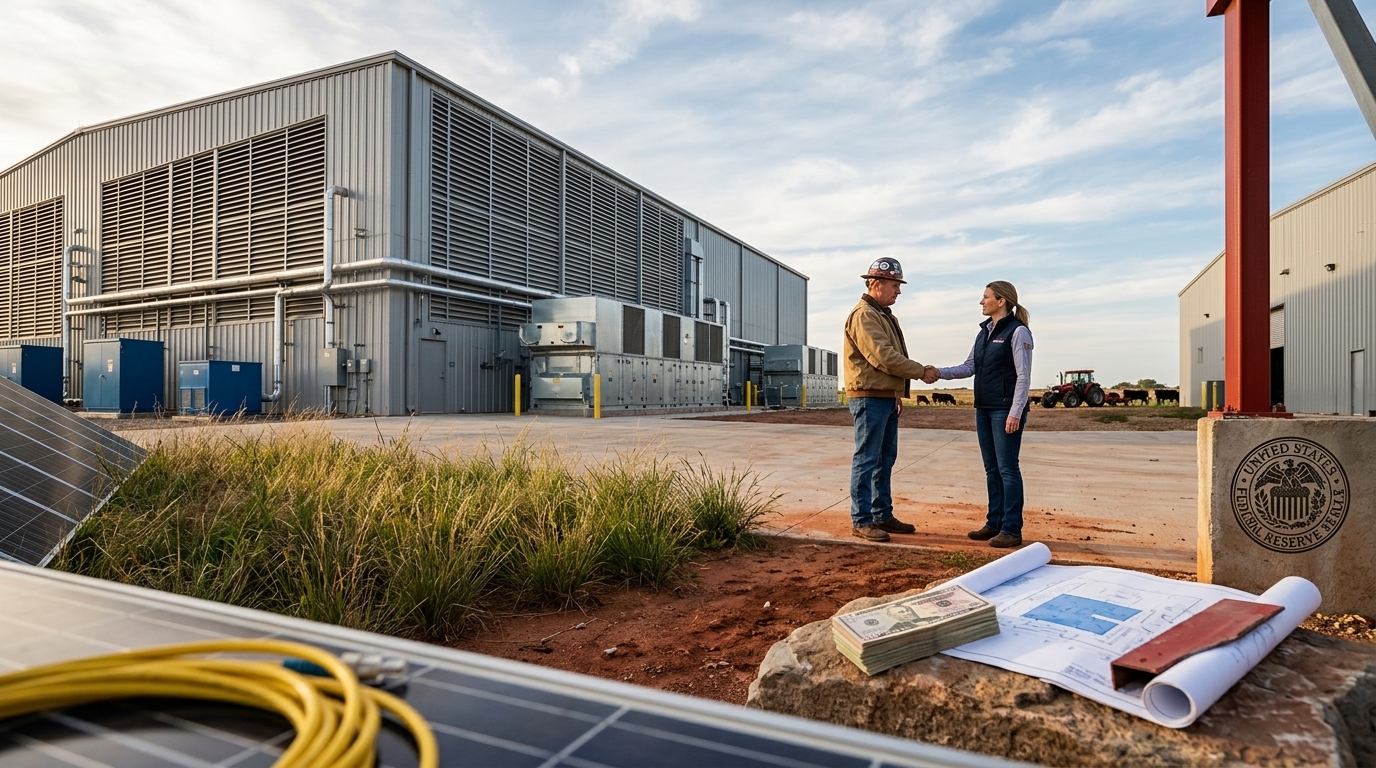
The global technology industry is facing an ironic reality: while Artificial Intelligence promises to optimize everything from medicine to supply chains, its very existence depends on the most fundamental need of the industrial age: electricity. In the United States, this need is now translating into a financial storm expected to reach $200 billion in mergers and acquisitions (M&A) within the energy sector, as Silicon Valley giants scramble to secure power for their data centers.
The Insatiable Hunger of Generative AI
The transition from traditional web searching to Generative AI has radically altered the landscape of power consumption. A single query on ChatGPT requires up to ten times more electricity than a standard Google search. As companies like Microsoft, Amazon, and Google integrate AI into every facet of their services, the demand for "baseload power"—energy that is available 24/7 regardless of weather conditions—has skyrocketed.
This pressure is forcing tech companies to move beyond being mere utility customers to becoming strategic partners or even owners of energy infrastructure. Analysts predict that the next twelve months will witness a series of massive deals, with tech titans acquiring or financing the revival of mothballed nuclear plants and the construction of new natural gas units to safeguard their growth trajectories.
The Nuclear Renaissance and the Natural Gas Paradox
One of the most striking features of this new investment wave is the return to nuclear energy. Microsoft’s recent agreement with Constellation Energy to restart the reactor at Three Mile Island is just the tip of the iceberg. Nuclear plants offer exactly what AI needs: massive power output with zero carbon emissions, allowing Big Tech to meet environmental pledges while simultaneously increasing consumption.
However, nuclear energy alone is not enough. The US energy sector recognizes that to bridge the gap until renewables and storage are fully deployed, natural gas will remain a "critical pillar." This is driving industry consolidation, with larger power producers acquiring smaller players to achieve economies of scale and manage the staggering costs of grid modernization. The $200 billion forecast reflects the necessity for an energy sector large and stable enough to support the digital infrastructure of the future.
Grid Challenges and Geopolitical Implications
The challenge is not just generation, but transmission. The US power grid is antiquated in many regions, and connecting new data centers can take years. The acquisitions we are witnessing often target companies that already possess secured grid interconnection rights—assets now considered more valuable than the land or equipment itself.
On a geopolitical level, a nation's ability to provide cheap and abundant energy for AI is now viewed as a matter of national security. If the US fails to upgrade its infrastructure through this wave of private investment, it risks losing its lead in the AI race to competitors investing heavily in state-led energy projects. This $200 billion wave is not merely a stock market headline; it is a prerequisite for the survival of the American technological dream.
The Future of the Market
As we head toward 2027, the distinction between "tech company" and "energy company" will become increasingly blurred. We will see more "vertical integration," where data centers are built directly adjacent to power sources (behind-the-meter), bypassing the public grid. This will create a new class of energy titans controlling the flow of both information and electricity, reshaping the global economy in ways we are only beginning to comprehend.