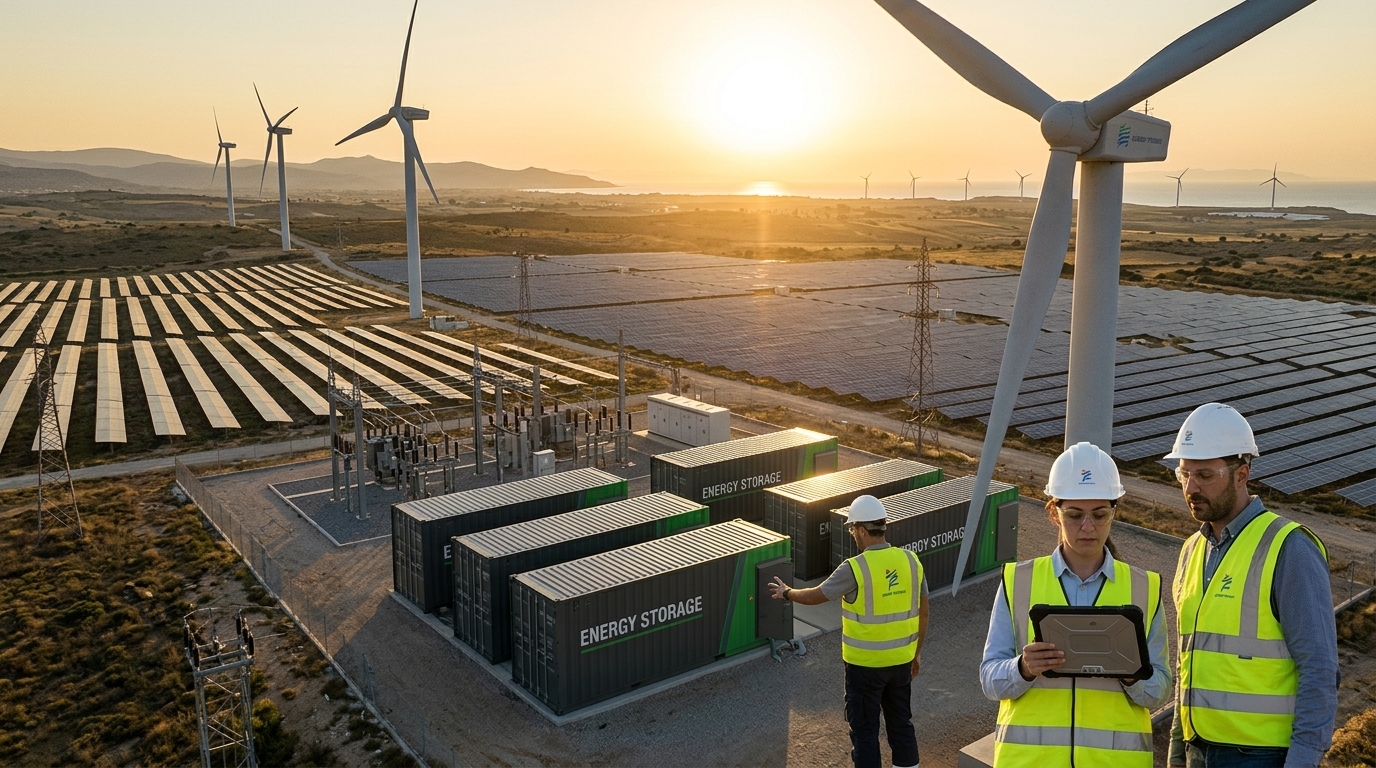
In the energy sector, avoiding an investment does not always equate to savings. In Greece's case, the delay in developing electricity storage infrastructure has created a paradox: the economic cost of non-stored energy is now approaching the cost of the infrastructure that was never built.
The Curtailment Paradox
With installed Renewable Energy Sources (RES) capacity exceeding 11-12 GW, the country faces intense congestion during midday hours. This leads to green energy curtailments surpassing 1,500 GWh annually. This quantity represents 50% to 55% of the country's total net annual exports, many of which occur during hours of zero or even negative wholesale prices.
Financial Hemorrhage
The loss of this energy forces the system to meet evening peak demands through fossil fuels. According to the data:
- Approximately 250 to 280 million cubic meters of natural gas are required annually to fill the gap.
- The cost of fuel and emissions amounts to €180 to €200 million every year.
- This figure remains consistently high, whether due to natural gas prices (as in 2021) or the cost of CO2 emission rights (as in 2026).
European Experience and Strategy
While vertically integrated groups are a common feature in markets such as France, Germany, and Italy, the difference lies in the speed of integrating flexibility infrastructure. In Greece, the rapid penetration of RES was not accompanied by a corresponding development in storage, leaving the country vulnerable to price fluctuations and dependent on imports and natural gas.
The question is not whether battery investments would yield profits, but whether the country could have achieved lower gas consumption and a better energy balance. Energy economics evaluates results, and current data suggests that Greece chose to pay the cost of storage in a different, less efficient manner.