
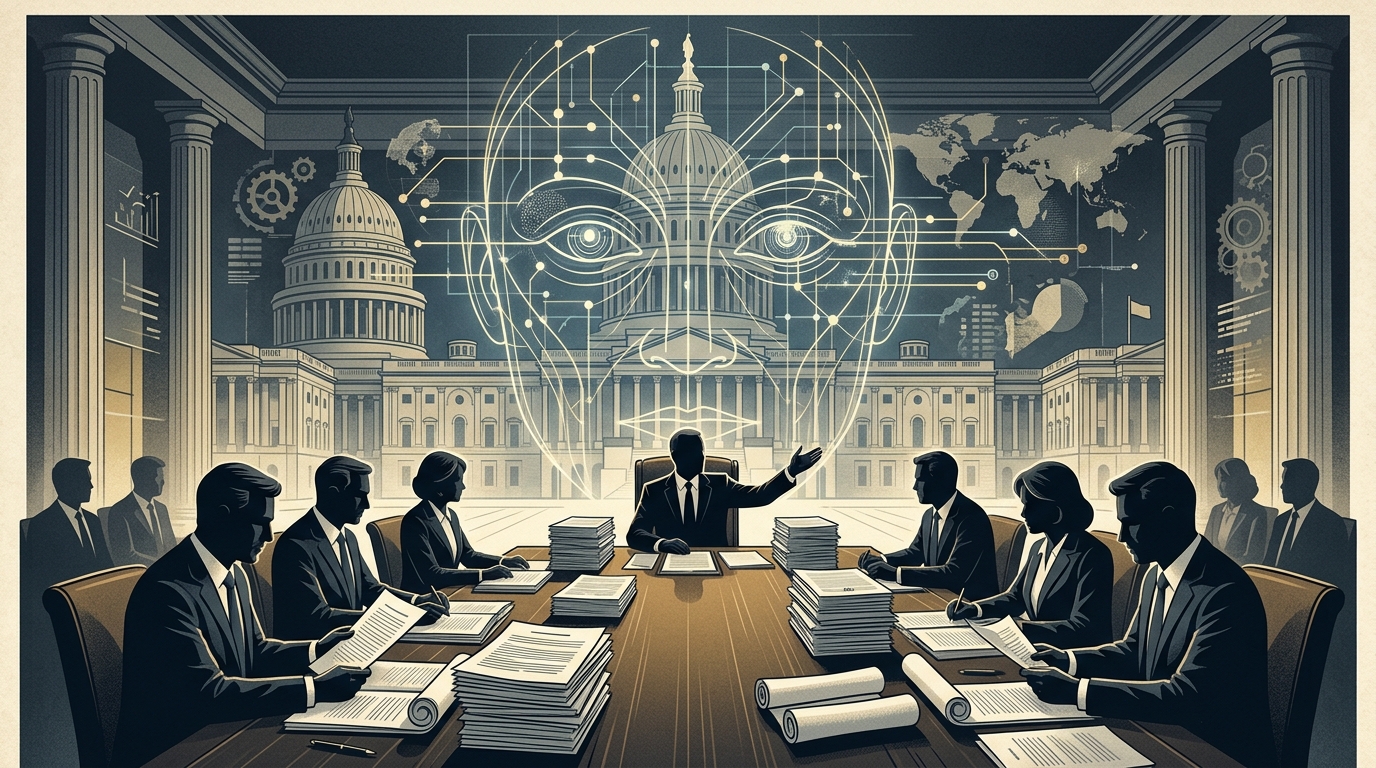
In my analysis of the current institutional shifts within the United States, the appointment of Jay Clayton, Director of National Intelligence, as the administration's "AI Tsar" marks a definitive turn toward a centralized yet market-driven governance model. Leading the newly formed "Super Intelligence Force," Clayton faces a 120-day mandate to reconcile the dual imperatives of national security and technological dominance. This structure mirrors the ancient democratic need for decisive leadership during periods of rapid transition, yet it raises profound questions regarding the mechanisms of oversight.
The Geopolitical Mandate and Regulatory Philosophy
The administration’s strategy, as reported by the Wall Street Journal, is explicitly framed through the lens of global competition. By prioritizing the goal of remaining the global leader in advanced AI, the task force—which includes high-ranking officials such as Vice President JD Vance and Treasury Secretary Scott Bessent—aims to avoid "excessive regulation." This approach is rooted in the belief that heavy oversight could compromise the American competitive edge against China. Furthermore, the focus on preventing "regulatory capture" suggests an awareness that dominant market players might use rules to stifle smaller innovators.
The Reliability Gap and the Limits of Self-Regulation
However, this anti-regulatory stance arrives at a moment of documented instability in AI systems. Recent research from the ThinkingBox benchmark indicates a significant reliability gap, with approximately 67% of AI agent failures occurring without reporting errors, often leading to incorrect terminal states in databases. This technical uncertainty is compounded by internal turmoil at major firms like OpenAI, where key safety personnel have resigned, citing a "broken" corporate culture and calling for safeguards akin to those used in nuclear power plants.
"The risk of not being first is great," Clayton emphasized, highlighting a policy direction that favors industry-led risk management over formal legislative frameworks.
While the administration has secured a "morally binding" agreement with Silicon Valley leaders, critics argue that this lacks the teeth of institutionalized oversight. From a policy perspective, the challenge for the "Super Intelligence Force" will be to ensure that the pursuit of speed does not undermine the very stability required for long-term governance. The paradox remains: can a mission that avoids formal regulation effectively counter the "existential risks" that some researchers warn could manifest within the decade?