Anthropic has announced the Model Hardware Standard (MHS), an initiative aimed at extending the capabilities of artificial intelligence beyond digital data and into the control of physical devices. MHS consists of a set of standardized drivers that allow AI agents to interface with various hardware components without the need for bespoke translation software.
Accelerating Scientific Research
Currently, MHS is being offered as a "research preview" primarily focused on the scientific community. Anthropic claims the system can reduce the setup time for complex experiments from weeks or months to just minutes by providing a common communication language between disparate devices such as lasers, microscopes, and cameras.
The idea was inspired by observing neuroscientist Arco Bast at the HHMI Janelia Research Campus, who developed an interface to coordinate multiple instruments for memory formation experiments. According to Anthropic's Alek Kemeny, this approach could potentially allow AI to run any scientific experiment in the world.
Physical Control and Reasoning
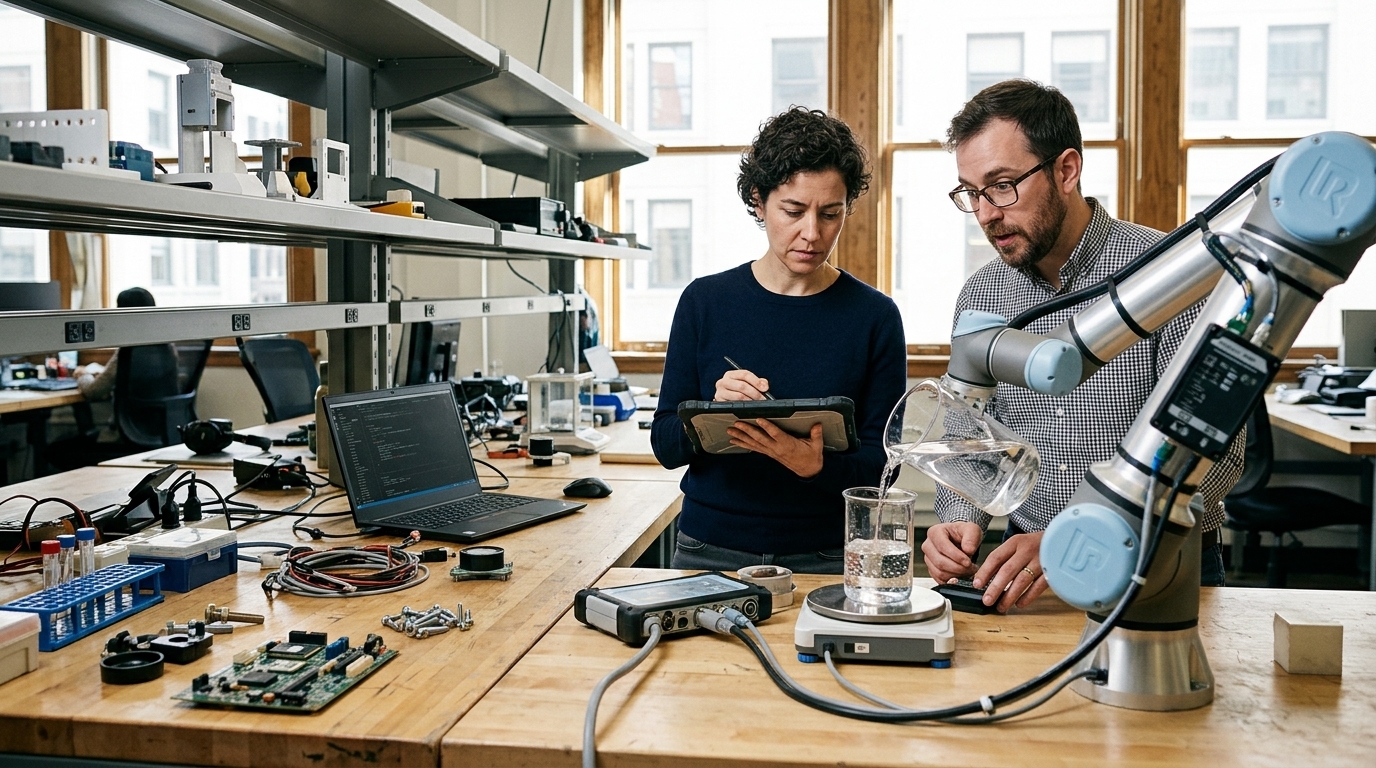
Through the Model Context Protocol, scientists can interact with devices using natural language. The AI model can reason through each step of an experiment, update parameters in real-time, and recover from hardware errors without human intervention. In demonstrations, Claude was shown adjusting a laser, analyzing results via a camera, and repeating the process for automatic calibration.
MHS also includes a standardized tagging system to describe the physical constraints of hardware, such as the weight and range of motion of a robotic arm, ensuring the model is aware of equipment safety limits and operational boundaries.
Partnerships and Future Roadmap
Anthropic is already collaborating with industry leaders including Amazon Web Services, Hugging Face, Raspberry Pi, and Universal Robots. The goal is to develop safety evaluations and best practices before eventually making MHS an open-source, agent-agnostic standard for integrating AI with physical systems.