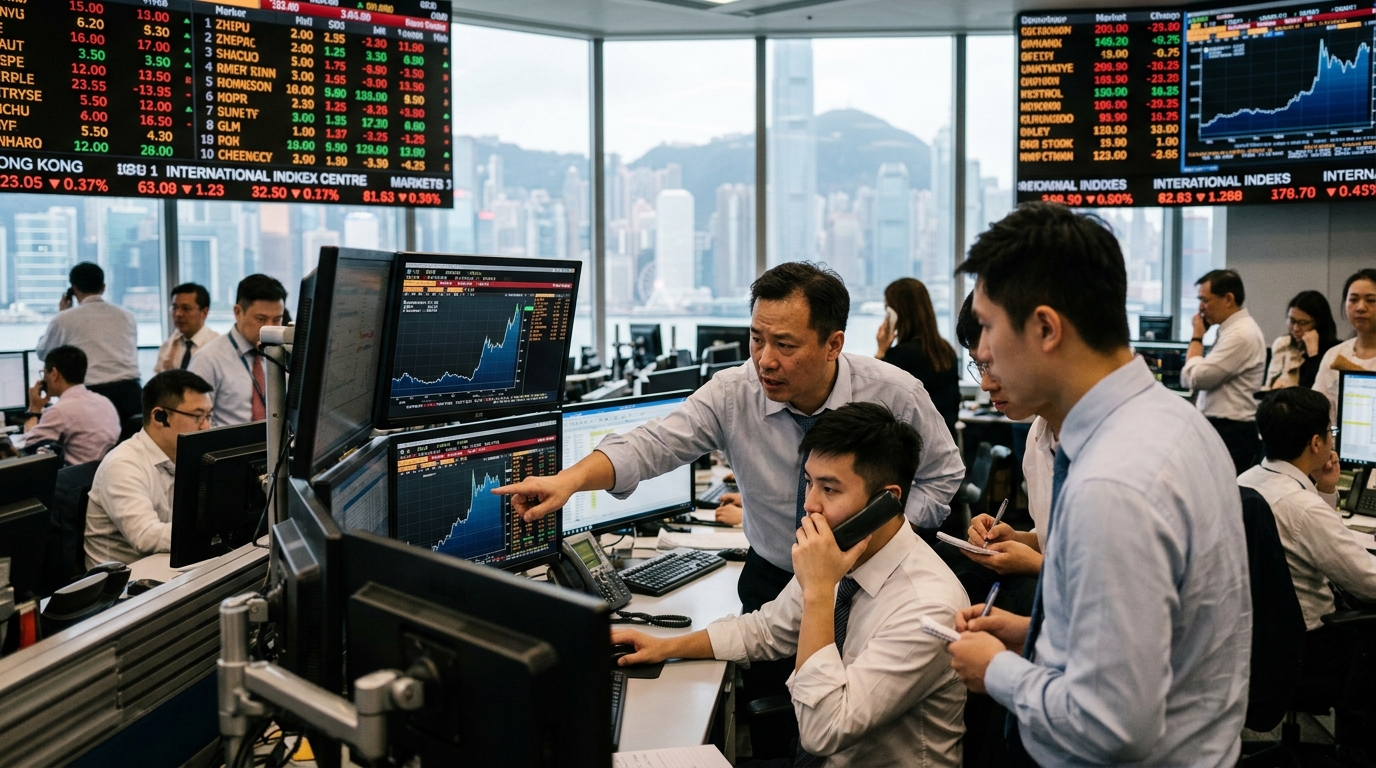
On June 22, 2026, the global artificial intelligence landscape is witnessing a tectonic shift that many analysts are already calling the "DeepSeek 2.0 Moment." Zhipu AI, the premier Chinese startup born from the laboratories of Tsinghua University, has seen its market capitalization soar past the historic HK$1 trillion mark (approximately US$128 billion). This news, coupled with the official launch of the GLM-5.2 model, has sent shockwaves through Wall Street, forcing investors to re-evaluate Silicon Valley's long-standing dominance.
The Rise of Zhipu AI and the Technical Prowess of GLM-5.2
Zhipu AI is no longer a mere follower of Western developments. With the release of GLM-5.2, the company has demonstrated that its model architecture can deliver performance exceeding OpenAI's GPT-5 in specific domains, such as mathematical reasoning and coding, while consuming only 40% of the computational power. This efficiency is the cornerstone of its success. In a world where access to advanced semiconductors (like NVIDIA's H100 and B200) is hampered by geopolitical sanctions, Zhipu has managed to innovate through algorithmic optimization.
GLM-5.2 introduces a new "Dynamic Reasoning" method, allowing the model to adjust its depth of thought based on the complexity of the query. This feature, reminiscent of the DeepSeek philosophy, has made Zhipu the preferred choice for Chinese enterprises and international conglomerates looking for economically viable AI solutions. The market responded immediately, with the company's shares in Hong Kong rising 15% in a single trading session.
Economic Impact: Wall Street on High Alert
Surpassing the HK$1 trillion milestone is not just a number; it is a clear signal to American capital markets. Analysts at Goldman Sachs and Morgan Stanley are noting that capital is beginning to flow East as the cost-performance ratio of Chinese AI models becomes irresistible. While Microsoft and Google spend billions on cloud infrastructure, Zhipu AI proves that intellectual property and algorithmic ingenuity can compensate for a lack of hardware.
- Capital Flight: Major New York hedge funds have begun trimming their positions in second-tier US AI firms to take positions in Zhipu and its ecosystem.
- Enterprise Adoption: Over 70% of Fortune 500 companies in Asia have already integrated Zhipu's API into their operations.
- Valuation: Zhipu AI is now valued higher than traditional tech giants, securing a spot alongside the likes of ByteDance and Tencent.
Geopolitics and the Future of AI
The success of Zhipu AI represents a significant victory for China's strategy of "self-reliance." Despite US chip export restrictions, China has managed to build an ecosystem that does not rely solely on raw compute power. GLM-5.2 is the product of a culture forced to innovate under pressure, and the results are now visible on a global scale. The "DeepSeek 2.0 Moment" marks the end of American unipolarity in AI and the beginning of an era of true bipolarity.
"We are not just seeing a new company rise; we are seeing proof that efficiency can defeat abundance," a senior analyst told Bloomberg.
In conclusion, Zhipu AI and GLM-5.2 are not just technological milestones; they are symbols of a new economic reality. Wall Street may still dominate in dollars, but Hong Kong and Beijing seem to be winning the battle of the algorithms. The coming months will be critical for how Silicon Valley responds to this challenge, as GLM-5.2 continues to shatter one record after another.