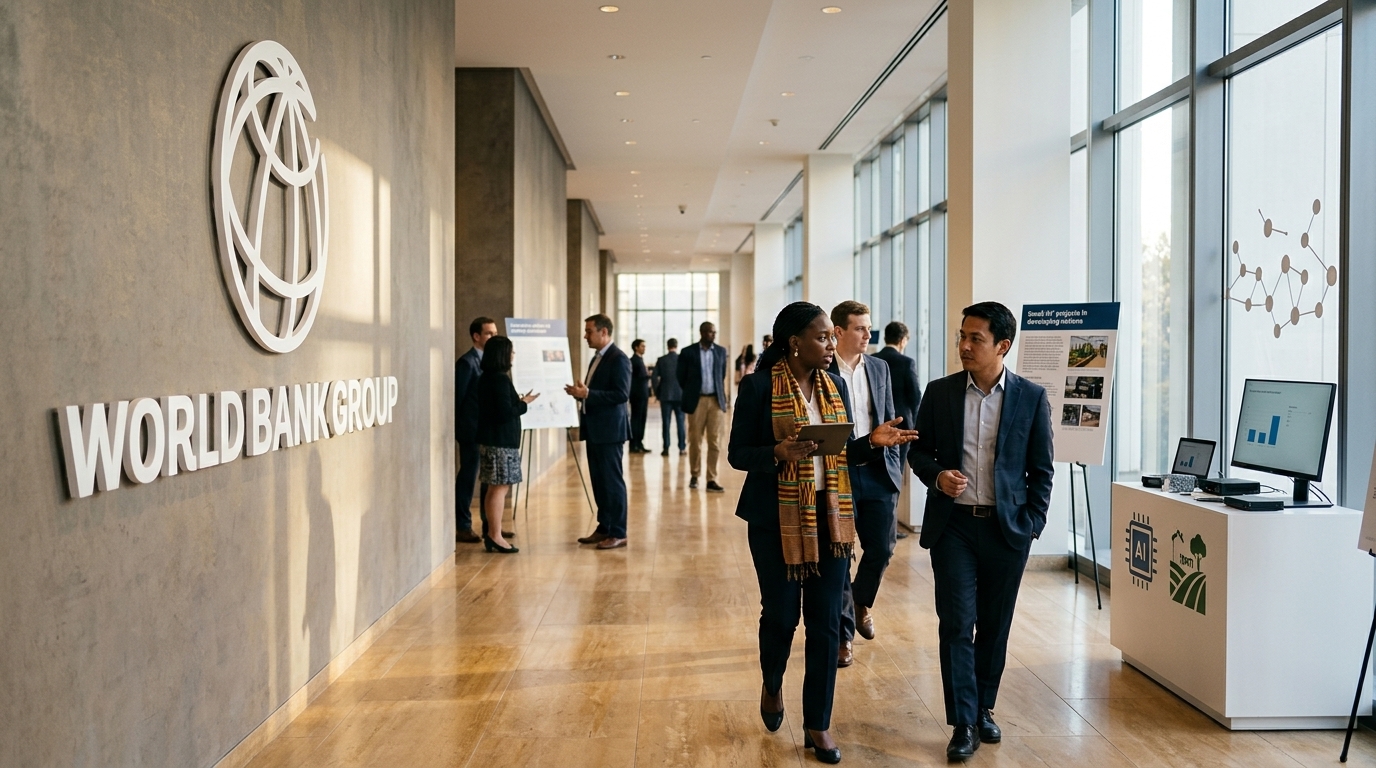
The World Bank is calling on developing nations to initiate the development of "small AI" models to catalyze economic growth. According to executives from the international financial institution, these models are designed to operate on mobile phones even in environments with limited connectivity, allowing emerging economies to reap the full benefits of artificial intelligence.
Specialization and Local Context
While Silicon Valley giants focus on increasingly sophisticated consumer products, Pascal Donohoe, the World Bank’s Chief Knowledge Officer, stated that AI could accelerate development only if tailored to local needs. Small AI relies on specialized models trained on limited datasets for specific purposes. Donohoe, a former Irish Finance Minister, argued that economic growth processes that once took centuries could now potentially be achieved within decades through localized AI available in native languages.
A practical application cited is the AgriConnect program in India. Small-scale farmers require soil analysis in their own languages, yet there are not enough agricultural scientists to serve every farm. "Small AI" on mobile devices is positioned to bridge this information gap by providing expert-level insights directly to the user.
Infrastructure and Safety Hurdles
The potential of AI is contingent upon fundamental requirements. Speaking at the annual meetings of the World Bank and the IMF in Bangkok, IMF Managing Director Kristalina Georgieva urged governments to establish necessary conditions, including access to electricity and digital infrastructure. However, significant challenges remain; a World Bank report from August highlighted that nearly one-third of rural schools in Sub-Saharan Africa lack electricity, while more than two-thirds do not have stable internet access.