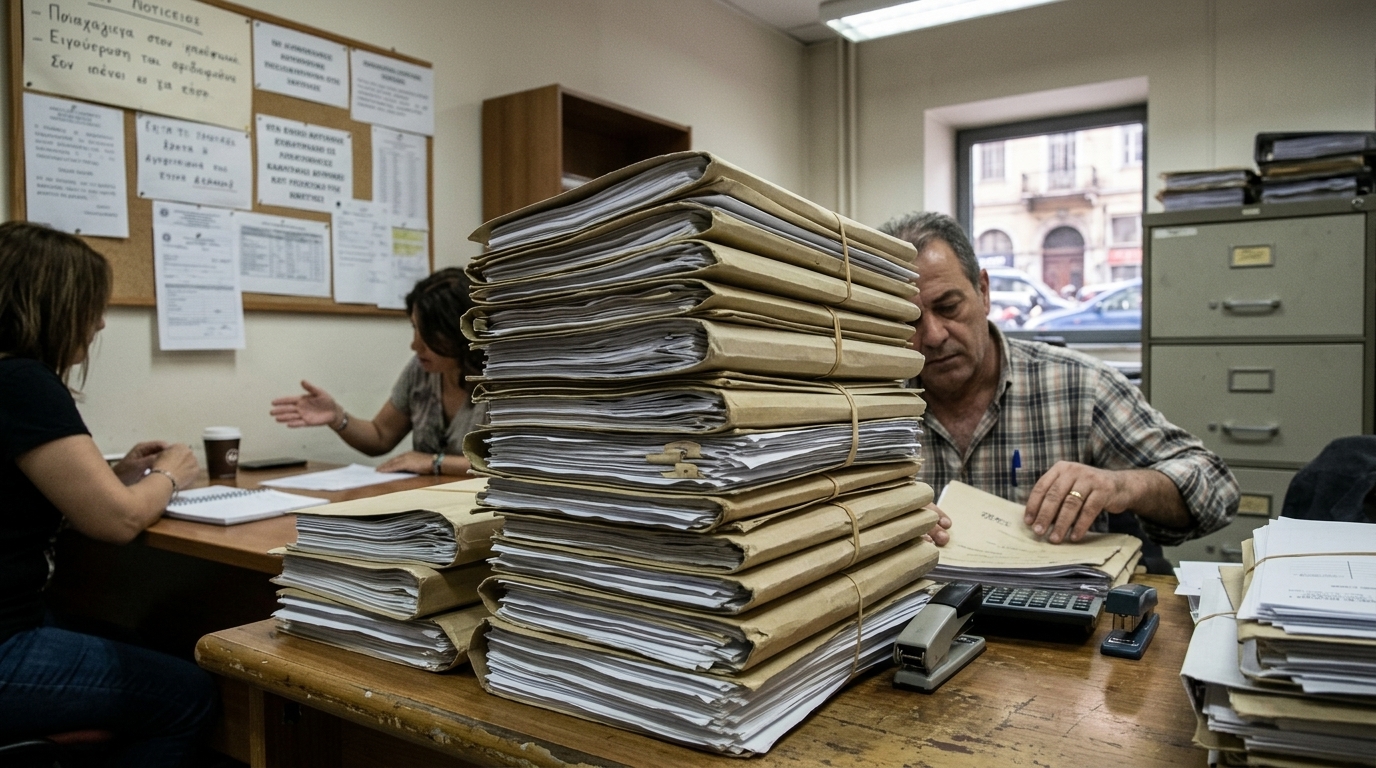
The Greek social security system is facing a mounting threat as total debt to Social Security has reached a staggering €52.42 billion. The situation is described as an "informal" payment freeze, which, while not immediately affecting current pensions, raises serious questions about the system's stability in the near future.
An Uncontrollable Upward Trend
Data reveals an alarming acceleration of debt, which has surged by 50% since 2019, when it stood at €35 billion. According to the latest KEAO report for the second quarter of the year, debt increased by €600 million in just three months. Paradoxically, this increase continues despite collections of €450 million during the same period, as additional fees and surcharges (€400 million) offset much of the recovery effort.
Limitations of Current Solutions
Current debt settlement efforts appear to be losing momentum. The 72-installment plan faces hurdles due to its 5.5% interest rate and restrictions on including debts incurred after 2024. At the same time, revenue growth from employment seems to be hitting a ceiling, with unemployment struggling to drop below the 8% mark.
- 65% of the total debt originates from the period before 2010.
- Approximately 300,000 working retirees have been officially registered, providing a temporary boost to the system.
- Additional fees and surcharges amount to nearly €22 billion.
The "Seisachtheia" Dilemma
A potential solution could involve writing off part of the surcharges to give the system breathing room; however, this carries the risk of rewarding chronic defaulters. During the economic crisis, experts had proposed strict measures, such as closing businesses with debts older than 18 months, to halt the creation of new deficits. Without immediate and bold interventions, the risk of returning to an era of pension cuts, similar to those of 2010, remains a possibility.