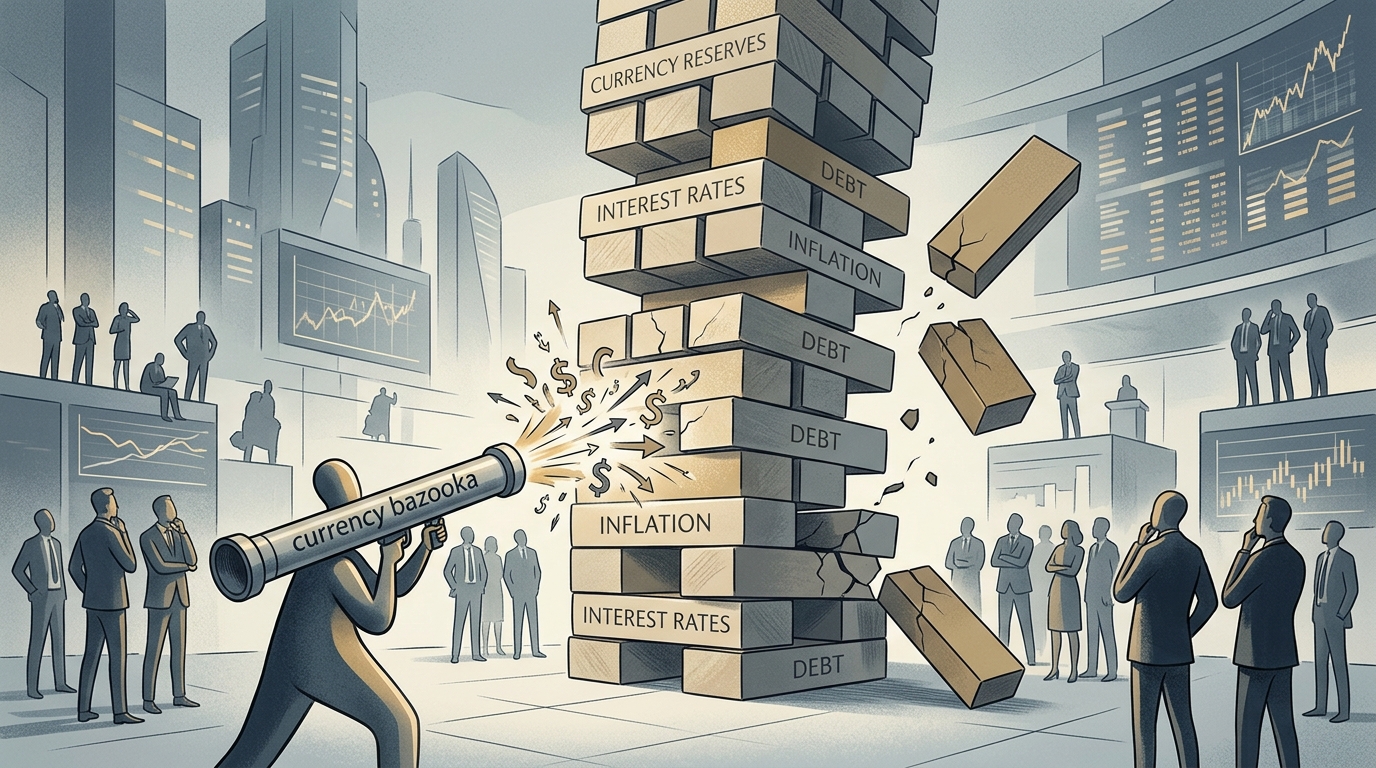
The first joint U.S.-Japan intervention in three decades to bolster the yen has passed with minimal impact on market anxiety. Despite billions being deployed, global finance continues to resemble a 'giant Jenga tower,' with the Japanese currency acting as a precarious load-bearing piece.
An Unconventional Intervention
Treasury Secretary Scott Bessent orchestrated a move where the U.S. purchased between $5 billion and $10 billion worth of yen, while Japan’s contribution exceeded $50 billion. Although the exchange rate initially strengthened from 164 yen per dollar to 157, it soon retraced to around 159.
The tactics employed raised eyebrows among analysts. The U.S. sold euros rather than dollars to fund the purchase, and Japan borrowed against its Treasury holdings instead of selling them. These maneuvers suggest an underlying fear within the Trump administration that a spiraling yen could worsen the U.S. debt outlook by driving Treasury yields higher.
The 'Yen Carry Trade' Threat
Wall Street veteran Ed Yardeni highlighted the risk of the 'yen carry trade,' where investors borrow cheap yen to fund bets on higher-yielding assets globally. "The financial system right now looks like a giant Jenga tower with the yen as a load-bearing piece," Yardeni noted, warning that the stability of this arrangement is increasingly fragile.
Root Causes vs. Symptoms
Experts like Robin Brooks of the Brookings Institution argue that currency interventions are merely addressing symptoms rather than root causes. Japan's fundamental issues include:
- Massive national debt exceeding 200% of GDP.
- Fiscal stimulus expected to widen the deficit.
- A central bank (BoJ) slow to raise interest rates despite inflation.
Brooks calls for a "profound shift" in Bank of Japan policy, specifically scaling back government bond purchases to allow long-term yields to rise. Without narrowing the gap between Japanese and U.S. yields, he argues, the yen is destined for further trouble regardless of temporary interventions.