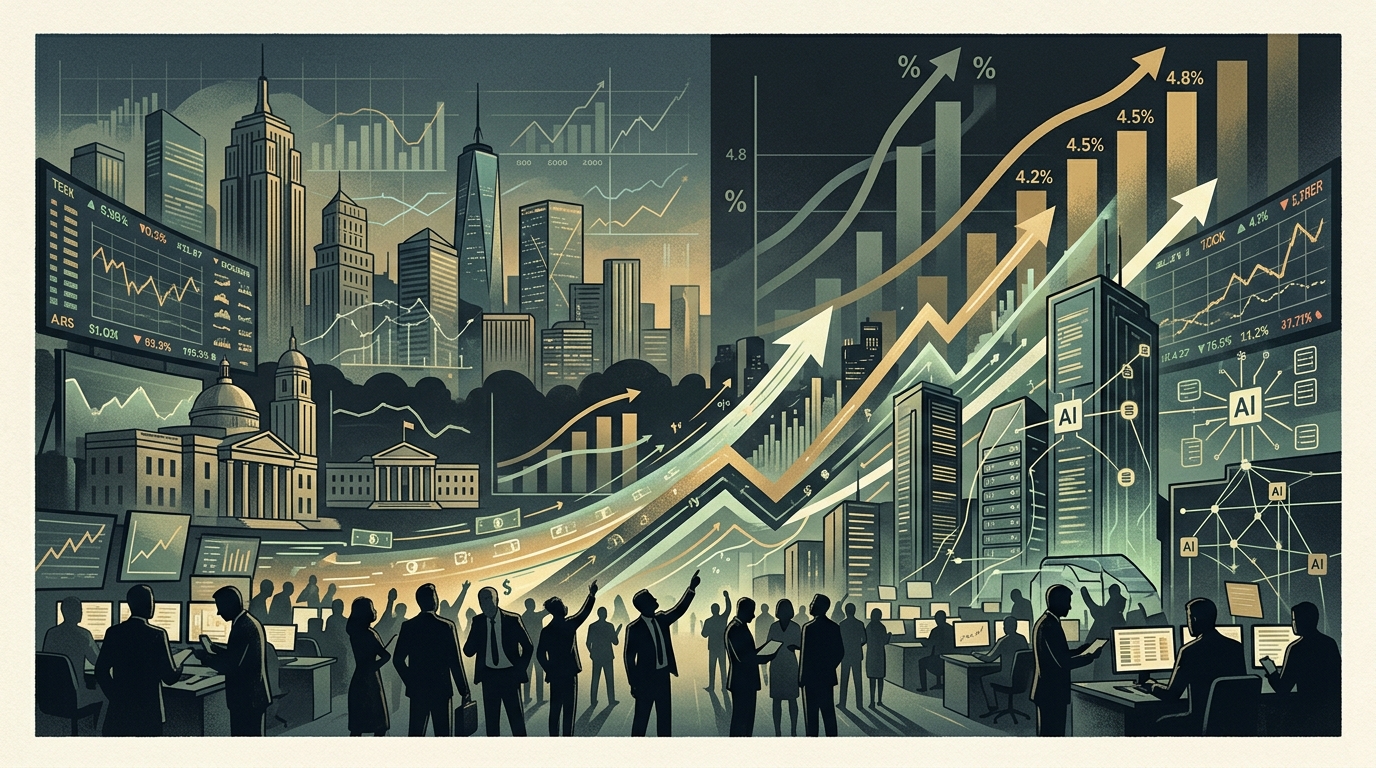
For decades, the prevailing economic narrative warned of "crowding out"—the idea that excessive government debt would soak up so much capital that private businesses would be left stranded. Today, with U.S. debt at $40 trillion and the federal deficit on track for $2 trillion this fiscal year, the dynamic is flipping due to the AI revolution.
The Rise of Yield-Agnostic Issuers
AI hyperscalers—the tech giants building out massive data infrastructure—are issuing debt at a breakneck pace to fund chip purchases and data center construction. U.S. Treasury Secretary Scott Bessent noted that these companies are almost "yield-agnostic." They believe the returns on AI investment will be so substantial that the cost of borrowing is a secondary concern.
Investment-grade corporate bond issuance reached approximately $1.7 trillion through July, a 27% increase over last year's pace. Wall Street veteran Ed Yardeni points out that such a massive flood of corporate debt would typically require yields to offer a significant premium over risk-free Treasuries. Instead, demand has been so high that yield spreads have remained compressed, forcing Treasury yields themselves to rise to clear the market.
The 'Reverse Crowding Out' Effect
"Capital flowing into corporate bonds is capital not flowing into Treasuries," Yardeni explained. This "reverse crowding out" means the market is adjusting not through higher borrowing costs for corporations relative to the government, but through higher costs for the U.S. government itself. International capital-flow data confirms this shift, showing foreign private buyers favoring U.S. corporate debt over Treasuries in the past year.
However, signs of fatigue are emerging. S&P Global recently warned that market participants are becoming wary of the rapidly rising leverage from issuers previously known for reliable cash flows. While AI debt is a primary driver, other factors including high oil prices due to the Iran war and a robust economy continue to put upward pressure on inflation and yields, complicating the fiscal outlook.