In the history of modern pop culture, few figures have managed to remain as central to the zeitgeist as Madonna. Known for her uncanny ability to predict trends and challenge the status quo, her latest intervention isn't about fashion or religion, but the very essence of creativity itself. Her statement that "the use of AI is the opposite of creating art" is not just a dismissive soundbite; it is a battle cry in an era where the lines between human inspiration and algorithmic production are becoming increasingly blurred.
The Human Experience as Raw Material
Madonna’s core argument centers on the concept of lived experience. For her, art is not the final product—a song, a painting, a film—but the process of its birth through pain, joy, doubt, and personal evolution. Artificial Intelligence, operating through statistical models and probabilities, reconstructs existing data. It doesn't "feel," it doesn't "suffer," and most importantly, it has nothing to risk.
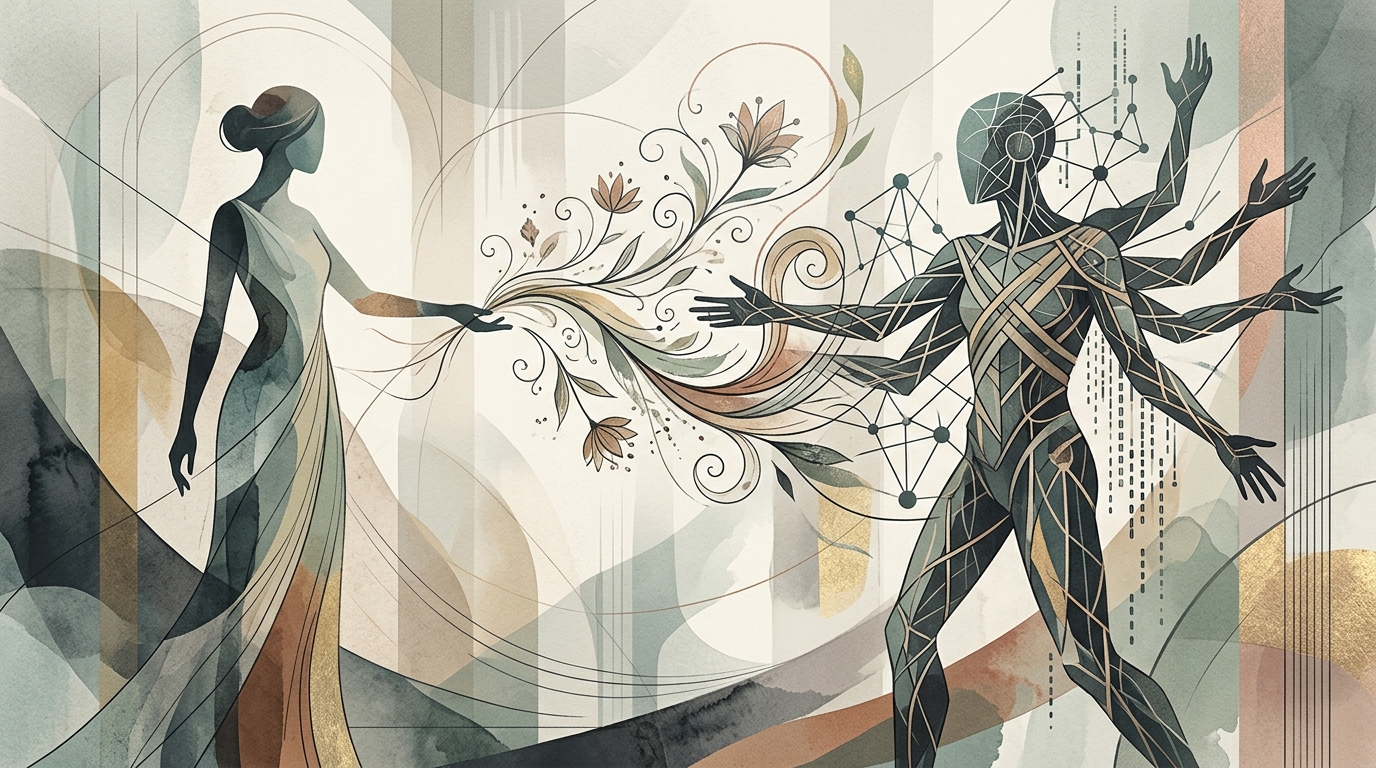
Madonna contends that art requires a form of sacrifice and exposure that AI is incapable of simulating. When an artist creates, they draw from their subconscious, from collective memories, and from their personal traumatic experiences. AI, conversely, produces content based on uniformity and the median value of the data it has been trained on. This leads to a "homogenization" of aesthetics, where the result is technically proficient but spiritually vacant.
The Industrialization of Creativity
Madonna’s intervention comes at a critical juncture for the music industry. With the rise of tools that can replicate any artist's voice or write lyrics in a specific style, the danger of devaluing human labor is palpable. The "Queen of Pop" views AI as a tool that serves speed and consumption at the expense of quality and authenticity.
- AI relies on pattern repetition, while art relies on pattern disruption.
- The use of AI in music raises serious ethical questions regarding intellectual property.
- The "sterilization" of the creative process threatens cultural diversity.
The Question of Authenticity and the Error
One of the most compelling aspects of her critique concerns the "error." In art, imperfection is often what provides beauty and character. The rasp in a voice, the hesitation in a note, the asymmetry in a frame. Artificial Intelligence tends to correct these imperfections, offering a "hyper-real" product that nonetheless feels alien to the human spirit. Madonna, who has built her career on provocation and the unexpected, realizes that AI is inherently conservative; it cannot create something truly new, it can only rearrange the old.
"Art is a conversation between souls. A machine has no soul, therefore it cannot converse. It can only echo."
In conclusion, Madonna’s stance serves as a reminder that in the digital age, the greatest revolution may be the preservation of our humanity. While technology can be a powerful assistant, surrendering the creative spark to algorithms risks turning culture into an endless echo of the past, deprived of the future that only human imagination can conceive.