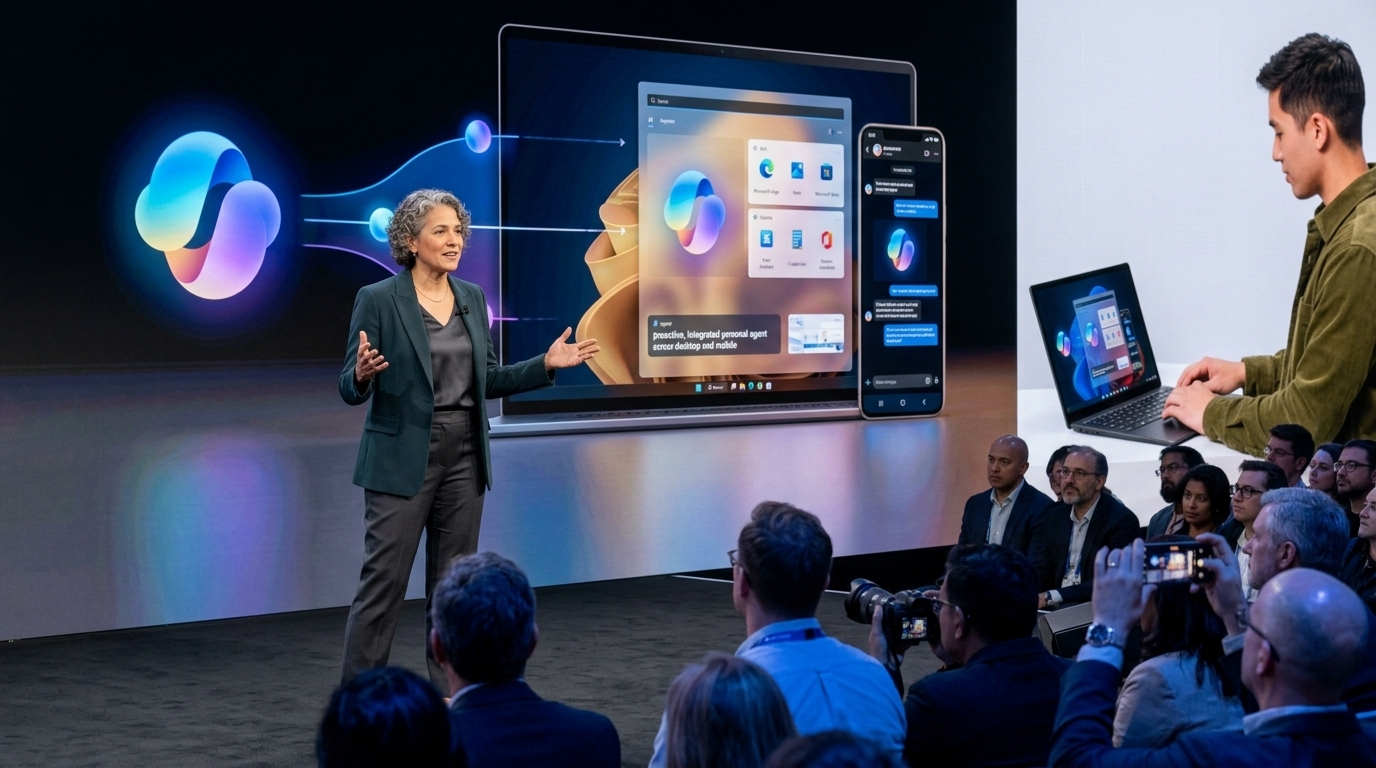
In a move signaling a transition from simple productivity tools to the era of autonomous digital agents, Microsoft has unveiled a sweeping overhaul of its Windows operating system. Speaking at San Francisco’s Dogpatch Studios, CEO Satya Nadella described Windows as a "hybrid intelligence" system, where processing is split between the cloud and local hardware power.
The Rise of AI Agents and Autopilot
The core shift involves the integration of a redesigned Copilot app, which now serves as a central interface for task execution. A new "Autopilot" feature allows users to name an agent, assign it a specific role and goal, and set it loose to autonomously manage project updates, track deadlines, and reach out to partners.
According to Jacob Andreou, head of Copilot, the app now "truly understands" the user's PC. For instance, it can autonomously pull all files needed for tax filing from various parts of a laptop and do so without accessing the cloud. This local approach makes AI usage faster, cheaper, and safer, as sensitive data does not need to leave the device.
New Hardware: Surface Laptop Ultra
To support these demanding workloads, Microsoft revealed the Surface Laptop Ultra, a high-end device aimed at developers and creators. The laptop features Nvidia’s RTX Spark "superchip," which Nvidia CEO Jensen Huang described onstage as a "beast" of a product.
- The Surface Laptop Ultra will be available starting October 16, priced at $2,599.
- The Surface RTX Spark Dev Box, designed for professional development, will cost $5,999 and launch in November.
This strategic pivot comes amid intense competition, with Google, OpenAI, and Anthropic leading in advanced large language models. Microsoft, which already boasts 30 million paid seats for Microsoft 365 Copilot, is now aiming to dominate enterprise workflows by offering a unified experience that avoids the friction of managing multiple disparate AI assistants.