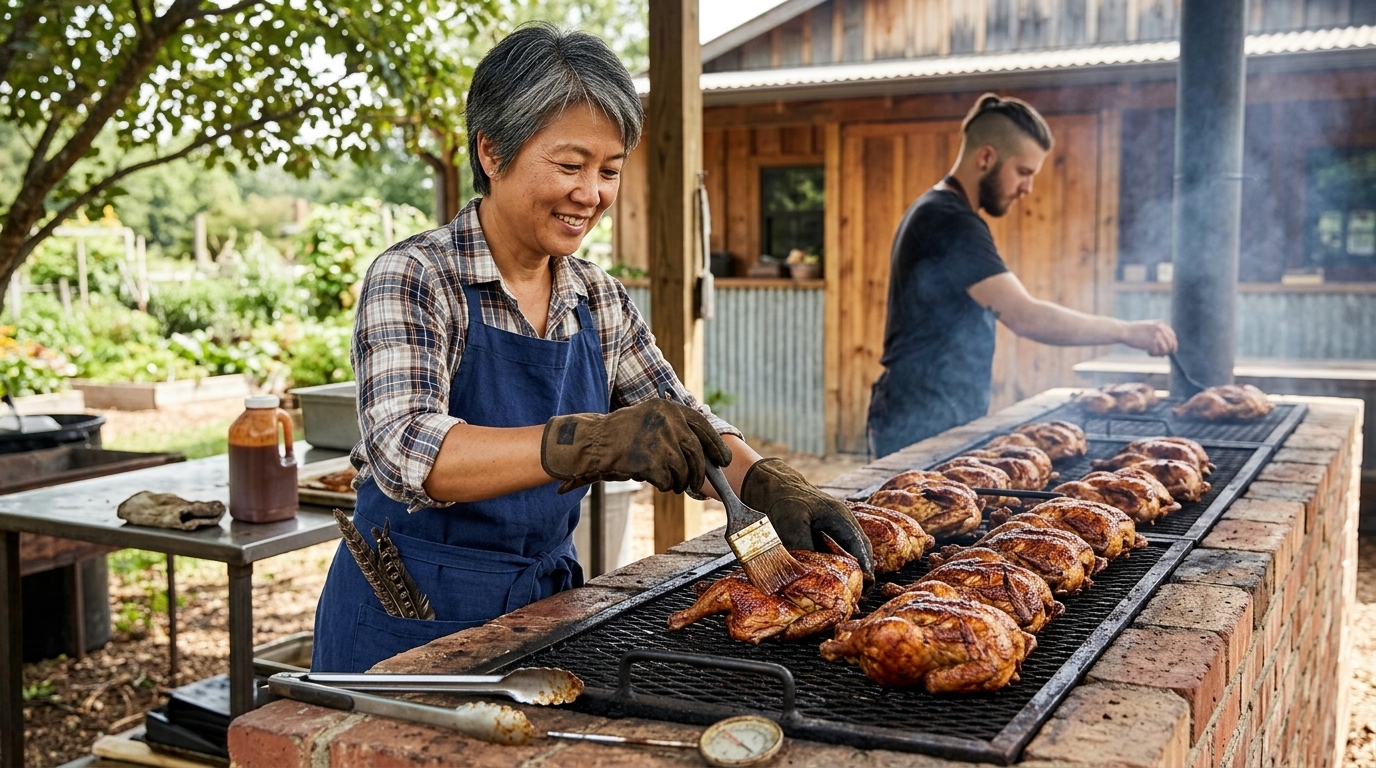
In the high-stakes world of Silicon Valley, the term "golden handcuffs" describes a peculiar predicament: elite professionals tethered to roles they no longer find fulfilling by astronomical salaries and lucrative stock options. Salahodeen Abdul-Kafi, a 33-year-old engineer whose resume boasts stints at Microsoft, Google, YouTube, and Cruise, decided to pick the lock. Despite earning an annual compensation of $450,000, he chose to trade algorithms and screen glare for deep fryers and customer service, opening a restaurant in Texas.
From Code to the Kitchen: A Calculated Pivot
Abdul-Kafi’s career trajectory was the quintessential "developer’s dream." Starting at Microsoft and moving through Shopify and Cruise (GM’s autonomous driving unit), he reached the upper echelons of the tech hierarchy. However, the satisfaction of working within massive corporate structures, often characterized by layers of bureaucracy and digital abstraction, began to wane. His decision to resign wasn't a mid-life crisis or an impulsive whim; it was a calculated entrepreneurial pivot driven by a desire for something tangible.
In 2021, he launched his first franchise location of "The Cookshack" in Houston, Texas. The concept was straightforward but executed with an engineer’s precision: high-quality fried chicken with an obsession over speed and customer experience. The transition was grueling. Abdul-Kafi had to learn every facet of the hospitality business, from supply chain logistics to frontline staff management, applying the optimization principles he honed at Google to the messy reality of the service industry.
The Economic Shift: Salary vs. Equity
While $450,000 a year is a figure 99% of the global population will never see, Abdul-Kafi was aiming for a different kind of wealth: ownership. Last year, his restaurant generated over $2 million in revenue. In the restaurant business, revenue is not profit—operating costs, raw materials, and labor absorb a significant portion of the top line. However, the enterprise value of a successful, scalable business offers a financial upside that no fixed salary, regardless of how many zeros it has, can match.
This case highlights a broader economic trend in the mid-2020s. Following the post-pandemic reshuffling of priorities, many high-skilled professionals are migrating toward the "real economy." While technology remains the engine of global growth, the saturated market for apps and digital services is pushing some of the brightest minds back toward fundamental human needs: food, shelter, and physical experiences.
Applying the Tech Stack to Hospitality
The secret to Abdul-Kafi’s success wasn't abandoning his tech background, but rather weaponizing it. At The Cookshack, data analytics is central to operations. From scheduling shifts based on predictive foot traffic models to optimizing the menu based on ingredient margin fluctuations, the "data-driven decision making" ethos was imported directly from Mountain View to Houston.
- Automation of ordering systems to slash wait times.
- Strategic site selection based on granular demographic data.
- Aggressive social media branding using algorithmic precision.
"At Google, I built things used by millions, but I never saw their faces. In the restaurant, I see the customer's reaction in real-time. That immediate feedback loop is something code simply cannot provide," he notes.
As we navigate 2026, Abdul-Kafi’s story serves as a testament to the fact that a career is not a linear path. The ability to deconstruct a system and rebuild it—whether it’s a software architecture or a commercial kitchen—remains the most valuable skill in the modern economy. Walking away from a nearly half-million-dollar safety net was a gargantuan risk, but the rewards, both financial and psychological, suggest that for this engineer, the juice was definitely worth the squeeze.