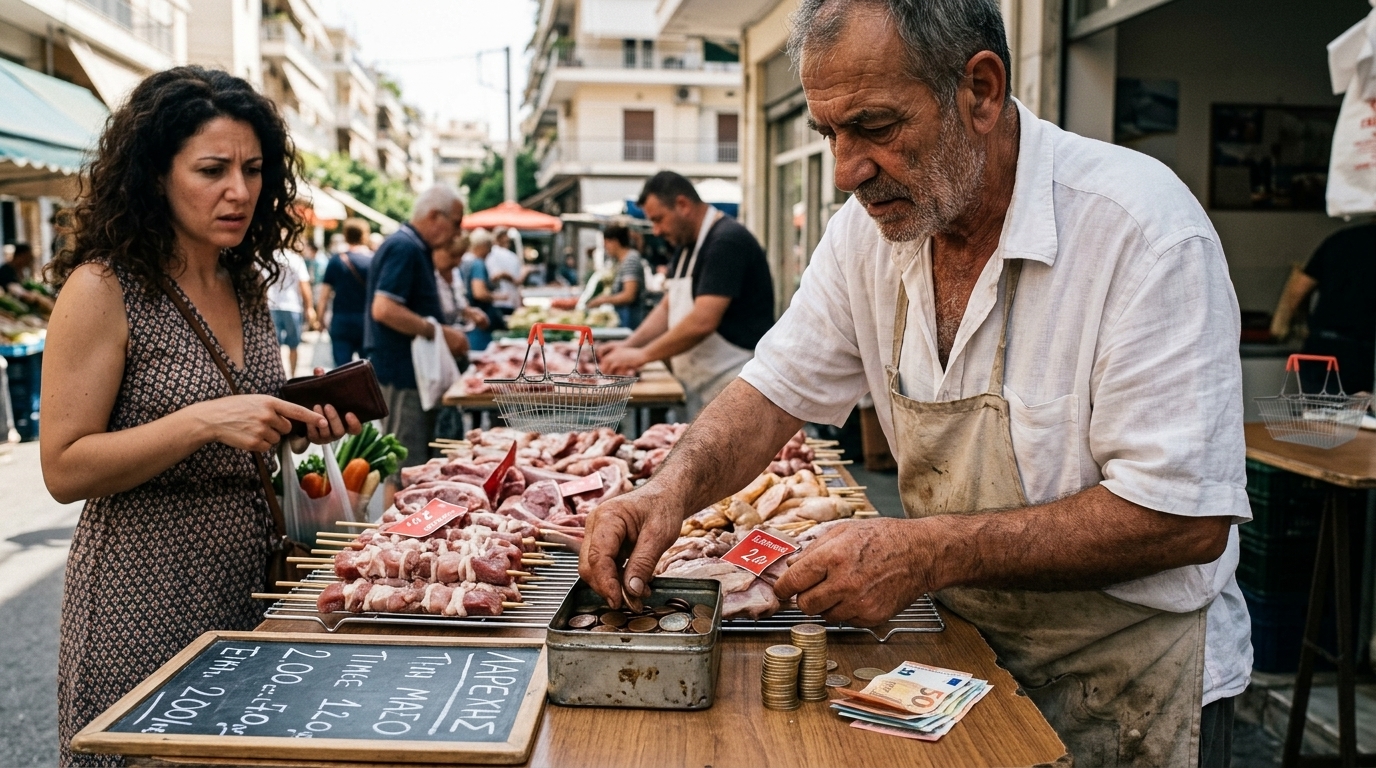
The Greek economy is grappling with a fresh wave of price hikes as data from ELSTAT for June 2026 reveals a concerning acceleration of inflation to 4.4%. Despite expectations for stabilization following the crises of previous years, a combination of energy uncertainty, a housing crisis, and increased tourism-driven demand is creating an explosive cocktail that erodes citizens' disposable income.
Inflation on the Plate: Meat as a Luxury Item
The greatest pressure is being felt in the household basket, with food items remaining at the top of the price-hike list. Meat prices, in particular, have soared, influenced by increased production costs, livestock diseases affecting European output, and the high cost of animal feed. Consumers are seeing beef and pork prices rise at rates double the general inflation rate, forcing many to alter their consumption habits.
But it's not just meat. Olive oil, although less volatile than last year, remains at historically high levels, while dairy and produce follow an upward trajectory, disproportionately burdening lower-income groups who spend the bulk of their wages on essential goods.
Housing and Energy: The Unbearable Cost of Daily Life
The housing chapter, specifically rents, has become an "open wound" for Greek society. The increase recorded by ELSTAT reflects a reality experienced by thousands of tenants: the supply of housing remains limited, while short-term rentals continue to absorb a large portion of the stock in urban centers. The rise in rents, combined with the spike in construction material prices affecting maintenance, makes housing the single largest burden on household budgets.
At the same time, energy has returned to the forefront of price increases. Natural gas and transport fuels recorded significant gains in June, influenced by geopolitical tensions in Eastern Europe and the Middle East, as well as increased seasonal demand. Gasoline and diesel, the backbone of the supply chain, pass their costs onto all products, creating a vicious cycle of inflation.
Tourism as a Double-Edged Sword
While tourism is the "engine" of Greek growth, its performance this year appears to be fueling inflation. Airfares and ferry tickets have seen double-digit increases, making holidays a difficult equation for the average Greek citizen. Tourism packages, hotel prices, and catering in tourist areas have risen significantly as businesses attempt to cover their increased operating costs and labor shortages.
- Airfares: Up over 12% due to fuel costs and high demand.
- Ferry tickets: Prices remain at record levels, affecting island mobility.
- Catering: Rising raw material costs are passed directly onto restaurant menus.
Analysis of the Road Ahead
Persistent inflation above 4% tests economic policy. Despite increases in the minimum wage, purchasing power appears to be receding. Analysts warn that if there is no de-escalation in energy and food prices by autumn, consumption—a key pillar of GDP—may falter. The government is called to balance between the fiscal discipline mandated by the EU and the need for targeted support measures for the vulnerable, while the European Central Bank closely monitors data to determine the path of interest rates.
"Inflation is no longer a transient phenomenon but a structural challenge requiring deep reforms in the market and supply chain," market sources state.
In conclusion, June 2026 confirms that the battle against high prices is far from won. The Greek economy must demonstrate resilience in an environment where the cost of living is rising faster than earnings, creating social pressures that cannot be ignored.