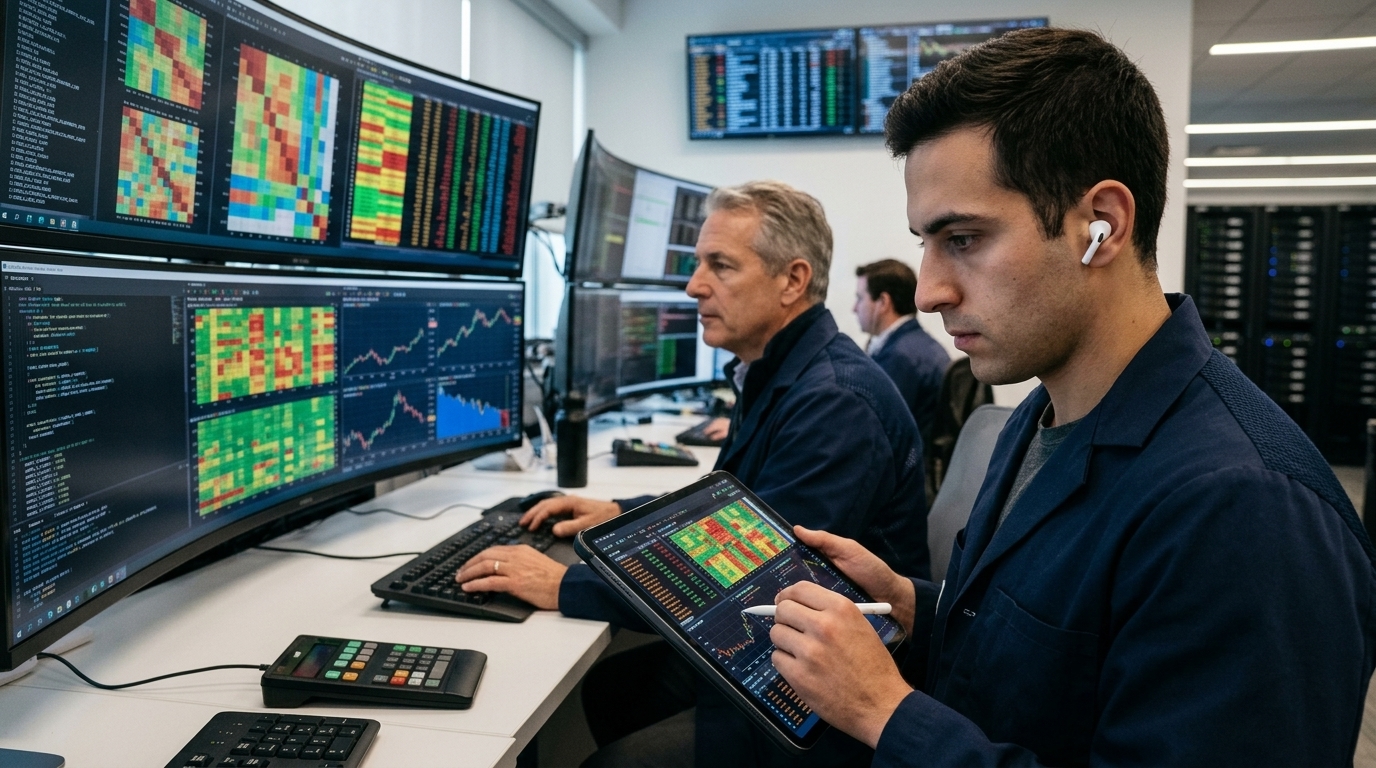
July 7, 2026, may well go down in market history as the day the "perpetual growth" narrative of the semiconductor industry faced its most severe reckoning. News that DeepSeek, the Chinese AI titan that has already disrupted the field with hyper-efficient models, is moving into custom silicon production (ASICs) triggered a global sell-off. Shares of leading chipmakers plunged by as much as 14%, wiping out hundreds of billions in market capitalization within hours.
The DeepSeek Disruption and the Threat to Nvidia
DeepSeek is no longer just a software underdog. Valued at $50 billion, the Beijing-based lab has demonstrated an uncanny ability to produce AI models that rival OpenAI’s GPT-5 and Google’s Gemini while utilizing only a fraction of the compute resources required by Western counterparts. The announcement that the firm intends to vertically integrate by designing its own hardware hits Nvidia where it hurts most: the industry's reliance on the proprietary CUDA architecture.
Analysts suggest that if DeepSeek successfully optimizes hardware specifically for its already lean algorithms, the performance-per-watt and cost-efficiency advantages could render Nvidia’s premium GPUs "economically uncompetitive" for a significant portion of the global market. The 14% drop reflects more than just a fear of lost revenue; it signals a growing realization that the technological "moat" Western firms built around high-end silicon is beginning to erode.
Geopolitical Chess and Silicon Sovereignty
DeepSeek’s strategic pivot is also being read as a direct response to U.S. export controls. As Washington continues to tighten restrictions on China’s access to cutting-edge chips, Beijing has accelerated its "Lencheng" (self-reliance) strategy. DeepSeek, acting as the vanguard of this movement, appears to have found a way to bypass hardware bottlenecks by focusing on the total synergy between code and silicon.
- DeepSeek is reportedly leveraging RISC-V architecture to circumvent Western licensing constraints.
- The focus is shifting from general-purpose GPUs to highly specialized AI accelerators.
- Chinese investment in domestic fabrication plants (fabs) is finally reaching the maturity needed for custom ASIC production.
This development poses an existential threat to companies like ASML and TSMC. The prospect of a fully decoupled Chinese supply chain is no longer a theoretical risk but an immediate reality that markets are now aggressively pricing in.
Economic Fallout: Is the AI Chip Bubble Bursting?
The violent correction in semiconductor stocks suggests that investors are re-evaluating the industry's long-term profit margins. If DeepSeek can provide AI services at one-tenth of the cost, the pricing power of Nvidia and AMD will face unprecedented pressure. Wall Street, which had previously been buying AI hardware stocks with reckless abandon, is now questioning whether the sector’s valuation has hit a structural ceiling.
"This isn't just a price correction; it's a paradigm shift. DeepSeek has proven that intelligence doesn't necessarily require billions of dollars in hardware if your software is superior," says a senior analyst at Goldman Sachs.
In conclusion, the market is entering a phase of intense volatility. DeepSeek, with its $50 billion valuation, may seem small compared to Nvidia’s trillions, but its ability to cause such seismic tremors proves that in the AI era, agility and innovation often trump sheer scale. The coming months will be decisive in determining whether this rout was a mere buying opportunity or the beginning of a long-term decline for Western hardware hegemony.