

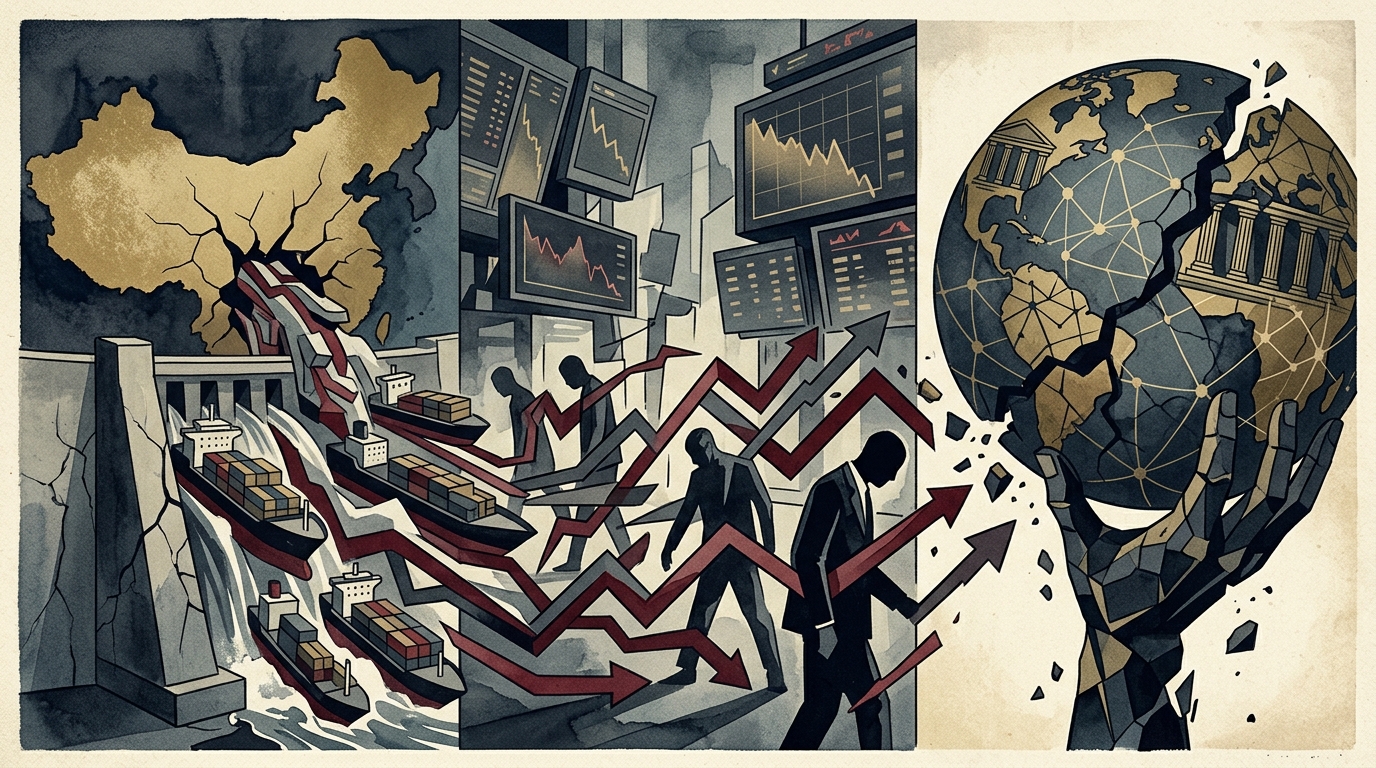
The global economy is facing an unprecedented challenge as China’s growth model, built on cheap and overwhelming exports, appears to be hitting a wall. According to Michael Froman, former U.S. Trade Representative and current president of the Council on Foreign Relations, the world’s ability to absorb Chinese overcapacity is approaching a breaking point.
The Math of Imbalance
The figures cited by Froman are stark. In 2025, China posted a $1.2 trillion trade surplus, the largest in recorded history, growing three times faster than global goods trade. In early 2026, this surplus expanded by more than 20%, while global GDP growth hovered around 3.1%.
This surge is fueled by state subsidies and an undervalued currency, allowing Chinese firms to charge up to 30% less than international rivals. However, this model comes at a price: nearly a third of Chinese industrial firms are reportedly operating at a loss, trapped in Beijing-mandated price wars and overproduction.
'China Shock 2.0'
Unlike the early 2000s, when China exported labor-intensive goods, the current 'China Shock 2.0' targets high-tech and capital-intensive industries. Brad Setser, a former Treasury official, estimates that China now possesses the capacity to produce two-thirds of the world's demand for cars and more than half of the global supply of steel, aluminum, and ships.
Protectionism and the Burden of the Cleanup
Western pushback is intensifying. President Trump hiked tariffs last year as the centerpiece of his 'Liberation Day' trade war, and even the European Union is racing to implement trade barriers. Froman warns that if foreign markets suddenly close off, the failure of China’s export-led model could trigger a global economic crisis.
In such a scenario, fragile Chinese 'zombie firms' would fail, state-owned banks would record massive losses, and demand for raw materials would dry up, hitting developing commodity-exporting nations. Froman concludes that, as is often the case, the United States and the institutions it anchors will likely be forced to 'clean up the mess,' as Beijing shows little interest in assuming the role of a global stabilizer.





