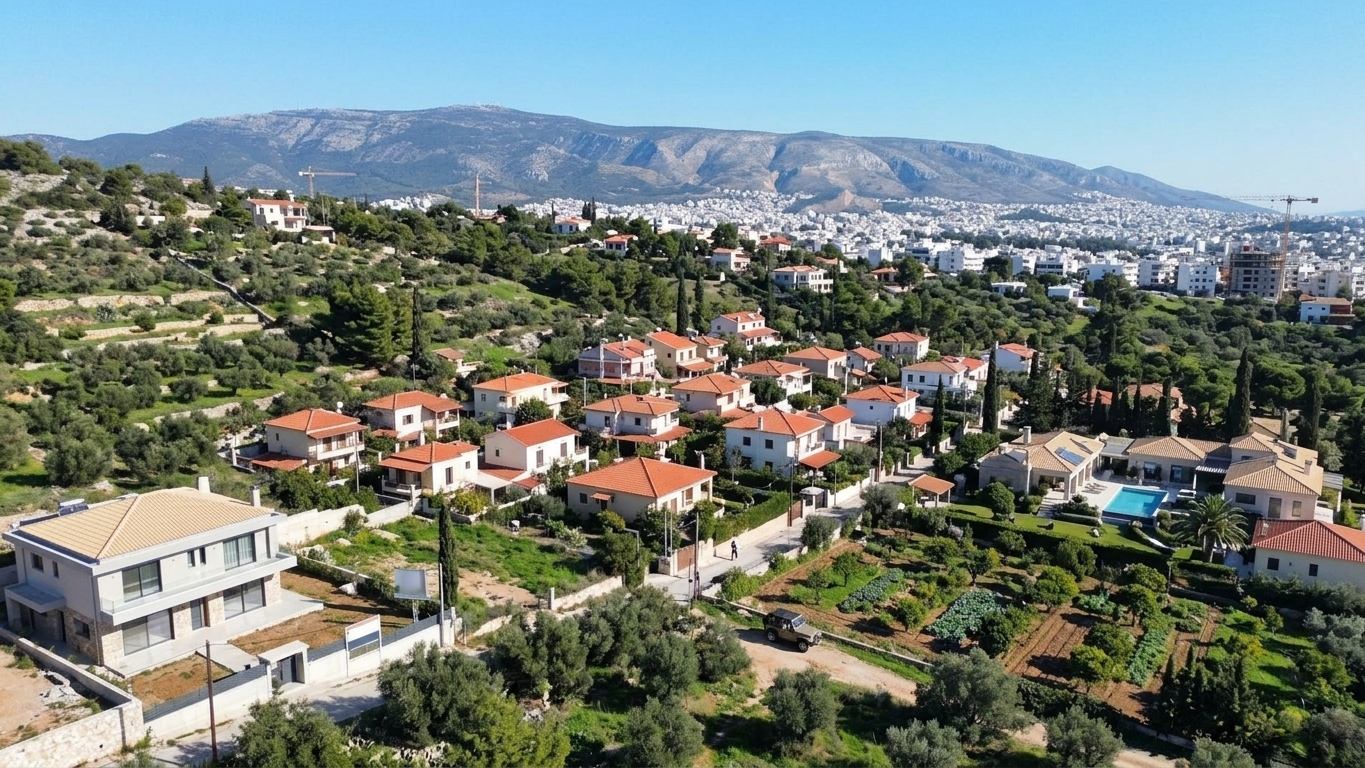
The Attica real estate market is undergoing a period of intense restructuring, with asking prices for land plots reaching their highest levels since 2014. According to the latest data, this rise is not a transient fluctuation but the culmination of a steady seven-year upward trajectory. Despite a slowdown in the growth rate compared to the previous two years, the scarcity of available plots, combined with the demand for modern, energy-efficient housing, is pushing land values to levels that inspire awe in prospective buyers and satisfaction in owners.
The Anatomy of the Increase: Why is Land Getting More Expensive Now?
The current surge in prices is not due to a single factor but a complex web of economic and social conditions. Firstly, the depletion of the stock of ready-made newly built apartments forced developers to turn to the land market for new constructions. However, the prime spots in traditionally expensive areas, such as the Southern Suburbs and Palaio Psychiko, have almost disappeared, turning every available square meter into a subject of fierce negotiation.
Secondly, construction costs, although stabilized compared to the shock of the 2022 energy crisis, remain high. Developers, in order to maintain their profit margins, seek plots with a high building coefficient, which increases demand and consequently the price of these specific properties. Furthermore, the implementation of the New Building Code (NOK) and recent legal battles over building "bonuses" have created a climate of uncertainty, driving the prices of plots with already secured permits to astronomical heights.
The New Geography of Demand: From Ellinikon to Western Attica
The investment in Ellinikon has acted as a catalyst for the entire Athenian Riviera. Prices for plots in Glyfada, Voula, and Ellinikon have skyrocketed, also pulling up areas that were previously considered "second-tier." We are observing an impressive shift of interest towards the Eastern Suburbs (Gerakas, Pallini, Glyka Nera), where quality of life is combined with slightly more affordable prices, although the gap is closing fast.
- Southern Suburbs: Absolute dominance of high prices, with demand fueled by foreign investors and the Golden Visa program.
- Northern Suburbs: Steady recovery in areas like Marousi and Vrilissia, due to proximity to business centers.
- Western Attica: The surprise of the decade. Areas like Egaleo and Peristeri are seeing increases due to the Metro extension and the lack of alternatives for the middle class.
Metro Line 4 is perhaps the most significant factor for price increases in the near future. Plots within a 500-meter radius of future stations (e.g., Kypseli, Galatsi, Kaisariani) have already seen their asking prices increase by 20-30% within three years, even before the first construction fences were put up.
Institutional Obstacles and the Conflict over the NOK
However, not everything is rosy. The land plot market is facing an unprecedented institutional crisis. The conflict between the Ministry of Environment and Municipalities over building heights and NOK bonuses has frozen many transactions. Investors fear that if they buy a plot based on specific building terms, they might be surprised if municipalities win appeals at the Council of State. This insecurity limits the supply of "clean" plots, pushing their prices even higher.
"Land in Attica is no longer just a building site, but a rare stock market product," says an executive of a large real estate company.
In conclusion, Attica is experiencing a maturation phase in its market. Prices at a decade-high reflect confidence in the Greek economy, but at the same time, they sound the alarm for housing affordability. If this trend continues without a parallel increase in incomes or institutional interventions for social housing, the dream of homeownership will become inaccessible for the vast majority of citizens.