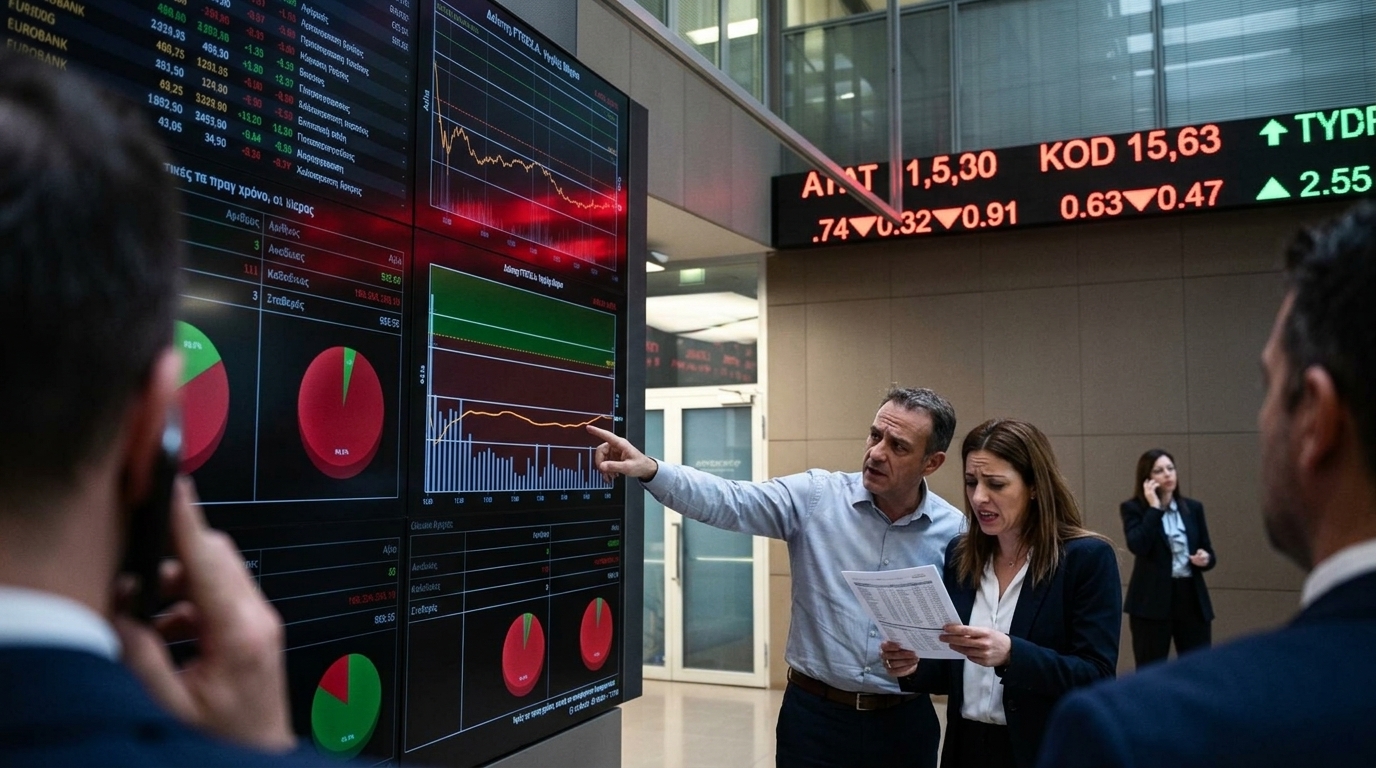
The Greek stock market, at the dawn of summer 2026, resembles a luxury edifice supported by a few but immensely powerful pillars. While the General Index steadily moves above the psychological and technical threshold of 1,500 points—invoking memories of the pre-crisis era of 2007—the picture at the bottom of the board is anything but celebratory. The so-called 'shallow' market, comprising small and mid-cap stocks, seems to have detached itself from the upward trend, creating a two-speed market that raises serious questions about the sustainability and depth of the Greek capital market.
The 'Entrapment' of Small Caps
The recent performance of the FTSE MID CAP index and, even more so, the stocks making up the small-cap segment, highlights a harsh reality: the rally is selective. Foreign institutional investors, who have been the primary source of liquidity since Greece regained investment-grade status, focus almost exclusively on the 'cream of the crop' of the Athens Stock Exchange (ASE). Banks, energy, and heavy industry absorb the lion's share of capital, leaving smaller companies to struggle with depreciation and a lack of marketability.
According to data, while the General Index has recorded gains exceeding 15% since the beginning of the year, dozens of small-cap listings are seeing double-digit losses. This paradox is partly explained by the shift of portfolios towards the safety of large-cap stocks. In an environment where interest rates remain higher than the average of the previous decade, the cost of borrowing for a small listed company is disproportionately high compared to an energy giant with access to international bond markets.
The Liquidity Deficit and the Role of Market Makers
One of the most fundamental problems facing 'small' players is the dramatic decrease in trading volume. There are days when historic industries or dynamic IT companies in the small-cap segment see trades worth only a few thousand euros. This 'shallowness' frightens investors, as it makes exiting a position extremely difficult without causing a price collapse.
"The market has become a closed club for the powerful. Small companies, despite their healthy fundamentals, are punished by a lack of visibility," notes a local market analyst.
Furthermore, the institution of market makers seems insufficient to stimulate interest. The absence of domestic retail investors—who traditionally supported small caps—is more than evident. The Greek family, scarred by successive crises, remains cautious about stock market risk, preferring the safety of real estate or time deposits, despite the low returns of the latter.
The Challenge of the Next Day
For the Athens Stock Exchange to be characterized as a mature and developed market, the upward movement must acquire horizontal characteristics. The concentration of power in 5-6 stocks makes the system vulnerable to external shocks. If, for example, there is an international correction in the banking sector, the General Index will collapse, as there are no 'bulwarks' from other sectors or smaller companies that could serve as alternative investment options.
- Need for incentives for small listings to remain on the board.
- Strengthening transparency and corporate governance.
- Attracting domestic institutions (pension funds) to small caps.
- Creating new indices to highlight growing enterprises.
In conclusion, the 1,500-point 'bull market' is, for now, a celebration for the few. The challenge for the ASE management and the government is to create the conditions that will allow smaller, healthy businesses to raise capital and grow. Without a vibrant small-cap segment, the Stock Exchange risks becoming a showcase for large interests, detached from the country's real economy, which is 90% based on small and medium-sized enterprises.