

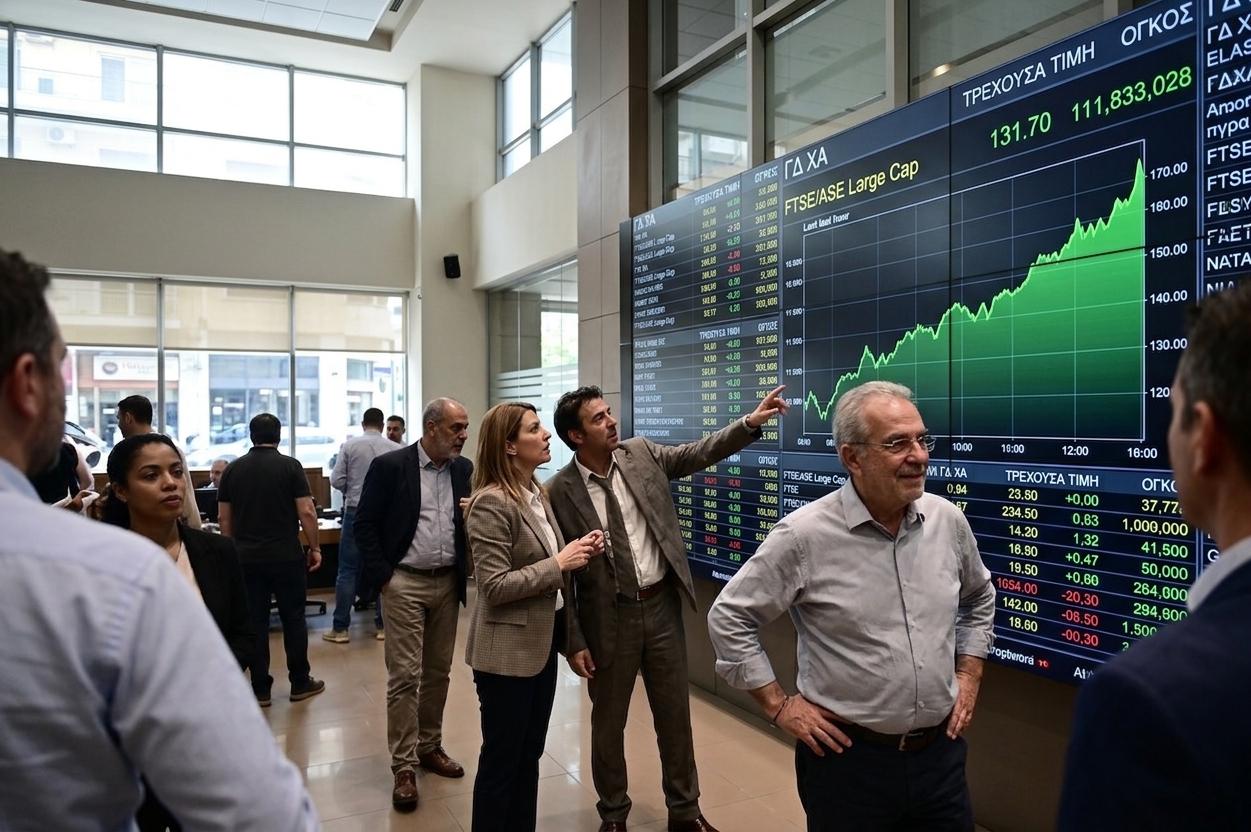
July 3, 2026, will be recorded in the annals of Athinon Avenue as the day the Greek capital market finally stepped out from the shadows of a painful decade. With the General Index closing at 2,537.23 points, the Athens Stock Exchange (ASE) not only completed three consecutive bullish sessions but soared to levels not seen since early 2009. This rise is not merely a number on a screen; it is the crystallization of international institutional investors' confidence in the new structure of the Greek economy, which is now less reliant on consumption and more focused on exports, technology, and green energy.
The Banking Renaissance and Dividend Policies
The banking sector, once the "sick man" of the previous era, is now the primary pillar of this ascent. Systemic banks, having fully cleaned up their balance sheets and integrated advanced AI systems for risk management and customer service, are posting profits that allow for generous dividend distributions. The market is rewarding stability: investors see Greek banks as an opportunity to gain exposure to a growing Eurozone market with significantly more attractive valuations compared to the European North.
- 18% year-on-year increase in net banking profitability.
- Return of foreign funds focusing on long-term value investing.
- Enhanced liquidity following the full divestment of the Hellenic Financial Stability Fund (HFSF).
Energy and Digital Transformation
Beyond banks, the driving force behind this 17-year high is the energy and infrastructure sector. Greece has become an energy hub for Southeast Europe, with listed companies leading the way in renewable energy projects and interconnections. Simultaneously, the listing of new technology companies has altered the market's profile. The digitalization of the state and businesses has created a new ecosystem of listed firms offering AI and cloud computing solutions, attracting capital that traditionally flowed toward NASDAQ.
"The Athens Stock Exchange no longer reflects the crisis, but the ambition of a country that learned from its mistakes and is investing in the future," says a senior investment banking executive from the City.
Challenges of the "Next Day"
Despite the excitement, analysts warn of the risk of overheating. The rise in stock prices must keep pace with real economic growth and improvements in living standards. There is a fear that market euphoria could create a "bubble" if ECB interest rates remain high for longer than expected. Furthermore, geopolitical instability in the Eastern Mediterranean remains an unpredictable factor that could trigger sharp corrections. The challenge for the ASE is to broaden its investor base, encouraging more domestic retail investors to participate in growth while ensuring transparency and robust corporate governance.





