

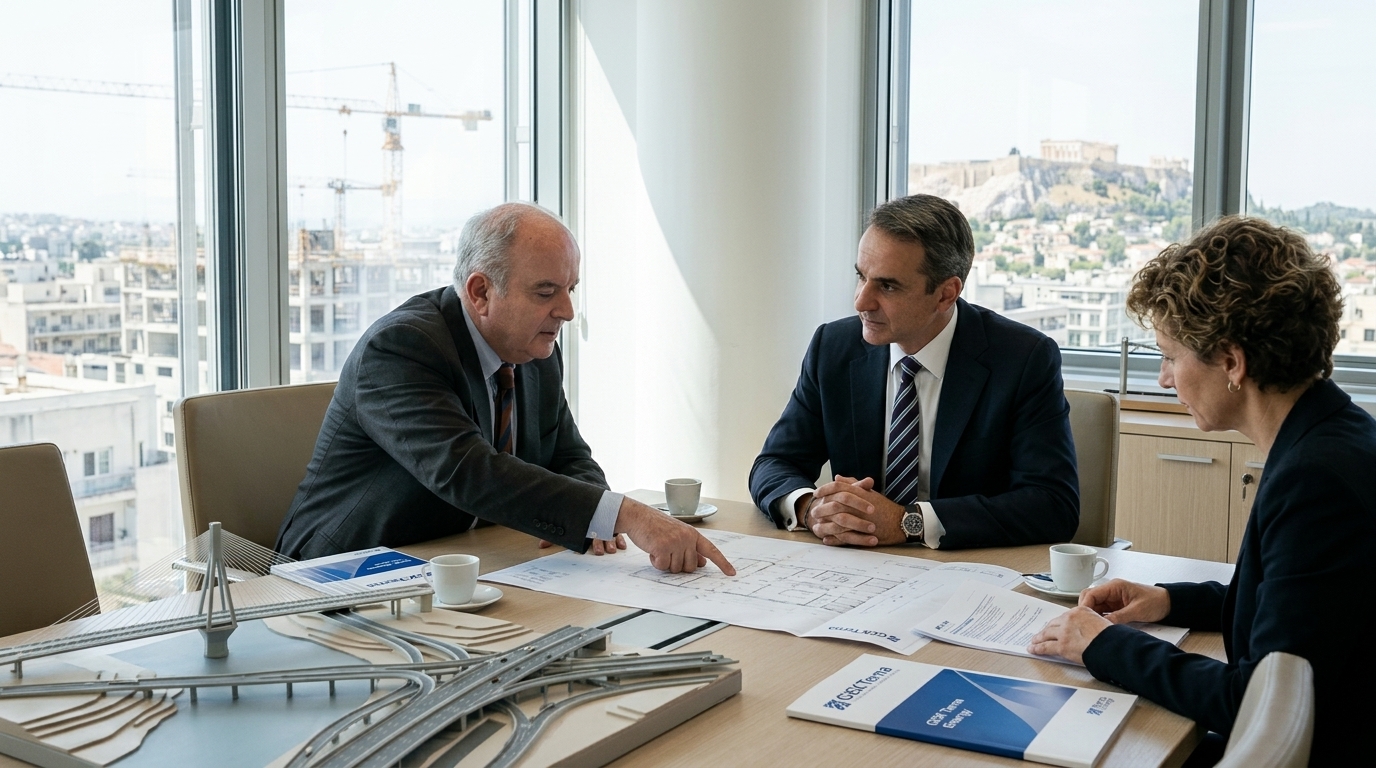
When in late 2024 George Peristeris, the head of GEK Terna, finalized the deal with Masdar for the sale of Terna Energy, many wondered if the group was losing its most valuable asset. Today, in the summer of 2026, reality proves that this was not a simple divestment, but a strategic realignment that reshaped the map of Greek infrastructure. The sale, with an enterprise value reaching 3.2 billion euros, released capital that allowed GEK Terna to transform from an energy player into an undisputed leader in concessions and large-scale projects in the Eastern Mediterranean.
The Liquidity Strategy and Deleveraging
This move was no coincidence. GEK Terna was at a crossroads where the growth of Terna Energy required massive capital to remain competitive at a European level, while the parent group faced a "mountain" of new concessions. With the influx of funds from the UAE, the group managed to drastically reduce its net debt, improving its credit rating and gaining the "firepower" needed to implement a project backlog that now exceeds 5 billion euros. The market welcomed this shift with enthusiasm, as the group's stock price showed an impressive rally, reflecting investor confidence in the new business model.
From Windmills to Motorways
The "takeoff" the market refers to is not just about numbers, but about the core of the activities. GEK Terna now controls the backbone of the Greek road network. Acquiring Attiki Odos for the next 25 years, combined with Egnatia Odos and existing axes (Nea Odos, Kentriki Odos), creates a concessions portfolio that ensures stable, predictable cash flows for decades. This "toll model" is considered by analysts as the ultimate shield against inflationary pressures and economic instability. Furthermore, progress on the Integrated Resort Casino (IRC) in Hellinikon and the construction of the new airport in Kasteli, Crete, place the group at the heart of the country's tourism and construction landscape.
The Geopolitical Dimension and the UAE Relationship
The importance of Masdar in this deal should not be overlooked. The sale of Terna Energy was not just a business transaction, but a piece of a broader geopolitical puzzle. The close cooperation between Greece and the United Arab Emirates found GEK Terna to be the ideal vehicle for implementation. Masdar, as one of the world's largest players in Renewable Energy Sources, found in Greece a gateway to the European market, while GEK Terna maintained strategic ties, ensuring that the expertise developed in-house would continue to bear fruit through collaborations on future green transition projects.
Challenges and the Future of the Group
Despite the success, the road is not without obstacles. Managing such large and complex projects requires high operational efficiency and the ability to absorb increased material and labor costs observed internationally. The challenge for George Peristeris and his team is now execution: timely delivery of projects and optimization of concessions management. With the Greek economy showing signs of resilience, GEK Terna now aims for a position among Europe's leading infrastructure groups, proving that sometimes, to fly higher, you have to leave your most beloved cargo behind.





