

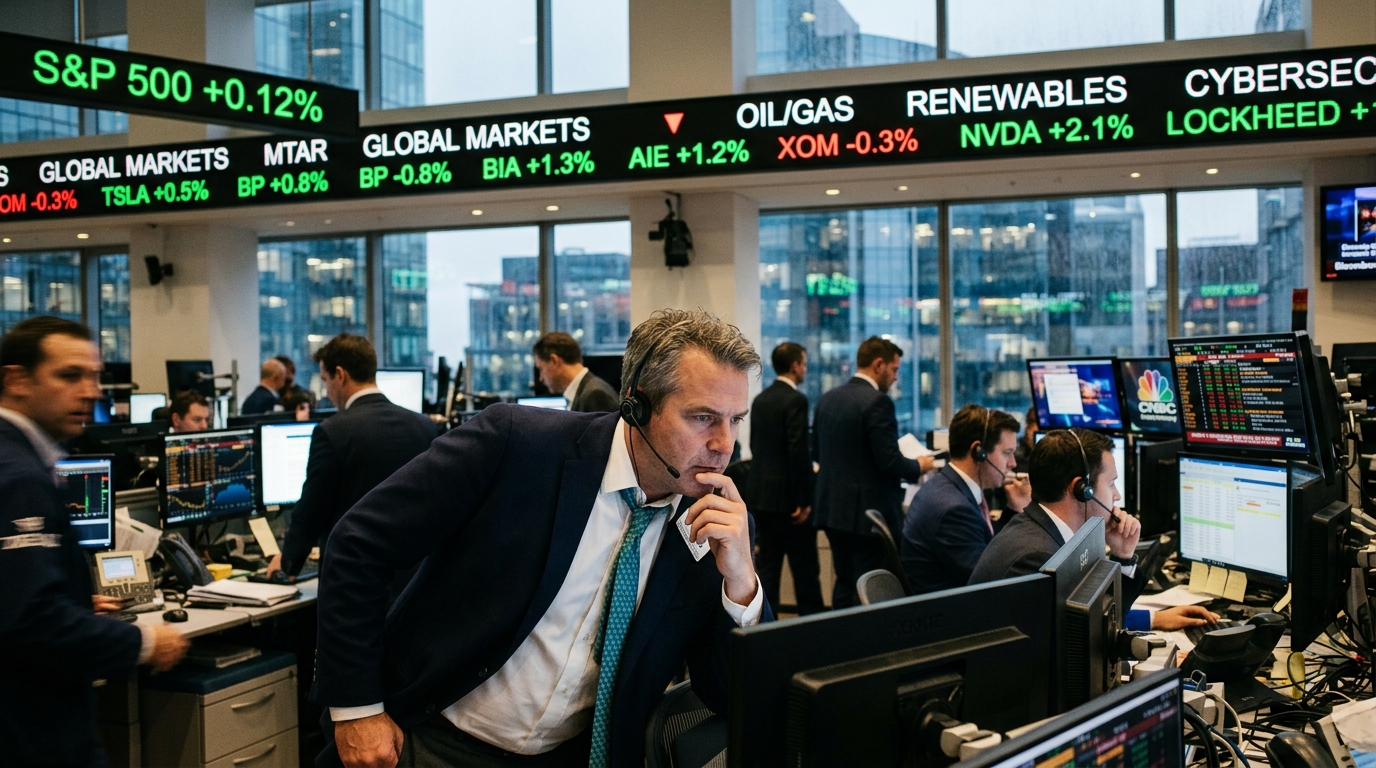
We stand at the threshold of a new economic era, where the traditional boundaries between technology, energy, and geopolitical security are dissolving. What were once considered distinct sectors are now intertwining into a "Triple Helix" that is driving one of the most significant investment cycles in modern economic history. Recent analysis of global trends, highlighted by international forums in Vietnam and East Asia, emphasizes that Artificial Intelligence (AI) is no longer just software; it is a catalyst requiring massive physical infrastructure, uninterrupted energy, and fortified national security.
AI as Physical Infrastructure
For years, the investment community treated technology as something intangible—the famous "software is eating the world" mantra of Marc Andreessen. However, the advent of Generative AI has fundamentally changed the calculus. Training large language models requires thousands of specialized semiconductors (GPUs) and massive data centers. This transforms AI from a digital service into a heavy infrastructure industry.
Investment is no longer just flowing into apps and startups, but into the "hardware" of technology. Countries that possess the land, cooling resources, and stability to host these "digital factories" are becoming the new magnets for capital. The demand for chips from companies like Nvidia has created a ripple effect across the supply chain, forcing governments to subsidize domestic semiconductor production to ensure their technological sovereignty.
The Energy Paradox of the Digital Age
The greatest challenge to the expansion of AI is energy. A single ChatGPT query consumes significantly more power than a standard Google search. As AI becomes embedded in every aspect of our lives, global electricity demand is expected to skyrocket. This is triggering a new investment cycle in the energy sector, with a dual focus on renewables and the resurgence of nuclear power through Small Modular Reactors (SMRs).
- Investment in "Smart Grids" to manage the load from massive data centers.
- Power Purchase Agreements (PPAs) between tech giants and green energy providers.
- Development of long-duration energy storage (utility-scale batteries) to ensure 24/7 AI operations.
The need for "Green AI" is not just a matter of corporate social responsibility; it is a matter of economic survival. Nations that can provide cheap, stable, and clean energy will be the ones to dominate the next economic cycle, making energy the new "currency" of technological power.
Security and Geopolitics: The New Frontier
In a world of increasing tensions, security—cybersecurity, energy security, and national sovereignty—forms the third pillar of this cycle. AI is now a critical tool for national defense, from intelligence analysis to autonomous systems. Simultaneously, the reliance on specific geographic regions for chip production (such as Taiwan) is now viewed as a systemic risk.
"Security is no longer an expense; it is a strategic investment that ensures the continuity of economic activity in an uncertain environment," market analysts suggest.
This is driving a trend of "friend-shoring" or "near-shoring," where investments are directed toward allied nations. Vietnam, for instance, is emerging as a central player as companies seek to diversify their supply chains away from China. This shift of capital is reshaping global alliances and creating new economic powerhouses.
Conclusion: A Holistic Approach
The new global investment cycle is no longer about isolated successes in a single sector. Success requires a holistic approach where technological innovation is backed by strong energy foundations and protected by robust security policies. For investors, this means a shift toward "hard" infrastructure. For nations, it means a reboot of industrial policy centered on AI. The future belongs to those who can synthesize these three elements into a single, sustainable ecosystem.





