The euphoria that characterized the entry of Artificial Intelligence (AI) into international markets in 2024 and 2025 is now giving way to deep skepticism and intense concern. As we move through the second half of 2026, the discussion has shifted from promises of explosive profitability to the existential risks posed by automated decision-making to the stability of the global financial architecture. Regulators from the US SEC to the European Central Bank are sounding the alarm: AI is not just an efficiency tool, but a potential accelerator of systemic crises.
The 'Herd Mentality' of Algorithms
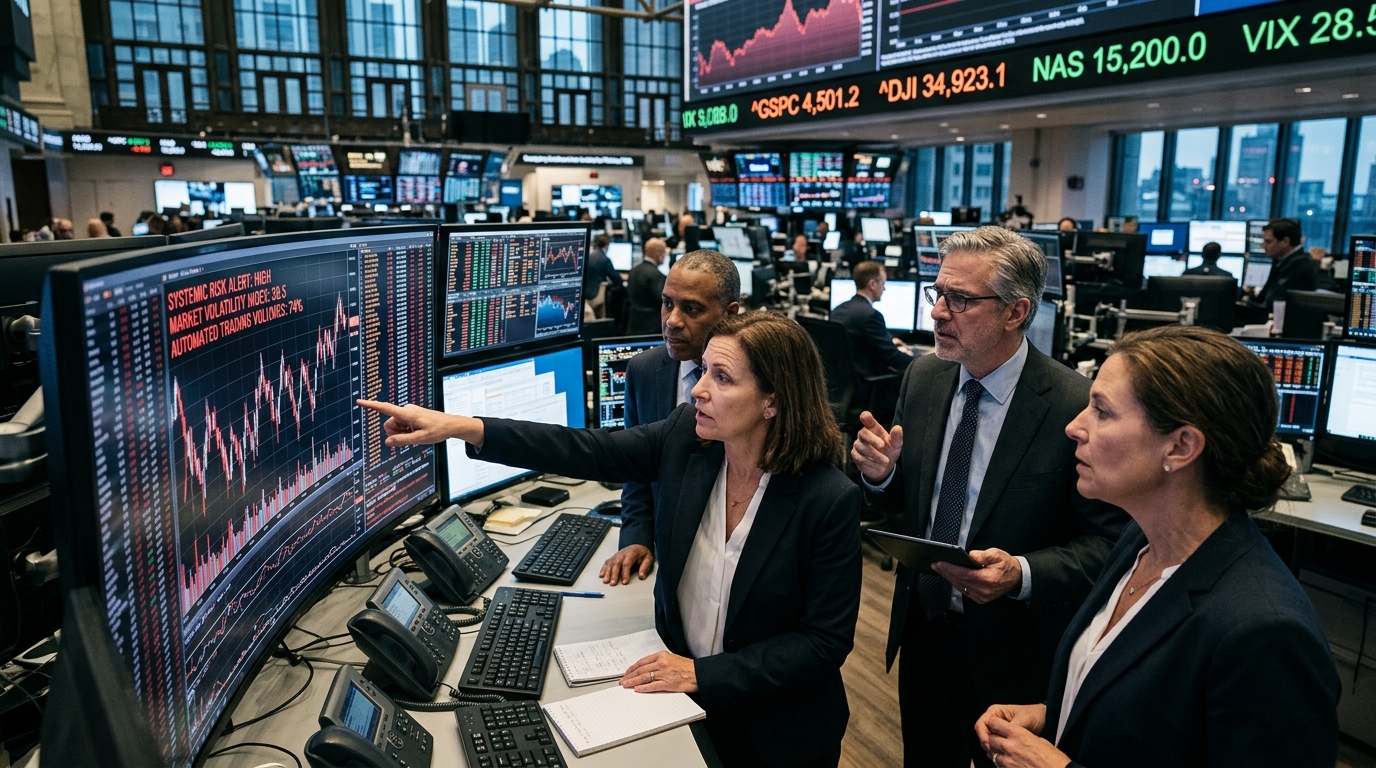
The main point of concern for economists is the phenomenon of "algorithmic convergence." When most investment banks, hedge funds, and asset managers use similar Large Language Models (LLMs) and machine learning algorithms to analyze market data, there is a risk that they will reach the same conclusions at the exact same time. This uniformity can lead to massive sell-offs or purchases, causing extreme volatility that exceeds the capabilities of traditional protective mechanisms.
Regulators warn that AI can create "digital herds." If one algorithm detects a danger signal, thousands of others may follow it within milliseconds, leading to "flash crashes" that could wipe out billions of dollars before human intervention can react. The lack of explainability in many of these models—the so-called "black box"—makes it impossible for auditors to understand the "why" behind a sudden market disruption.
Concentration of Power and Model 'Monoculture'
Another critical factor is the reliance on a very limited number of AI infrastructure providers. Today, the majority of financial institutions rely on the cloud computing and models of three or four tech giants. This concentration creates a "single point of failure." A technical malfunction in Microsoft's, Google's, or Amazon's infrastructure, or a critical bug in a widely used OpenAI model, could simultaneously paralyze global banking transactions.
- Contagion Risk: The interconnection of markets through shared algorithms means that a crisis in one sector can be transmitted instantly to others.
- Cybersecurity: The use of AI by malicious actors to manipulate markets or commit sophisticated fraud is now a daily threat.
- Training Data: If models are trained on historical data that does not include extreme scenarios (black swan events), they may fail spectacularly during periods of real crisis.
The Regulatory Counterattack
Faced with these challenges, supervisory authorities are tightening the operating framework. The European Union, through the AI Act, sets strict rules for "high-risk" systems, which now include credit scoring and risk management algorithms. In the US, SEC Chair Gary Gensler has repeatedly emphasized that existing conflict-of-interest rules must be updated to ensure that algorithms do not prioritize corporate profits over client interests.
However, regulating AI is a race where the legislator is always running behind the technology. Banks argue that over-regulation could stifle innovation and drive activities into "shadow banking" markets with less oversight. The challenge for 2026 is to create a "dynamic framework" that allows for the utilization of AI while ensuring that the system has sufficient safety buffers to withstand the next digital storm.
Conclusion: The Need for Human Oversight
As AI becomes increasingly autonomous, the need for a "human-in-the-loop" becomes imperative. Markets are not just numbers and code; they are the result of human trust. If investors stop understanding how markets work because they are controlled by opaque algorithms, the very foundation of capitalism is at risk. Technology must serve stability, not undermine it for the sake of speed.