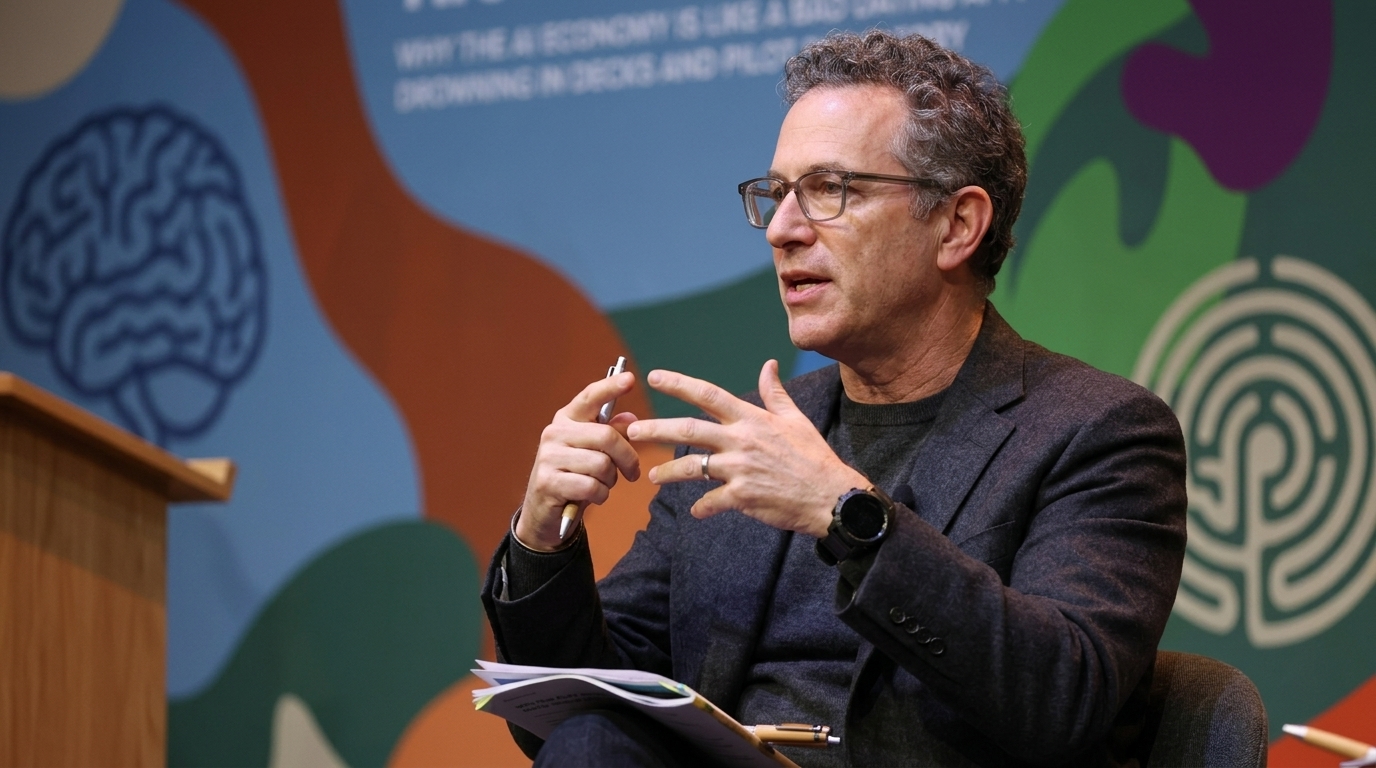
Amy Webb, the renowned futurist and founder of the Future Today Strategy Group, likens the current state of the AI economy to the fatigue experienced by users of dating apps. In a recent analysis, she describes a corporate world where CEOs are buying into the "abundance" promised by AI without budgeting for the actual cost of that abundance.
Pilot Purgatory
According to Webb, businesses are trapped in what she calls "pilot purgatory." Despite massive leaps in potential productivity, executives are unsure how to harness it. A Bain & Company survey of 951 global firms supports this: while 90% are increasing AI budgets, nearly 40% of those measuring cost savings reported returns below 10%, missing their targets significantly.
The issue lies in a lack of integration. Many pilots run without involving legal or IT departments, meaning companies often restart from zero rather than embedding the technology into their infrastructure. "AI is making production cheap," Webb notes, "but it’s making everything else in companies much more expensive."
The 'Insta-Deck' Trap
Another side effect is information overload. Webb describes the phenomenon of "insta-decks": presentations that used to take a week to build now take a day. Consequently, executives are buried under five times as much analysis, leading to decision paralysis rather than action. She also notes a "verbosity problem" with tools like Claude, which might produce ten pages when only one is needed.
A Different Kind of Reckoning
Webb expects a reckoning as early as next year as Wall Street begins demanding measurable results from generative AI pilots. However, she stresses this is not a standard dotcom-style bubble. The problem is a generational and expertise gap: boards and CEOs have spent decades developing skills in fields unrelated to AI. Managing this shift requires data-driven planning rather than gut feeling.
If this mismatch between pressure and inexperience persists, Webb warns the outcome could be worse than a market crash. She describes a scenario where the economy makes "weird decisions"—effectively an AI hallucination on an economy-wide scale.