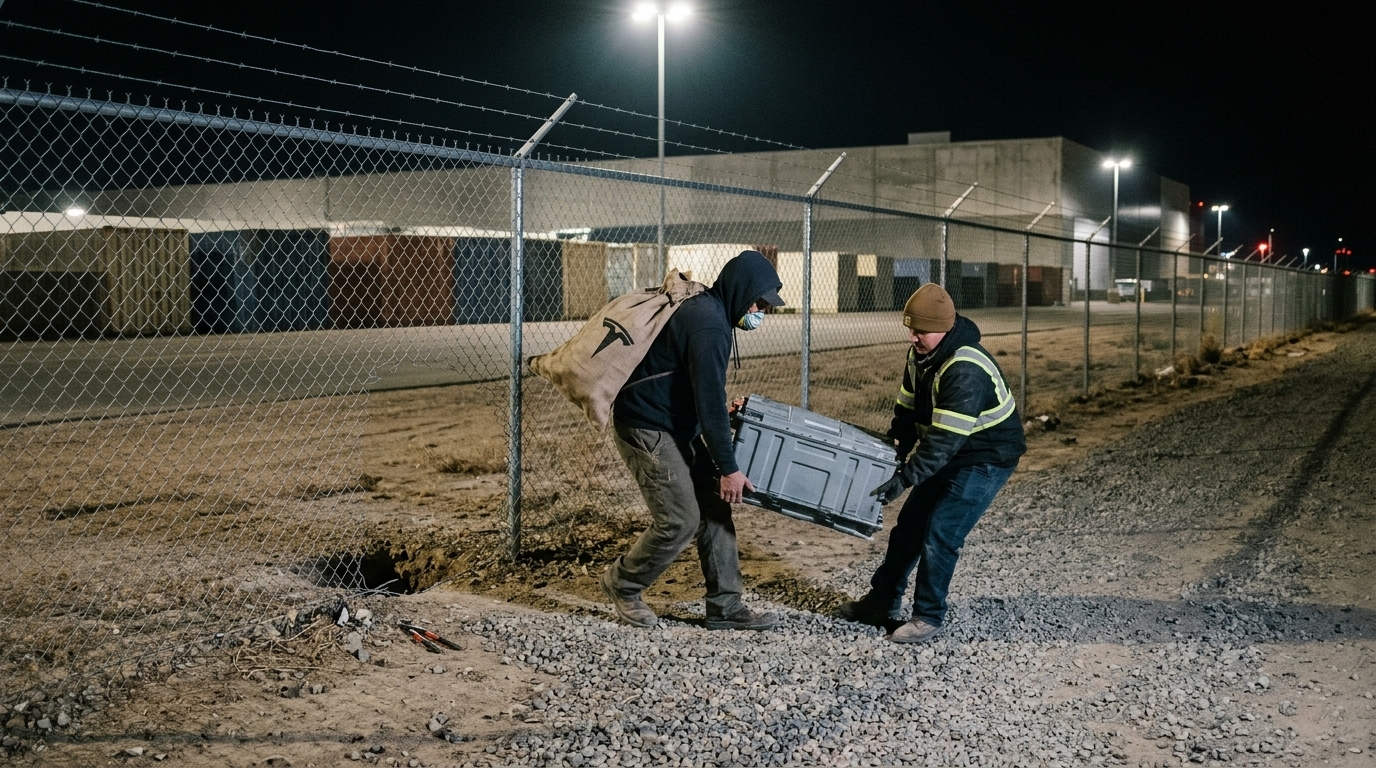
In the heart of the Nevada desert, where Tesla has erected its flagship Gigafactory, a quiet but extremely costly war is unfolding. While Elon Musk envisions a future of autonomous driving and humanoid robots, the reality of his supply chain appears vulnerable to much more traditional methods of crime. According to sheriff's records recently brought to light, entire truckloads of Tesla batteries are vanishing before they even clear the factory gates.
The Anatomy of a Modern Piracy
Cargo theft is nothing new, but the scale and frequency of incidents at the Nevada Gigafactory are shocking. In January 2026 alone, nine major cargo theft incidents were recorded. These are not petty thefts by individual employees, but organized operations targeting the company’s most valuable asset: lithium-ion battery cells. Perpetrators appear to be using a method known as "strategic cargo theft," which relies more on social engineering and identity theft than on brute force.
In many cases, thieves use stolen truck driver identities or create shell transportation companies. They show up at the factory with the correct paperwork—or at least paperwork that looks valid in the rush of daily operations—load hundreds of thousands of dollars worth of goods, and simply drive away. By the time Tesla or the actual transport company realizes the cargo never reached its destination, the batteries have already been funneled into the black market.
Why Batteries are the 'New Gold'?
The demand for lithium batteries has skyrocketed, not just for electric vehicles (EVs), but also for home energy storage systems and industrial applications. A pallet of Tesla batteries is remarkably easy to liquidate. Unlike a whole car, which has a Vehicle Identification Number (VIN) and can be tracked via GPS, individual cells or battery packs are difficult to trace once they are removed from their packaging. This makes them the ideal product for the black market, where the demand for cheap Tesla components is insatiable.
- High resale value in unauthorized repair shops.
- Difficulty in tracing individual components.
- Growing global raw material shortages driving up prices.
This situation highlights an irony: a company considered a pioneer in digital security and software seems to struggle with managing the physical challenges of traditional industry. Facility security and logistics oversight appear to have lagged behind the sheer speed of production.
Market and Safety Implications
These losses don't just affect Tesla's profitability. They set a dangerous precedent for the entire EV industry. When critical components end up on the black market, there is a risk they will be used in DIY projects or low-quality repairs, increasing the risk of fires or failures. Furthermore, insurance premiums for transport companies working with Tesla are expected to soar, a cost that will eventually be passed on to the consumer.
"Cargo theft is becoming one of the biggest threats to the green transition," says a supply chain analyst. "If we cannot protect our materials from the factory to the customer, the cost of electrification will remain prohibitive."
Tesla, for its part, has maintained a wall of silence, refusing to comment on the specific incidents. However, sources within the factory suggest the company is now attempting to implement stricter identity verification protocols and digital "seals" on cargo in an effort to stem the tide of thefts threatening to derail its production targets.