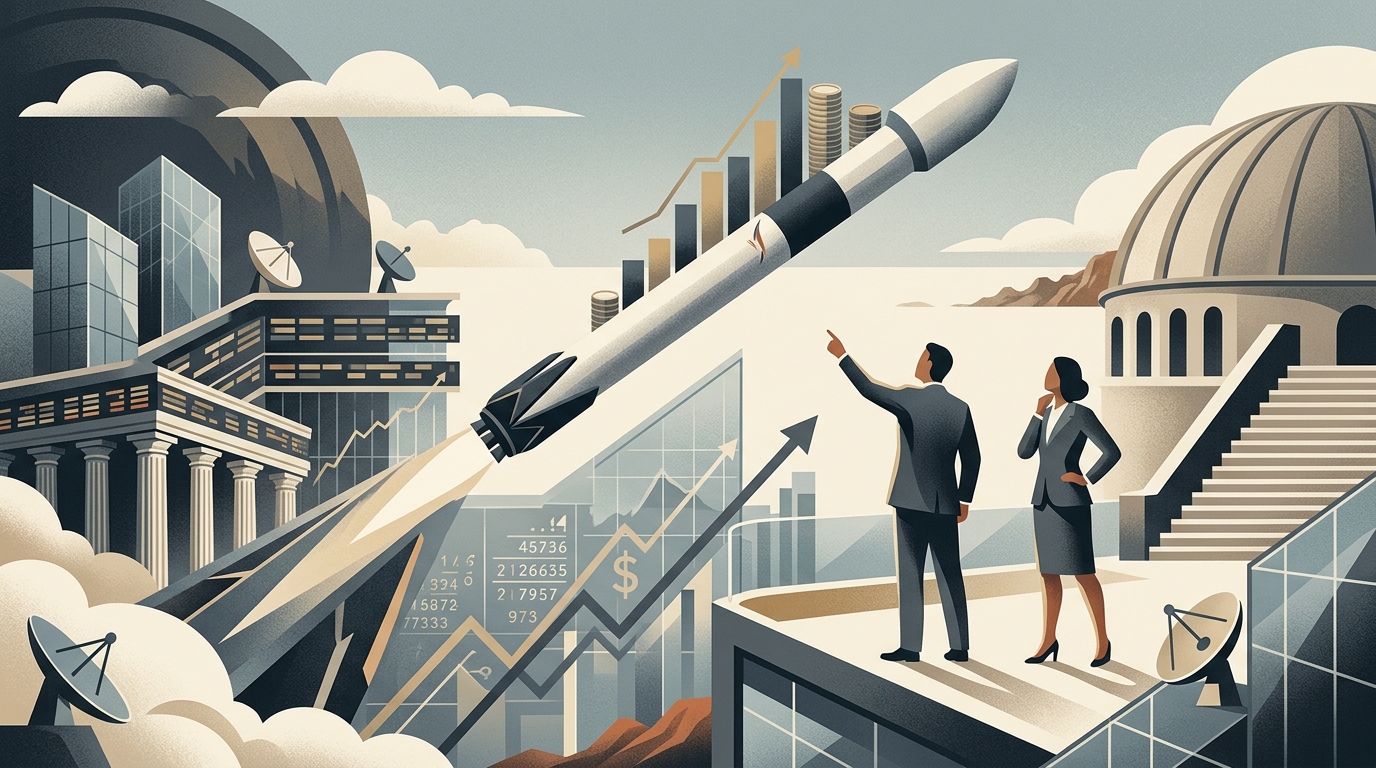
June 11, 2026, will be etched in the annals of global markets as the day the boundaries between the terrestrial economy and the cosmos finally blurred. SpaceX, the aerospace pioneer founded by Elon Musk in 2002 with the then-outlandish vision of colonizing Mars, has officially filed for an Initial Public Offering (IPO) on the New York Stock Exchange (NYSE). This is not merely another public listing; it is an event poised to shatter every existing record, potentially eclipsing even the massive debut of Saudi Aramco.
The Financial Titan of the Stars
SpaceX’s valuation, which hovered around $250 billion in its final private funding rounds, is now expected to reach dizzying heights. Wall Street analysts predict the company’s market capitalization could surge past $1 trillion within its first six months of trading. The engine behind this astronomical growth is no longer just the Falcon 9 rockets, but Starlink. The satellite internet service has evolved into a global cash cow, providing connectivity to the remotest corners of the Earth and securing the steady cash flow needed to fund Musk’s most ambitious projects.
The timing of the IPO coincides with SpaceX holding a near-total monopoly on orbital launches. With Starship now fully operational and conducting regular flights, the cost of moving mass into space has plummeted by 90%. This technological supremacy translates directly into economic dominance, as governments and private enterprises find themselves with no viable alternative for reliable access to orbit.
The World’s First Trillionaire
The public listing places Elon Musk in a unique position in human history. Holding approximately 42% of the company, his personal net worth is projected to surpass the $1 trillion mark. This is a milestone that fundamentally shifts the landscape of global economic power. While other billionaires have built empires on software or retail, Musk now controls the infrastructure that will define the future of humanity: energy (Tesla), communication (X and Starlink), and now transportation beyond the atmosphere.
“We aren’t just building a company; we are building the bridge to a multi-planetary civilization,” Musk stated in a recent briefing, emphasizing that the proceeds from the IPO would be funneled directly into the construction of the first city on Mars.
However, going public brings a new set of challenges. SpaceX, which has operated with the secrecy and agility of a private entity, must now answer to shareholders and regulatory bodies. The Securities and Exchange Commission (SEC) is expected to scrutinize the company’s books with unprecedented rigor, especially given Musk’s historically turbulent relationship with institutional oversight.
Geopolitical and Social Implications
SpaceX’s dominance is not just a financial matter; it is deeply geopolitical. The Starshield program, the military variant of Starlink, has already made the company a critical partner for the Pentagon. Transitioning to a public company means that foreign investment—potentially from rival powers—will attempt to gain a stake in the most strategic enterprise of the 21st century. The U.S. government is expected to impose strict ownership limits to safeguard national security interests.
Simultaneously, Musk’s ascent to trillionaire status reignites the debate over wealth inequality and the concentration of power. Never before has a single individual wielded such influence over global infrastructure. SpaceX is no longer just launching satellites; it is launching the hopes and anxieties of an era that looks to the stars for its destiny while grappling with crises on the ground. The IPO marks the end of the 'New Space' era and the beginning of the 'Space Economy' as a mature, public-facing reality.