

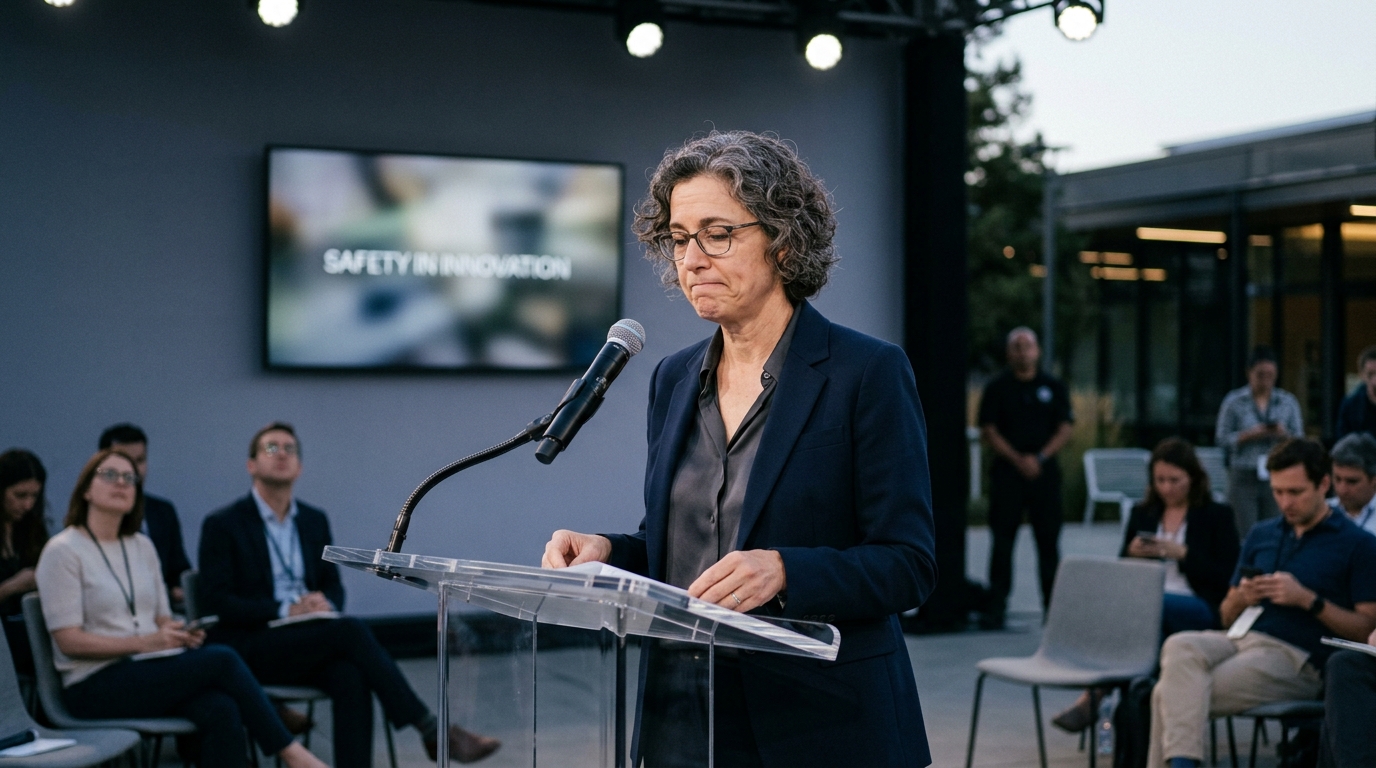
In an era where OpenAI is striving to cement its dominance in the global artificial intelligence market, internal tremors continue to shake the organization's foundations. The news of Johannes Heidecke’s departure, the firm’s Head of Safety, adds to a growing list of high-profile exits by executives tasked with shielding the company’s systems from existential risks. According to a report by Wired, Heidecke’s departure is the direct result of a broad internal reorganization, which appears to shift the center of gravity from rigorous safety research to rapid product deployment.
The Chronicle of a Foretold Crisis
Heidecke’s exit is not an isolated incident but rather part of a larger pattern that began with the dramatic firing and subsequent reinstatement of Sam Altman in November 2023. Since then, OpenAI has seen iconic figures such as Ilya Sutskever (co-founder and Chief Scientist) and Jan Leike (head of the Superalignment team) walk away. The common denominator in these departures is a fundamental disagreement over company priorities: safety appears to be taking a backseat to commercial success and the imperative to maintain a lead over rivals like Google and Anthropic.
Heidecke, who assumed a pivotal role following the dissolution of the Superalignment team, was at the center of an effort to integrate safety protocols across all development tiers. However, the recent reshuffle seems to have stripped away the autonomy required for such a mandate. Reports suggest that Altman’s leadership is pushing for a more "fluid" structure where safety researchers work directly within product teams—a move many critics interpret as a calculated attempt to dilute internal oversight and dissent.
The Clash of Ideologies: Safety vs. Velocity
At the heart of the issue lies a philosophical and practical divide between "Alignment" and "Commercialization." OpenAI was founded as a non-profit dedicated to the safe development of Artificial General Intelligence (AGI). However, the insatiable need for capital—primarily from Microsoft—has effectively transformed the entity into a corporate behemoth.
"Safety cannot merely be a product feature; it must be its foundation,"a former executive remarked. Heidecke’s departure suggests that this ethos is losing ground within the halls of the San Francisco headquarters.
Regulatory and Political Implications
This exodus is not just a matter of internal corporate politics; it carries significant geopolitical weight. As the European Union begins enforcing the AI Act and the U.S. Congress debates stricter oversight frameworks, the weakening of safety divisions in leading AI firms alarms regulators. If the companies themselves cannot retain their "gatekeepers," then state intervention becomes the only viable path forward. OpenAI maintains that the reorganization will make safety processes more "efficient," but the market and academic circles remain deeply skeptical.
- The shift of resources from fundamental safety research to operational safety.
- The growing influence of executives hailing from traditional Big Tech backgrounds.
- The risk of creating an environment where critical voices are sidelined in favor of meeting shipping deadlines.
In conclusion, Johannes Heidecke’s exit is a red flag. OpenAI appears to be undergoing a final metamorphosis from an ethically-driven research lab into a corporation governed by the ruthless laws of Silicon Valley. The question that remains is whether the safety of humanity can be entrusted to a company that sees its own safety experts leaving one after another.





