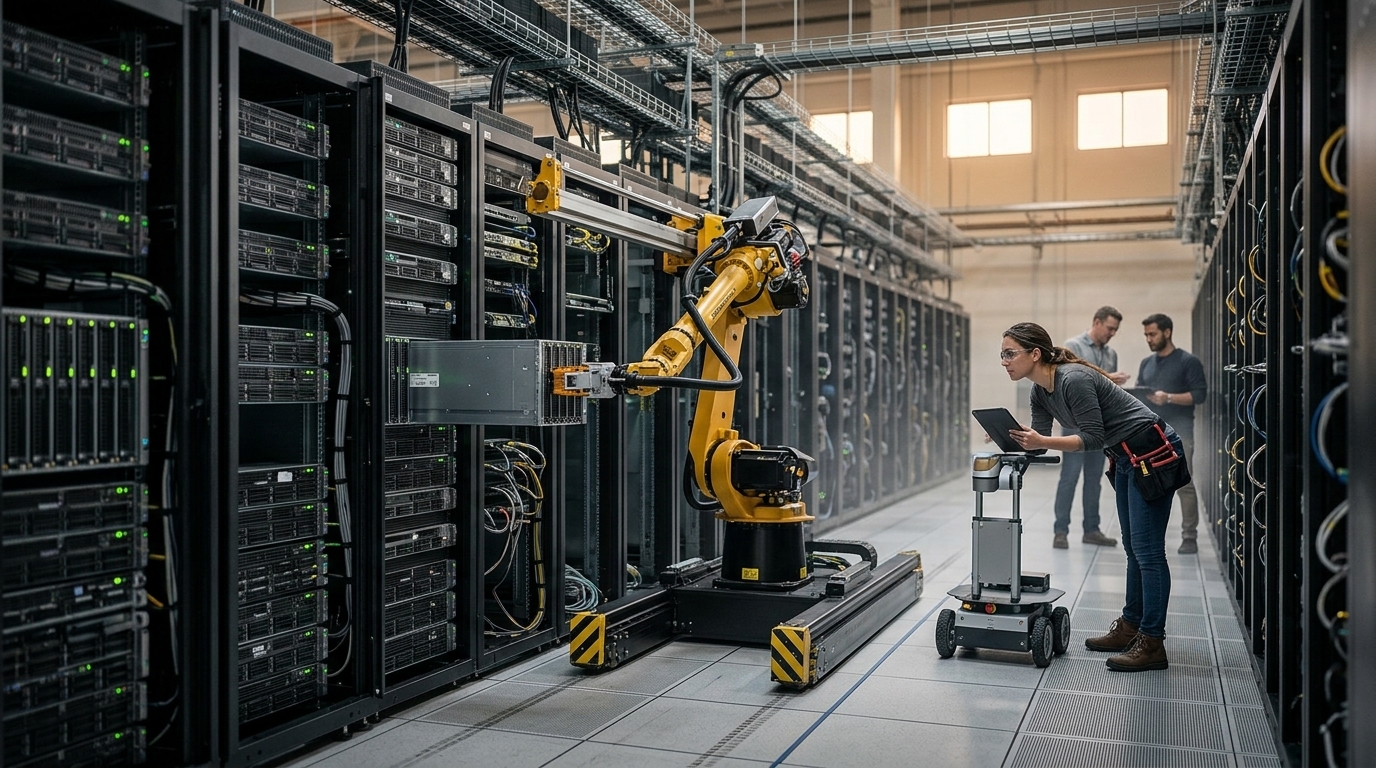
Meta is quietly testing robots to perform tasks traditionally handled by human technicians, such as plugging in network cables and resetting servers. According to current and former employees, this effort aims to manage the company's rapidly expanding data center footprint with fewer workers, keeping labor costs stable as AI infrastructure spending surges.
From Robotic Arms to 'Pointy Sticks'
The company is utilizing hardware from various vendors, including Kinova, ABB, and Watney Robotics. In one experiment, a Kinova Gen3 robotic arm is being evaluated for power cycling servers. At other facilities, Meta has deployed a simpler robot—described as a "pointy stick"—designed to physically press power buttons on Mac Minis when prompted by a remote human operator.
One data center worker estimated that, if successful, these bots could replace up to 80 percent of some employees' daily workloads. "We thought those of us performing the physical tasks were safe for a while, but not anymore," the worker noted.
Meta’s Stance and Community Impact
Meta declined to comment on specific testing but emphasized its commitment to hiring and training. Spokesperson Francis Brennan stated that the U.S. is experiencing a shortage of skilled workers and that Meta needs more personnel, not fewer. However, internal discussions and previous conference statements by Meta executives suggest a long-term goal of using robots to speed up incident response and handle preventative maintenance.
“They no longer want people who can think independently... They want ‘smart hands,’ people who are just capable enough to follow AI instructions,” said one Meta employee.
Technical Hurdles and Future Visions
Despite the push, significant technical challenges remain. An inventory robot currently in use struggles to differentiate between red and green status lights because its camera only detects grayscale. Furthermore, existing data center hardware is designed for human dexterity; redesigning components for robots, such as the complex cabling required for NVIDIA GB300 supercomputers, will take time.
In the long run, reducing human presence could make it feasible to operate data centers in environments inhospitable to life, such as underwater or in outer space. For now, the transition is creating a demoralized atmosphere in hubs like Altoona, Iowa, where workers fear their roles may vanish within years.