

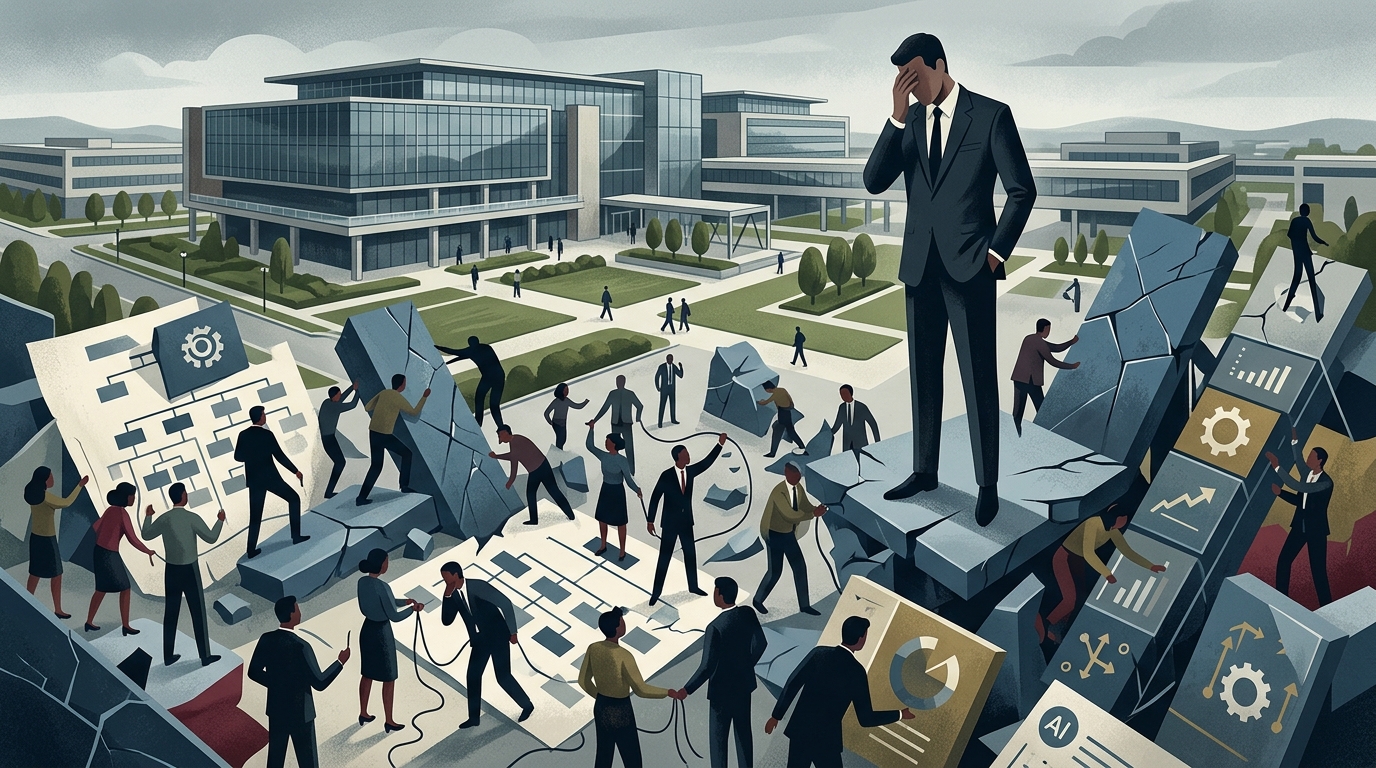
Meta, the social media titan formerly known as Facebook, has been in a state of perpetual transformation for the past three years. From the grand vision of the Metaverse to Mark Zuckerberg’s current "Year of Efficiency," the company is struggling to redefine its identity. However, the pivot to Artificial Intelligence (AI) has been neither smooth nor painless. In an internal memo recently brought to light by Wired, Chief Technology Officer (CTO) Andrew "Boz" Bosworth admitted with startling candor that the company’s recent AI reorganization was "atrocious."
The Anatomy of a Chaotic Pivot
Bosworth’s admission isn't necessarily a surprise to those following Meta’s internal dynamics, but the use of such a harsh descriptor by a top executive is rare. According to the memo, the company’s scramble to integrate Generative AI into every facet of its operations led to a series of rushed personnel shifts, murky reporting lines, and a pervasive sense of uncertainty. Employees, already reeling from the massive layoffs of 2023, found themselves in an environment where priorities shifted weekly.
Bosworth acknowledged that leadership communication was severely lacking. Teams working within Reality Labs (the Metaverse division) saw resources abruptly diverted toward the development of Llama, Meta’s large language model, without a clear explanation of how this affected their long-term objectives. This created a climate of "internal competition" and confusion, as various departments vied for a role in the new AI gold rush.
The Strategic Necessity of a Mea Culpa
Why did Bosworth choose this moment for such a blunt self-critique? The answer lies in employee morale and retention. Meta is in a fierce war with OpenAI, Google, and Anthropic for the world’s top AI talent. If engineers feel the organization is dysfunctional, they will take their expertise elsewhere. Admitting failure is the first step toward rebuilding trust. The CTO promised a period of "stability," vowing that the major structural upheavals are now behind them.
- Improving internal transparency regarding strategic pivots.
- Restoring certain workplace perks that were previously cut as a gesture of goodwill.
- Focusing on AI execution without further disruptive restructuring.
It is evident that Meta is attempting to heal the wounds inflicted by Zuckerberg’s aggressive "flattening" of the company. The return of certain office perks might seem trivial to outsiders, but in Silicon Valley culture, these benefits are symbols of the value the company places on its workforce.
The Challenge of the Road Ahead
Despite the internal friction, Meta has managed to deliver impressive results in the AI arena. Llama 3 is widely regarded as one of the best open-source models in existence, and the integration of Meta AI across Instagram and WhatsApp is moving at a breakneck pace. However, product success should not be mistaken for organizational health. Bosworth understands that sustained innovation requires psychological safety and focus—two elements that have been in short supply at Menlo Park lately.
"We can't build the future if the people building it feel like the ground is constantly shifting beneath their feet," Bosworth reportedly wrote.
The challenge for Meta now is to prove it can function as a mature technology leader rather than a permanent startup in a state of panic. The balance between the speed demanded by the AI market and the stability required by its human capital will determine whether Meta remains at the top of the tech hierarchy or buckles under the weight of its own ambitions.





