

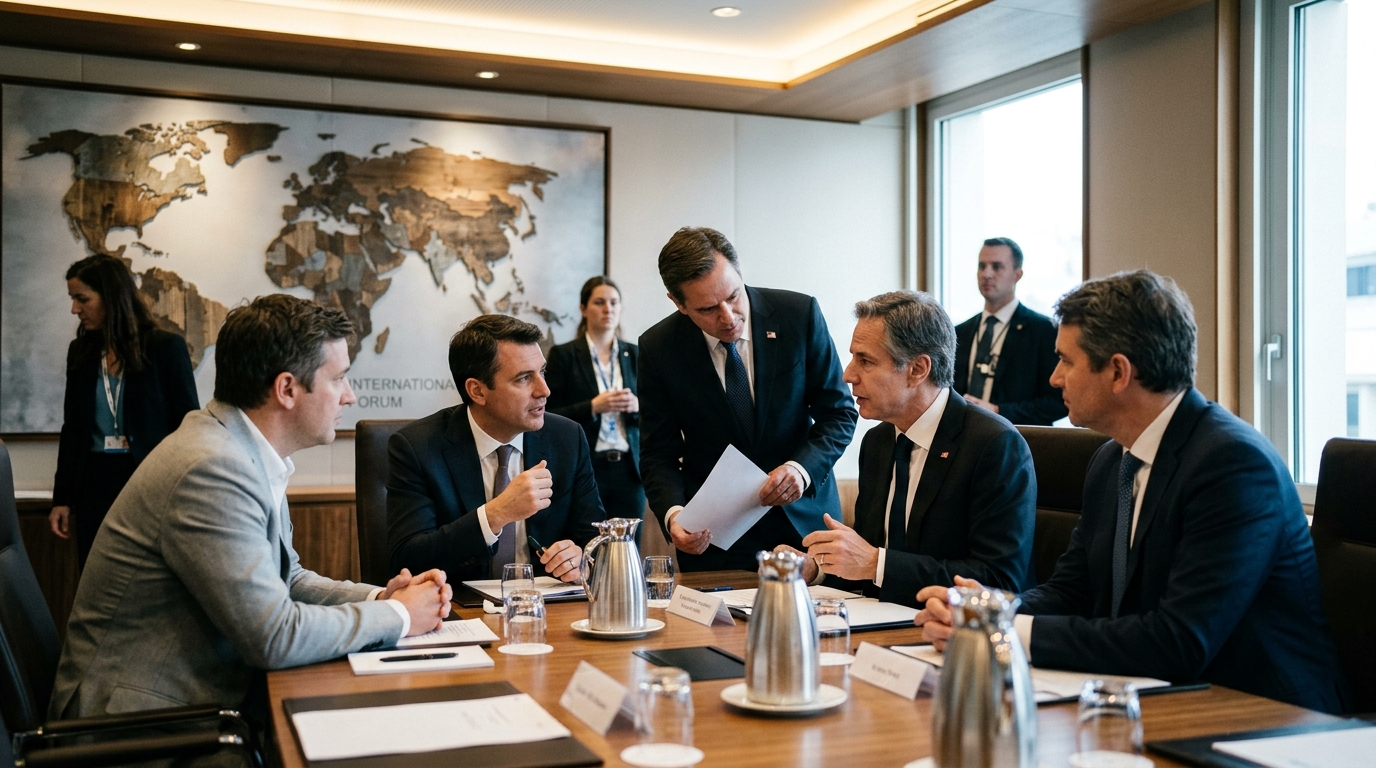
The news that top officials from the Trump administration met with the leadership of Anthropic—the company most associated with 'ethical' and 'safe' AI—has sent shockwaves through Silicon Valley. According to a report by Politico, this meeting was not merely a routine briefing but the beginning of a 'truce' in a war that has raged for years between Washington's conservative circles and California's tech laboratories.
The Divide Between 'Woke AI' and National Security
For a long time, Anthropic was in the crosshairs of Republicans. Its approach, known as 'Constitutional AI,' was viewed by many on the right wing as an attempt to impose liberal values and 'woke' ideology onto algorithms. Donald Trump himself has repeatedly criticized Big Tech for bias, arguing that AI models are programmed to suppress conservative voices and promote a specific social agenda.
However, the reality of 2026 dictates new alliances. Anthropic, the creator of Claude, possesses some of the most advanced large language models in the world. In the escalating arms race with China, the U.S. government is realizing it cannot afford to marginalize one of the industry's most significant players. The 'truce' appears to be based on a straightforward exchange: Anthropic will mitigate constraints deemed 'ideological,' and the government will include it in the inner circle of national defense technology providers.
Anthropic’s Strategy: Survival and Influence
For Anthropic, this meeting represents a high-stakes, high-reward move. The company, founded by former OpenAI executives concerned about safety, risked being excluded from major government contracts if the hostility with the White House continued. By engaging in this dialogue, Dario Amodei and his team are attempting to convince Trump officials that 'safety' does not mean 'censorship,' but rather protection against catastrophic AI uses that could threaten America itself.
- The pivot toward national security as common ground for cooperation.
- The need for less restrictive models capable of military and intelligence applications.
- Pressure from investors to access the massive public sector market.
The China Factor and Technological Nationalism
The central argument seemingly breaking the resistance of Trump officials is the competition with Beijing. The administration is adopting a policy of 'technological nationalism,' where the success of American AI companies is equated with national power. In this context, internal disputes over 'ethical guidelines' are giving way to the necessity for models that are faster, stronger, and more efficient than those from Alibaba or Baidu.
"We cannot afford to lose the AI race because we disagree on how a chatbot should answer political questions," a senior White House advisor reportedly stated during the meeting.
This approach signals a new era where Artificial Intelligence is no longer treated as a consumer product or a research milestone, but as a strategic weapon. Anthropic, whether it likes it or not, is being called to play the role of a modern-day 'Manhattan Project' participant, adapting its culture to the requirements of a state that prioritizes power over ethical hair-splitting.
Conclusions and Future Outlook
This meeting is just the beginning. If the truce holds, we will see a significant shift in how AI models are developed in the U.S. The pressure to 'de-ideologize' AI may lead to more neutral but also more unpredictable systems. Simultaneously, Anthropic gains a seat at the decision-making table, ensuring its voice on safety is heard, even if it must compromise on the political correctness of its models. The road to AGI (Artificial General Intelligence) now runs through the halls of power in Washington, and Anthropic seems to have been the first to realize it.





