

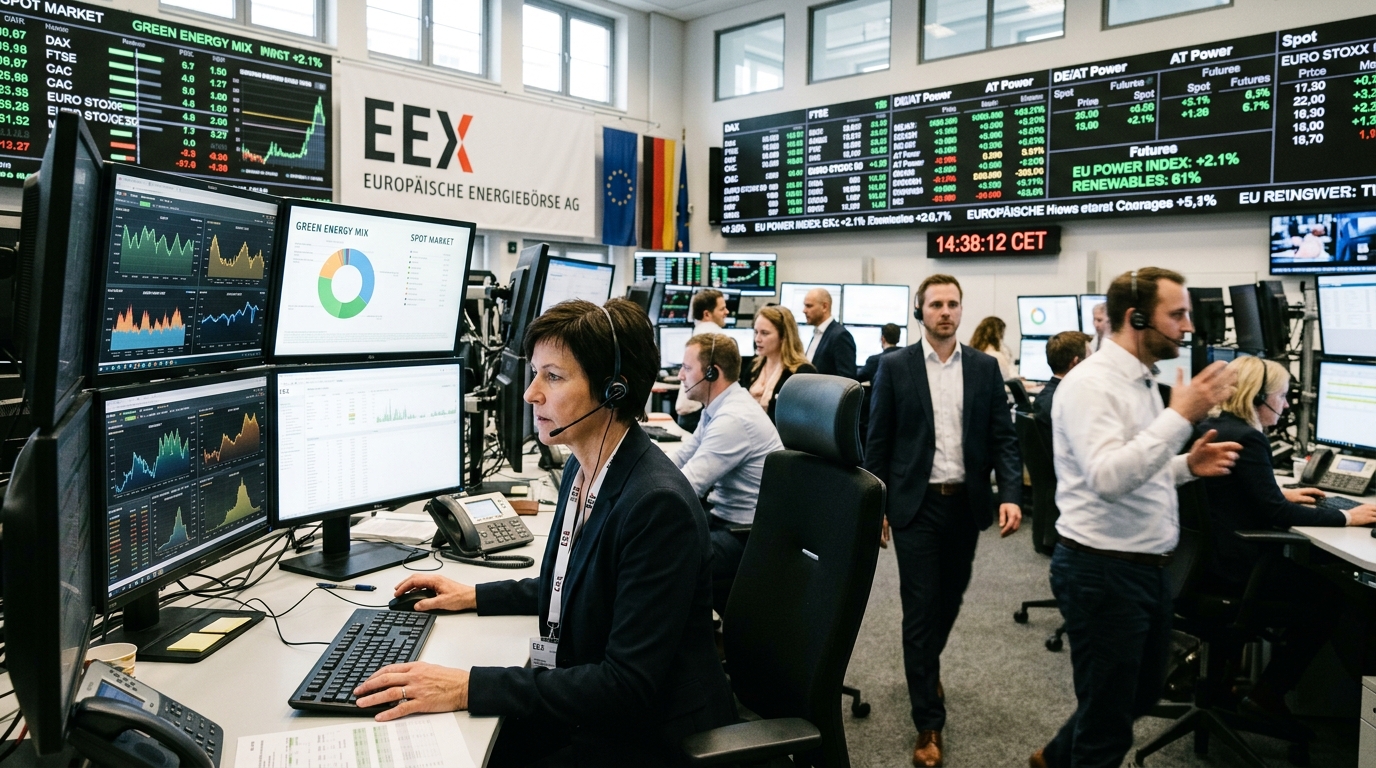
By mid-2026, the European Union stands at a critical crossroads. The climate crisis is no longer a distant threat but a daily reality straining the continent's economies. In this context, Artificial Intelligence (AI) is emerging as the most crucial ally in achieving the goals of the Green Deal. The transition from fossil fuels to renewable energy sources (RES) is not merely a matter of installing wind turbines and solar panels; it is a complex problem of data management and systems optimization that only advanced computing power can solve.
The Smart Grid Revolution
The primary obstacle to the full adoption of RES has always been intermittency—the fact that the sun doesn't always shine and the wind doesn't blow consistently. This is where AI makes the difference. Through sophisticated machine learning algorithms, grid operators in Europe can now predict energy production with an accuracy reaching 98%. This allows for efficient real-time balancing of supply and demand, reducing the need for gas-fired power plants that previously served as spinning reserves.
In Germany and Denmark, AI systems analyze satellite data and meteorological models to adjust the pitch of wind turbine blades, maximizing efficiency even in low-wind conditions. Furthermore, smart grids use AI to direct excess energy into storage systems or electric vehicle chargers, transforming the grid from a passive infrastructure into a living, self-regulating organism.
Industrial Efficiency and Predictive Maintenance
Heavy industry, responsible for a massive share of CO2 emissions, is also being transformed. In Europe's steel and cement factories, AI is used to optimize thermal processes. Through digital twins, engineers can simulate production and identify points of energy waste invisible to the human eye. Reducing energy consumption by just 5% at these scales translates into millions of tons less carbon dioxide in the atmosphere.
"Artificial intelligence is not just a digitization tool; it is the catalyst that makes the green transition economically viable," says a senior official at the European Investment Bank.
Another area where AI triumphs is predictive maintenance. Offshore wind farms in the North Sea are difficult and expensive to maintain. AI-powered sensors can predict a failure weeks before it occurs by analyzing vibrations and temperatures. This means less downtime and greater reliability for the continent's energy mix.
The Paradox of AI Energy Consumption
However, the relationship between AI and the environment is not without challenges. AI itself is energy-intensive. The massive data centers required to train models consume vast amounts of electricity and water for cooling. The European Commission has already established strict rules for the energy efficiency of data centers, requiring tech giants to use 100% renewable energy and recycle the heat they produce to warm nearby cities.
The question arises whether the energy savings offered by AI outweigh its own energy cost. Most studies indicate a positive ratio, but constant vigilance is required. The development of "green algorithms"—models that require less computing power to achieve the same results—is now a priority for the European research community.
Geopolitics and Energy Sovereignty
Beyond the environment, AI in energy is a matter of geopolitics. Europe, seeking independence from energy imports from authoritarian regimes, sees AI as the key to its energy sovereignty. Optimizing domestic production and reducing waste strengthens the resilience of the European economy against external shocks.
In conclusion, Europe's green revolution will not only be decided on political battlefields or in conference rooms but in the lines of code managing the flow of electrons. AI provides the intelligence that the "dumb" grid of the 20th century needed to become the smart engine of the 21st. The stakes are high, but for the first time, technology seems to be keeping pace with the needs of the planet.





