

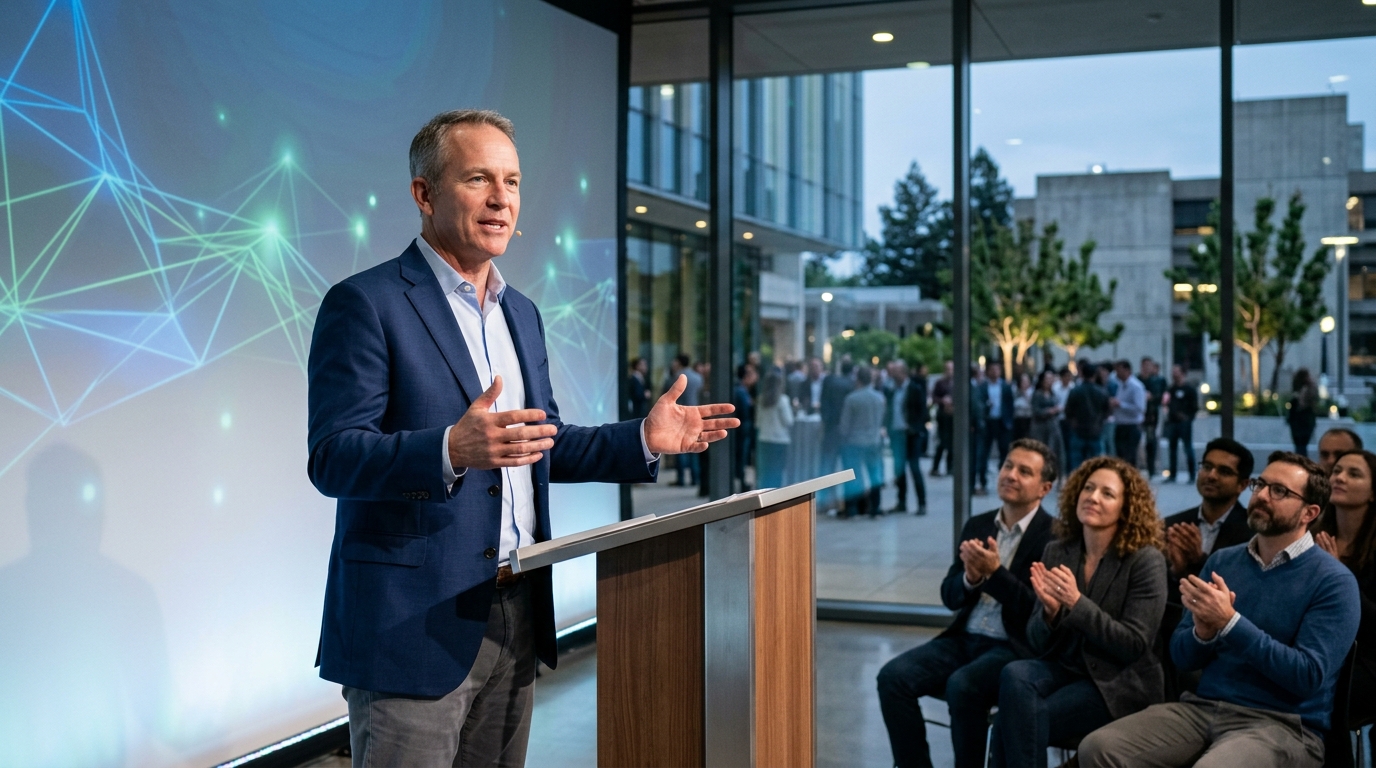
In a move that fundamentally redraws the map of enterprise software, Salesforce has announced the acquisition of Fin, a pioneer in agentic artificial intelligence, for a staggering $3.6 billion. This acquisition is not merely an addition to Marc Benioff’s portfolio; it signals a foundational strategic pivot: the transition from Generative AI that simply answers questions to autonomous AI that executes tasks.
The Agentforce Strategy and the Quest for Autonomy
The acquisition of Fin comes at a critical juncture for Salesforce. After a decade of dominance in CRM (Customer Relationship Management), the company faced the challenge of "AI fatigue" with traditional tools. Einstein, Salesforce's previous AI platform, while successful, was viewed by many as an assistive tool rather than an autonomous partner. By integrating Fin’s technology, Salesforce intends to give its AI "hands."
Fin’s "agents" differ from standard chatbots. While a chatbot can explain a company's return policy, a Fin agent can log into logistics systems, cancel an order, issue a credit note, and update the customer—all without a single human touchpoint. This capacity for decision-making and executing complex workflows is what justifies the premium price tag of the deal.
Fin: The Technology Behind the $3.6 Billion Price Tag
Fin was founded with the vision of solving the customer service crisis through "thinking" machines. Its platform is built on sophisticated reasoning models that allow the system to understand the context of a situation and select the best possible course of action. According to market analysts, Fin had achieved resolution rates exceeding 80% in specific industries—a figure considered the "holy grail" for enterprises looking to slash operational overhead.
Salesforce plans to weave this technology into its new flagship initiative, Agentforce. Agentforce promises to allow businesses to build their own digital employees in minutes using natural language. Fin provides the necessary plumbing to ensure these employees are not just polite in their responses, but effective in their actions.
Competition and the Future of Labor
This move by Salesforce is a direct shot across the bow for Microsoft and ServiceNow, both of which are investing billions in similar technologies. The war for dominance in the "autonomous enterprise" is well and truly underway. However, this acquisition also raises serious questions about the future of employment in call centers and back-office departments.
If an AI agent can do the work of ten humans at a fraction of the cost without ever tiring, the pressure for mass layoffs will become irresistible. Salesforce argues that AI agents will "augment" human labor, freeing employees from repetitive tasks. However, market reality often shows that efficiency translates into headcount reduction for the sake of profit margins.
Conclusion: A New Era for Software
Salesforce’s $3.6 billion acquisition of Fin will likely be remembered as the moment software stopped being a tool and started becoming an actor. For investors, it is a bet that the future of SaaS (Software as a Service) lies in autonomy. For workers, it is a warning sign and a call for upskilling. What is certain is that the business world will never be the same as "agents" take the reins of daily operations for the world's largest corporations.





