

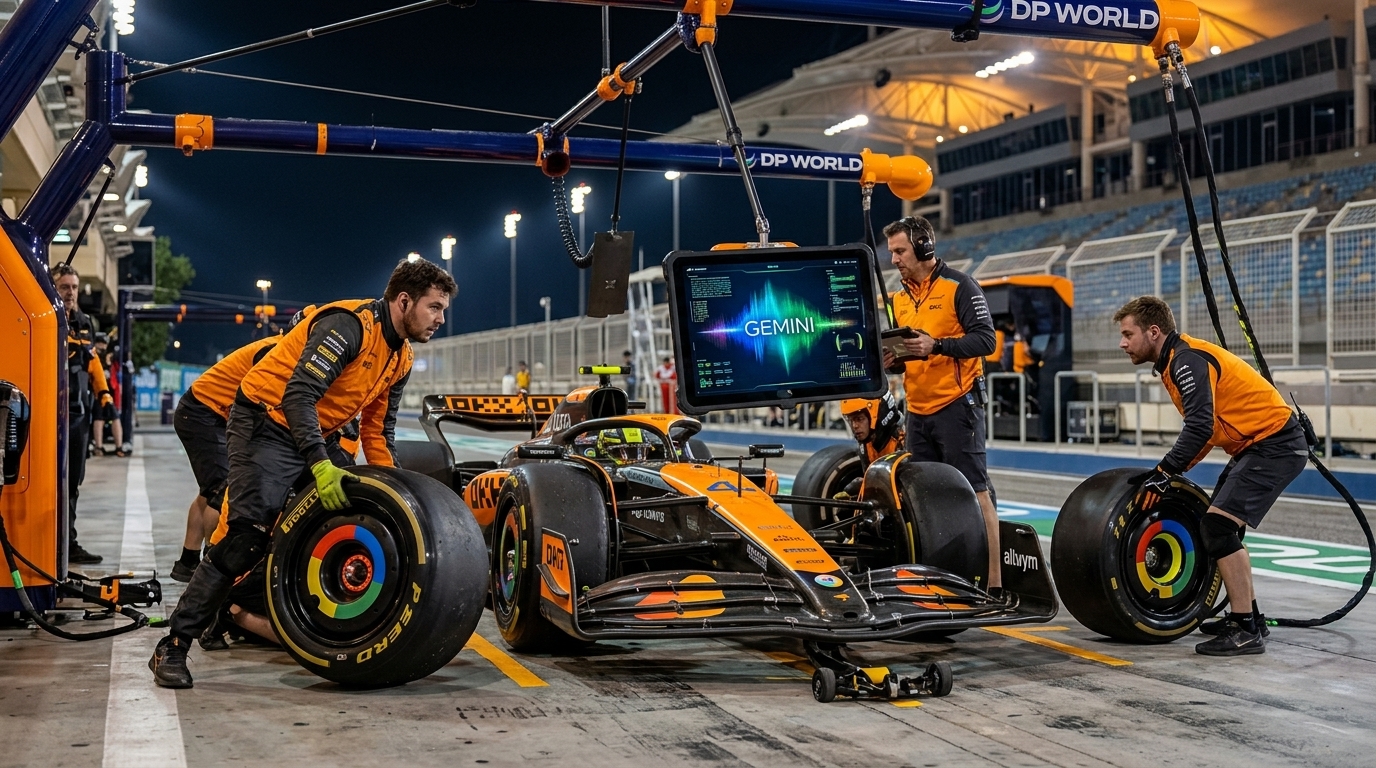
Formula 1 has always been the pinnacle of engineering excellence, a space where milliseconds separate triumph from obscurity. However, in 2026, the battle is no longer fought solely on the tracks and in wind tunnels, but in data centers. McLaren Racing, in a strategic move that redefines the sport's boundaries, has announced a deepening of its partnership with Google, bringing the Gemini AI model to the heart of its operations. This move isn't just about marketing; it represents a fundamental shift in how an F1 team analyzes data, designs strategies, and interacts with its audience.
The Tech Behind the Speed: Gemini as a Digital Engineer
During a race weekend, a Formula 1 car generates billions of data points from hundreds of sensors. The challenge for engineers is no longer collecting this information, but the ability to interpret it in real-time. This is exactly where Google Gemini steps in. Gemini's multimodal nature allows McLaren to combine telemetry, visual data from car cameras, and audio snippets from team radio, providing a holistic view of performance that was previously impossible.
The use of Gemini extends to simulating millions of race scenarios in seconds. While traditional algorithms could predict tire wear, AI can now factor in variables like micro-changes in wind direction or the psychological pressure on a driver based on their history in similar conditions. This ability to "predict the future" gives McLaren's strategists, such as Randeep Singh, an invaluable advantage during critical pit stop decisions.
Design and Aerodynamics: The Creative Intelligence of AI
The partnership isn't limited to the garage. To celebrate this technological convergence, McLaren unveiled a special anniversary car, the livery of which was designed with the help of Gemini. The AI analyzed decades of the team's historical liveries, from the iconic Papaya Orange to the Chrome of the 2000s, and created a design that honors the past while looking toward the future. This process, which would normally take weeks of design work, was completed in record time, allowing creators to focus on detail and emotion.
More substantially, AI is now being used to optimize Computational Fluid Dynamics (CFD). Formula 1 imposes strict limits on the time teams can spend in the wind tunnel. Using Gemini allows McLaren to "guess" which aerodynamic shapes will be most efficient before even testing them digitally, drastically reducing development time and cost—something extremely critical under the FIA's Budget Cap regulations.
Winning Strategy and the Fan Experience
McLaren understands that F1 is as much a spectacle as it is a sport. Through Google's tools, the team is creating personalized experiences for its fans. Gemini can analyze fan questions on social media and generate real-time explanatory content, clarifying complex technical decisions made during the race. This level of transparency and engagement strengthens brand loyalty at a time when the F1 audience is becoming increasingly young and tech-savvy.
In conclusion, the integration of Google Gemini into McLaren is not a simple sponsorship deal. It is proof that artificial intelligence has matured enough to be trusted in high-stakes environments. As McLaren continues to push for the top of the championship, AI will be the invisible co-pilot for Lando Norris and Oscar Piastri, turning every bit of information into pure speed on the asphalt.





