

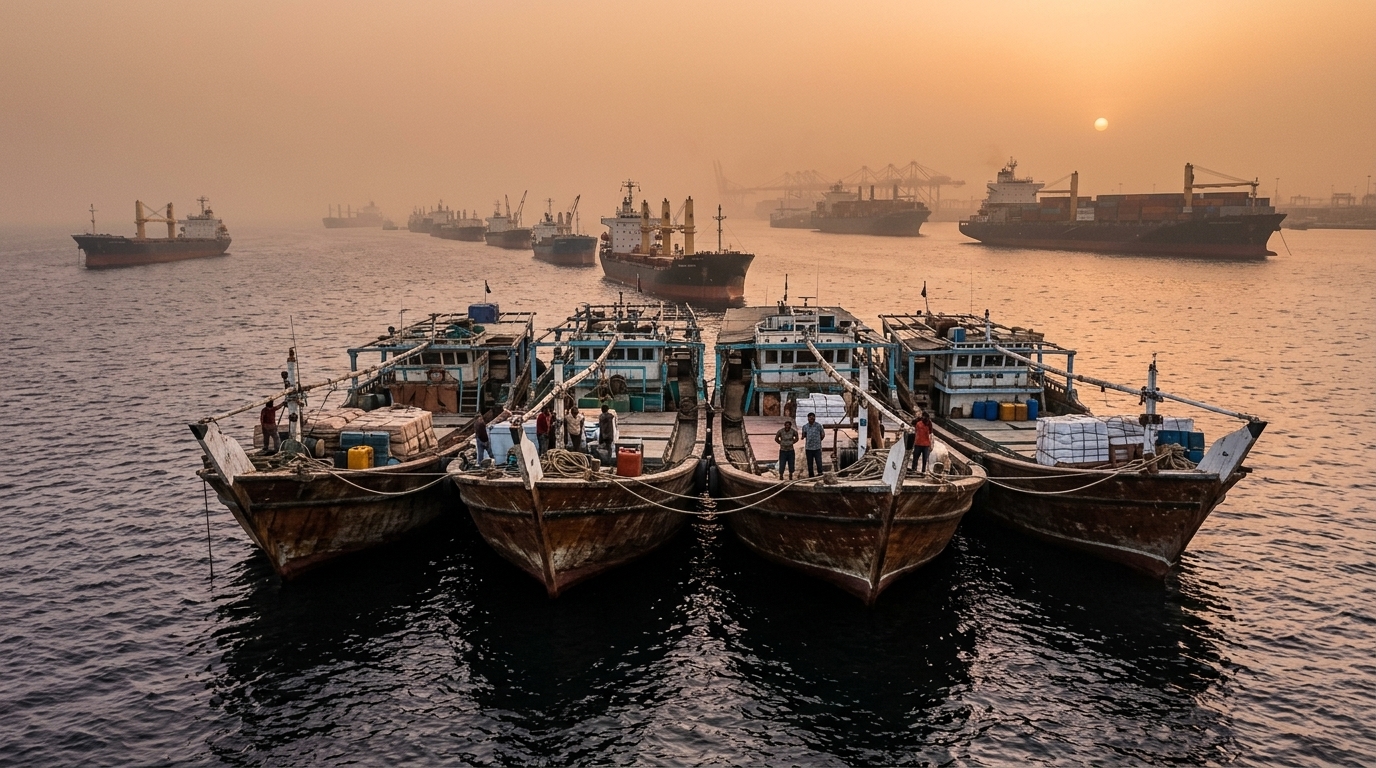
The global economy rests on an invisible yet immensely powerful web: shipping. More than 80% of global trade by volume is moved by sea, making maritime routes the literal arteries of global prosperity. However, in recent years, these arteries have been suffering from successive "blockages." From geopolitical tensions in the Red Sea and the Black Sea to environmental challenges in the Panama Canal, shipping disruptions are no longer isolated incidents but a permanent threat to price stability and food security.
The Geopolitical Domino and the Red Sea
The crisis in the Red Sea is perhaps the most striking example of how geopolitical instability translates into economic costs. Houthi attacks on commercial vessels have forced shipping giants to reroute their ships around the Cape of Good Hope. This detour adds approximately 10 to 14 days to the journey between Asia and Europe, sharply increasing fuel consumption and operational expenses.
According to analysts, freight rates on some routes have more than doubled within a few months. Furthermore, war risk insurance premiums have skyrocketed, further burdening the final cost of products. When a ship carries thousands of containers with electronics, clothing, or car parts, every day of delay and every extra dollar spent on fuel is integrated into the price the final consumer pays at the store.
The Climate Crisis in the Panama Canal
While missiles threaten Suez, drought threatens Panama. The Panama Canal, one of the most critical trade routes connecting the Atlantic and Pacific, recently faced one of the worst droughts in its history. Water shortages in Lake Gatun, which feeds the canal's locks, forced authorities to limit the number of daily transits and impose draft restrictions on vessels.
This means ships must carry less cargo to navigate safely, which reduces efficiency and increases the cost per unit of product. The resulting delays forced many companies to seek alternative, longer, and more expensive routes, proving that climate change is not just an environmental issue but a direct economic risk to the global supply chain.
Impacts on Inflation and Energy Security
These disruptions have a direct impact on inflation. Central banks worldwide are fighting to contain prices, but increases in transportation costs act as "imported inflation" that is difficult to control through interest rates. Particularly for Europe, which relies heavily on energy and raw material imports, instability in maritime routes can lead to new spikes in natural gas and oil prices.
- Container shipping costs increased by up to 200% on critical routes.
- Delays in raw material deliveries slowing down industrial production.
- Rising food prices due to difficulties in transporting grain from the Black Sea.
- Pressure on the profit margins of SMEs that cannot absorb the increased costs.
"Shipping is the backbone of globalization. When this backbone is injured, the entire structure of the global economy shakes," industry executives note.
The Need for Strategic Resilience
Companies and governments are now realizing that the "Just-in-Time" model, which dominated the last few decades, is extremely vulnerable. The transition to a "Just-in-Case" model involves maintaining larger inventories and diversifying suppliers, which, while providing security, increases operating costs. Greek shipping, as a global leader, is called upon to play a decisive role in finding solutions, investing in more efficient vessels and AI technologies for route optimization.
In conclusion, free and safe navigation is not a given. It requires international cooperation, protection of maritime routes, and investment in infrastructure that can withstand both geopolitical and climate pressures. Until then, the cost of these disruptions will continue to be an invisible burden for every household on the planet.





