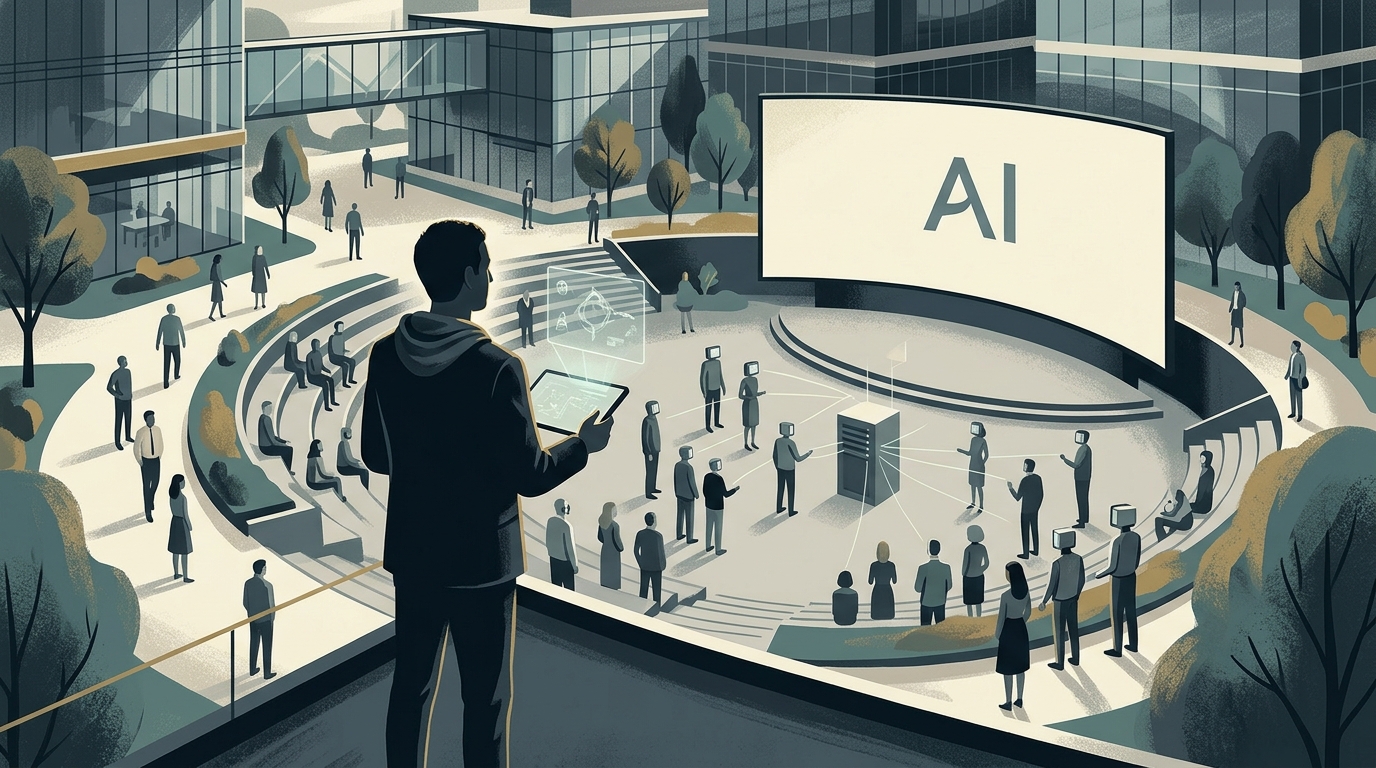
In a recent 6,500-word manifesto, Mark Zuckerberg attempted to define a positive future for Artificial Intelligence. However, his effort to position himself as a "soothing tech guru" seems to overlook a fundamental truth: life is not a checklist of tasks to be completed, but a series of experiences that require attention and effort.
Replacing Human Investment
Zuckerberg promises that everyone will soon have an "exceptionally capable personal agent" working 24/7 to improve our relationships, health, and hobbies. Yet, as noted, relationships are strengthened through personal investment. An AI agent might pick the perfect birthday gift, but it definitionally cannot provide the time and consideration that form the essence of love. Love is not just a feeling; it is a way of paying attention.
Productivity vs. Experience
Zuckerberg’s vision of using AI for hobbies, such as baking with one’s children or reading books, seems to miss the point. If an AI selects the recipe and streamlines the process, the opportunity for learning, for mistakes that create stories, and for the precious gift of undivided attention is lost. Hobbies exist for relaxation and enjoyment of the process, not to maximize productivity at the cost of experience.
Past Failures and Future Risks
Despite claims of new creative tools, Meta’s history with the Metaverse—which flopped despite massive resources—invites skepticism. Furthermore, the risks are real: Meta recently announced its AI had been used to hack another company. The manifesto also promotes AI "tutors," ignoring that learning is a social process requiring human mentorship and inspiration.
"If you do not have to pay attention or do work to meet your goal, does your goal mean anything at all?"
Ultimately, Zuckerberg’s vision appears focused on accomplishments rather than the quality of living. When art, learning, and relationships are automated, what remains is a sterile version of existence where speed replaces depth.